
How to Choose the Best Water Softener Company in Raleigh, NC
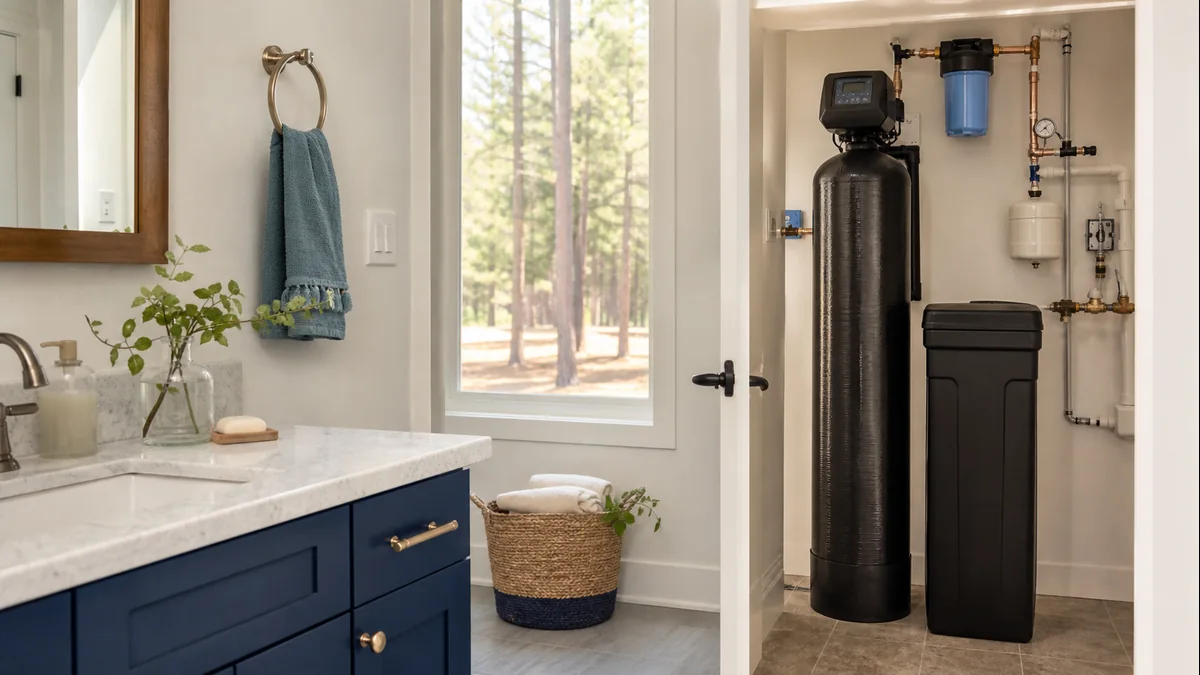
Direct answer: The best water softener company in Raleigh is the one that tests your water before it quotes a price, is upfront about what drives that price, installs with licensed plumbing work, and recommends an all-in-one softening plus carbon system rather than softening alone. Locally installed all-in-one systems are sized and priced after a free water analysis, well under what national big-brand installers commonly quote ($6,000 to $12,000).
What makes one Raleigh water softener company better than another?
Whether they measure your water before they price your system. That single question sorts the field faster than reviews do, because everything downstream depends on it — sizing, media selection, whether you even need the same configuration as the house next door. Raleigh Water runs about 1.6 grains per gallon, which is slightly hard on the WQA scale — the same one the Hach Total Hardness Test Kit (Model 5-B) uses — but our own testing across the wider service area measures 1.6 to 3.7 grains per gallon depending on the ZIP code. A company quoting from a phone call is guessing at which end of that range you're on.
The second differentiator is whether the recommendation covers what's actually in the water. Raleigh's system carries a chloramine residual for most of the year, converts to free chlorine annually while the distribution system is flushed, and the EWG Tap Water Database lists HAA9 at 19.9 ppb and TTHM at 21.7 ppb for the Raleigh system — compliant with EPA limits, and a stricter non-regulatory benchmark than the EPA's. A softener alone does nothing about any of it, because ion exchange targets calcium and magnesium only. A company that sells you softening and stops there has solved half the problem.
What should I ask before hiring a water treatment company in Raleigh?
Seven questions, in roughly this order:
- Do you test my water at my address before quoting? The answer should be yes, and it should be free.
- Will you explain what drives the price before the visit? A company that's upfront about how sizing and options affect the number is a proxy for how the rest of the conversation will go.
- Is the install done by licensed plumbing work? A whole-home system ties into the main supply line — this is not a plug-in appliance.
- What does the system actually treat? Ask them to separate what the softening stage does from what the carbon stage does. If they blur the two, that's informative.
- What certifications does the equipment carry, and for which specific claims? NSF/ANSI 42 covers aesthetic effects like chlorine, chloramine, taste and odor; NSF/ANSI 44 covers softeners; PFAS reduction requires NSF/ANSI 53 or P473 carbon, or NSF/ANSI 58 reverse osmosis. Certified claims vary by product, so ask for the claim, not just the number.
- Who services it afterward, and are they local? Service response is where national franchise structures and local companies diverge most.
- What's in the warranty, in writing? Read the document rather than the sales sheet.
Our longer guide on what to look for in a water system warranty covers question seven in depth.
Local company or national brand — which is better in Raleigh?
They differ less in the equipment than in the overhead attached to it. A national big-brand quote commonly lands at $6,000 to $12,000 for whole-home coverage; locally installed all-in-one systems are priced well below that after a free water analysis sizes the system to your home. The gap isn't a quality gap — it reflects franchise structures, national marketing spend, and multi-layer commission sales.
| What you're comparing | Local licensed installer | National big-brand installer |
|---|---|---|
| First step | Free water analysis | Phone quote or in-home sales appointment |
| Typical installed price | Sized and quoted after the free analysis | $6,000–$12,000 |
| Pricing transparency | Clear about what drives the price before the visit | Often quoted only at the close |
| Sizing basis | Your measured hardness and household usage | Frequently a standardized package |
| Who services it later | The company that installed it | Varies by franchise and region |
| Knowledge of Raleigh Water specifics | Direct — source, residual, annual chlorine conversion | Generic national playbook |
We wrote a fuller comparison in big brand vs. local water treatment.
Should I buy a softener or an all-in-one system in Raleigh?
The all-in-one, for a straightforward reason: Raleigh's water gives you two different jobs to do, and a standalone softener does one of them.
- The softening half handles calcium and magnesium — the film on glassware, the crust on faucet aerators, the soap that won't lather, and the scale that accumulates inside a water heater over years of daily use. Low-hardness water is not mineral-free water; deposits are cumulative even at 1.6 gpg, and a home is a fifteen-year timescale.
- The carbon half handles what softening cannot touch — the chlorine and chloramine taste, especially during the annual conversion period, and the disinfection byproducts documented in the system.
- Together in one unit is what we install, and it's why the recommendation doesn't change based on which half of the problem happens to be bothering you this month.
There's also a genuine local advantage worth naming: because Raleigh's water starts out low in hardness, the softening side regenerates infrequently and uses very little salt. The system is cheap to run here — see water softener salt cost per year for what that works out to.
How do I know a quote is honest?
Compare it to the two published ranges above, and check that the price is tied to something measured. An honest quote traces back to a hardness reading and a household water-usage estimate, both taken at your house. A quote that arrives before either of those exists is priced on a script.
Two more signals: pressure to sign the same day is a sales technique, not a technical requirement — water chemistry doesn't change between Tuesday and Saturday. And a quote that can't be explained line by line usually can't be defended line by line either.
Get the number your quote should be based on
Take our 60-second water quiz to see which all-in-one system fits your Raleigh home, or book a free water analysis and get the hardness reading at your own address before you talk price with anyone.
Frequently Asked Questions
I've had three companies quote me wildly different prices in Raleigh — why the spread? Usually because they're quoting different things: different treatment stages, different sizing assumptions, and very different overhead structures. Ask each one what the system treats and what it's sized from, and the spread usually explains itself.
Do I need a plumber, or does the water treatment company handle installation? A whole-home system ties into the main supply line, so the work should be done by licensed plumbing regardless of who schedules it. Ask directly whether the installing company does that work itself or subcontracts it.
Is a bigger system always better? No — oversizing costs more up front and can regenerate inefficiently, while undersizing leaves capacity short during peak use. Sizing should come from your measured hardness and your household's actual water usage, which is what the free analysis establishes.
My house is on Raleigh Water and the utility report looks clean — so what would I actually gain from a system? Two things the report doesn't cover: mineral deposits that accumulate on fixtures and inside the water heater over years, and the disinfectant taste plus disinfection byproducts that carbon removes. A clean compliance report and a noticeable improvement at the tap are compatible facts.
How long does installation take? A typical whole-home install is a single scheduled visit once the analysis has determined sizing, though access, existing plumbing layout and where the unit goes all affect the day. Ask any company you're considering to walk you through their own process before you commit.
Related reading: Water Softener Installation in Raleigh | Water Softener Cost in Raleigh | How to Choose a Water Softener | Water Softener vs. All-in-One System
Answer nine practical questions, then request a written quote or well-water analysis.
Start My Water Analysis