
Coliform Bacteria in Well Water: What to Do Next
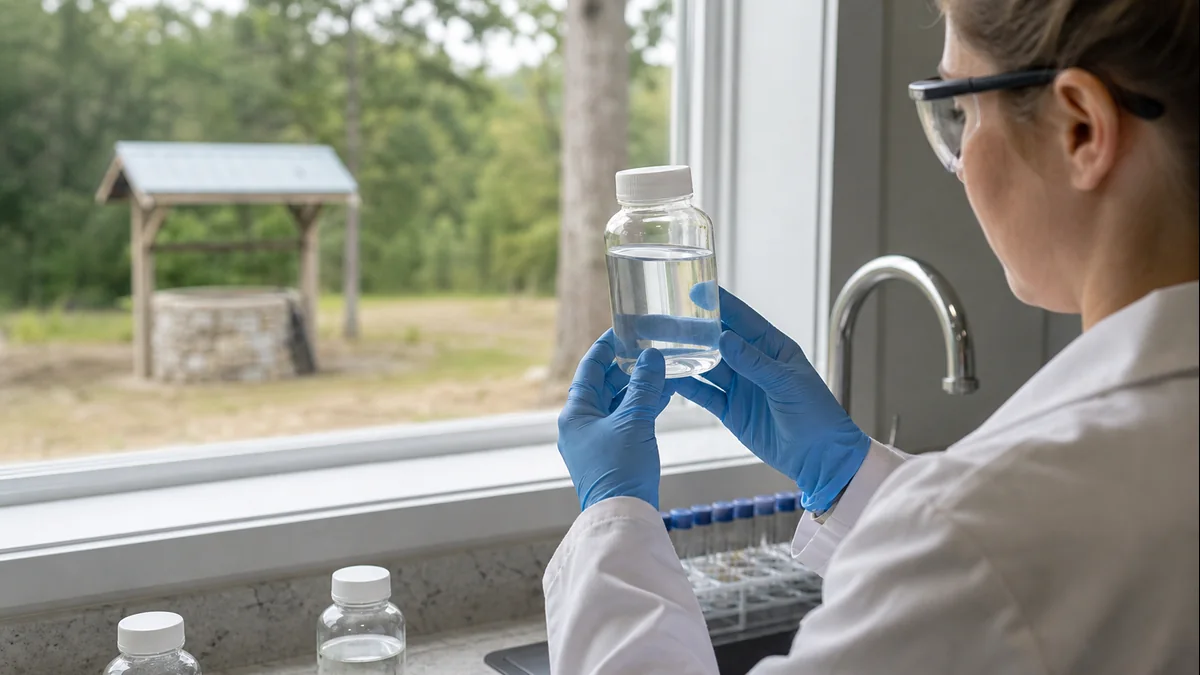
A positive coliform test means bacteria have found a way into your well — from a cracked casing, a loose well cap, surface runoff, or a nearby contamination source. It doesn't automatically mean the water is currently dangerous, but it does mean the well isn't sealed the way it should be. The standard response is shock chlorination to disinfect, a retest to confirm it worked, and — if the source of intrusion can't be found and fixed — a permanent UV system so it doesn't happen again.
What does a positive coliform test actually mean?
Coliform bacteria themselves are mostly harmless — they're a broad group found in soil, plants, and the digestive tracts of animals. Their real value in a well test is as an indicator: if coliform got into your water, it means water from the surface or from unsanitary sources is finding a path into your well, and other things could be getting in through that same path — including E. coli, which is the specific coliform strain that signals fecal contamination and a real health risk. That's why a lab result that flags "total coliform present" gets taken seriously even if E. coli specifically comes back negative.
What causes coliform contamination in the first place?
The bacteria are getting in somewhere. Common entry points include:
- A well cap that isn't sealed tight, letting insects, dust, or surface water in
- Cracks or gaps in the well casing
- A wellhead sitting too close to a septic drain field, livestock area, or standing water
- Flooding or heavy rain that temporarily overwhelms the seal
- A recently disturbed well (new construction, pump replacement) that reintroduced bacteria during the work
Finding and fixing the entry point matters as much as treating the current contamination — otherwise it comes back.
What's the standard fix — shock chlorination or UV?
Usually both, in sequence, not one or the other:
- Shock chlorination first. This is a strong, temporary chlorine dose flushed through the well and household plumbing to kill the current bacteria load. It's the immediate response to a positive test, not a permanent fix — the chlorine dissipates over time.
- Retest after shock chlorination. Your county health department or a certified lab can confirm whether the treatment actually cleared the contamination before you go back to using the water normally.
- UV disinfection for the long term, if the entry point can't be fully sealed or if repeat testing shows the problem recurring. UV treatment for bacteria needs to be NSF/ANSI 55 Class A certified to be relied on as an ongoing safety barrier — not every UV unit on the market meets that bar.
Shock chlorination without addressing the physical entry point (a bad well cap, a crack in the casing) is a short-term patch. If bacteria keeps showing up on repeat tests, the fix is sealing the well, not repeating the shock treatment indefinitely.
Who tests for coliform, and how often should I test?
County health departments generally test for bacteria and nitrates, and NC does not regulate private well water quality after the well is constructed — testing and follow-up treatment decisions are the homeowner's responsibility, not something the state checks on a schedule. That makes annual testing (or after any event that could compromise the well — flooding, nearby construction, a new baby or immunocompromised household member) a homeowner decision, not a legal requirement.
Local angle: coliform risk in Triangle-area wells
Private wells are common outside the Raleigh/Cary city water footprint — Wake County sits around 15% well households, with Johnston, Franklin, Chatham, and Granville counties running higher. Rural and semi-rural well setups in this region are often closer to septic systems, livestock, or agricultural runoff than a typical suburban lot, which is part of why coliform is one of the more common positive test results county health departments see locally. If your well is on a property with a septic system, checking the distance and grading between the two is worth doing alongside your regular water test.
FAQ
Is it safe to drink well water while waiting on a coliform retest? Treat a positive coliform result as a reason to switch to bottled or otherwise treated water until you get a clear retest back, especially if E. coli specifically is present or unconfirmed. Boiling water for at least a minute kills bacteria if you need an immediate option.
Does shock chlorination permanently fix a coliform problem? No — it clears the current contamination but doesn't stop bacteria from getting back in if the entry point (a bad seal, a crack, a low-lying wellhead) isn't fixed. Repeat positive tests usually mean the physical problem needs attention, not another round of shock chlorination.
Can I install a UV system myself after a positive test? Whole-home water treatment installation in North Carolina is licensed plumbing work under NCGS §87-21. You can verify any installer's license through the NC State Board's public lookup before hiring one.
How do I get my well tested for coliform? Your county health department typically offers bacteria testing, and it's usually the first call after a positive result or any time you want a baseline check — reach out to your specific county's environmental health division for their current testing process.
What does a UV system cost if I need permanent protection? A free water analysis comes first, so the system is sized to your actual results — not guessed and not priced until your water is tested.
Dealing with a positive well test and not sure what's next? Start with a free water analysis — we'll walk through what your results mean and what actually fixes it.
Related reading: Well Water Treatment: The Complete NC Guide · UV Water Treatment for Well Water · How Often to Test Well Water in NC
Answer nine practical questions, then request a written quote or well-water analysis.
Start My Water Analysis