
Do I Need a Water Filter in Holly Springs, NC?
Direct answer: Yes. A clean-tasting tap and no visible buildup don't rule out treatment — chlorine/chloramine taste, PFAS, and disinfection byproducts pass through Holly Springs' Cape Fear River-sourced water regardless of what you notice, and mineral buildup is cumulative and often invisible for years. This is worth addressing, not living with: an all-in-one system pairs carbon filtration for what taste can't reveal with softening resin for buildup before it starts.
My Water Tastes Fine and I Don't See Buildup — So Why Would I Need a Filter?
Because taste and visible buildup only tell you about two specific things, and neither one is the full picture of what's in your water. A Holly Springs resident recently put it this way in a local discussion: the municipal water "is fine odor and taste wise" and there's not "a lot of build up on my appliances from hard water."
Both observations can be accurate and still leave real, unaddressed issues untouched. Taste and appliance buildup simply aren't testing for what a filter is built to catch, or for what's dissolved in the water below the level you can perceive.
Chloramine, the disinfectant Harnett Regional Water uses to supply Holly Springs, is chosen partly because it's less likely to produce a strong chlorine taste or smell than free chlorine alone. Passing the taste test is what a well-run chloraminated system is supposed to do — not proof nothing else is present.
PFAS ("forever chemicals") and disinfection byproducts like haloacetic acids (HAA5/HAA9) and trihalomethanes (TTHM) are odorless and tasteless at the concentrations found in treated tap water. You cannot smell, taste, or see your way to knowing whether they're there.
That's not just a taste question. EPA's own National Primary Drinking Water Regulations table lists the potential health effects of long-term exposure above the legal limit for these exact compounds: for TTHMs, "liver, kidney or central nervous system problems; increased risk of cancer"; for HAA5, "increased risk of cancer."
"Legally compliant" is the ceiling EPA set with those effects in mind — not a guarantee the compounds aren't present below it. A carbon stage that removes them outright is worth having, not something to skip because the water tastes fine.
Why Doesn't "No Buildup Yet" Mean There's Nothing to Worry About?
Because mineral buildup from hard water is a slow, cumulative process, not an on/off switch. A home can be several years into scale accumulating inside a water heater, in supply lines, and on heating elements before it becomes visible on a faucet or shower door. What you see on a sink or shower door is the most visible, most delayed sign of hardness — not the earliest one.
Scale builds first in the places you don't look: inside the tank of your water heater, inside the drum of a dishwasher, along the internal channels of a washing machine valve. By the time spots show up somewhere you can see them, the same mineral deposits have often already been forming for a while in places you can't.
That's why "I haven't noticed buildup" is a real observation but not a reliable green light. It tells you what's visible right now. It doesn't tell you what's already accumulating inside your water heater, and it says nothing at all about chlorine byproducts or PFAS, which aren't mineral-based and wouldn't show up as buildup even after years.
What Does Holly Springs' Water Source Have to Do With This?
It matters because Holly Springs draws its treated water from the Cape Fear River through Harnett Regional Water, a surface-water source rather than a groundwater well field. Surface water carries more organic material through the treatment process than a deep well does, and utilities respond by applying disinfectant — chlorine or chloramine — to keep the water safe from the treatment plant all the way to your tap.
That disinfection step is necessary and it works, but it's also the same process that produces disinfection byproducts as chlorine or chloramine reacts with organic matter in the source water.
No verified hardness or contaminant figure has been published for Harnett Regional Water specifically. That's exactly why a free water analysis — not a guess borrowed from a neighboring town's numbers — is the honest starting point, and it's worth doing now rather than after years of unaddressed accumulation.
What Does a Whole-Home Filter Actually Remove That I Can't Detect on My Own?
A carbon filtration stage is built to remove the specific things taste, smell, and appliance inspection can't catch:
- Chlorine and chloramine taste/odor — even when it's mild enough not to notice consistently, a carbon stage strips it to non-detectable levels at every tap.
- Disinfection byproducts (HAA5/HAA9, TTHM) — compounds that form when disinfectant reacts with organic matter in surface water; activated carbon is an effective, verified treatment method for these.
- PFAS — "forever chemicals" that require carbon certified for PFAS reduction or reverse osmosis; standard water softening resin is not an effective PFAS treatment on its own.
None of these show up as a taste you'd notice, a smell you'd catch, or a stain you'd see on a faucet. That's precisely why relying on "the water seems fine" as your only signal leaves a real gap worth closing now, not watching.
What's the Difference Between a Softener and a Filter — and Do I Need Both?
A softener and a carbon filter solve two different problems, and neither one substitutes for the other:
| What it does | Softening resin | Carbon filtration |
|---|---|---|
| Removes calcium/magnesium (hardness, scale) | Yes | No |
| Protects water heater, dishwasher, washer, plumbing from buildup | Yes | No |
| Removes chlorine/chloramine taste and smell | No | Yes |
| Reduces disinfection byproducts (HAA5/HAA9, TTHM) | No | Yes |
| Reduces PFAS (with proper carbon media) | No | Yes |
| Needs a tested hardness number to size correctly | Yes | Not hardness-dependent |
Softening resin is ion exchange — it's built to swap out calcium and magnesium, full stop. It has no effect on chlorine, chloramine, disinfection byproducts, or PFAS, because none of those are hardness minerals.
That's why Triangle Waterworks builds its whole-home systems as softening resin and a carbon stage together in one unit rather than selling them as separate add-ons — a Holly Springs home on a surface-water source genuinely benefits from both halves, not just one. For the fuller mechanical comparison, see our breakdown of whole-house filters versus water softeners.
What Should a Holly Springs Homeowner Actually Do First?
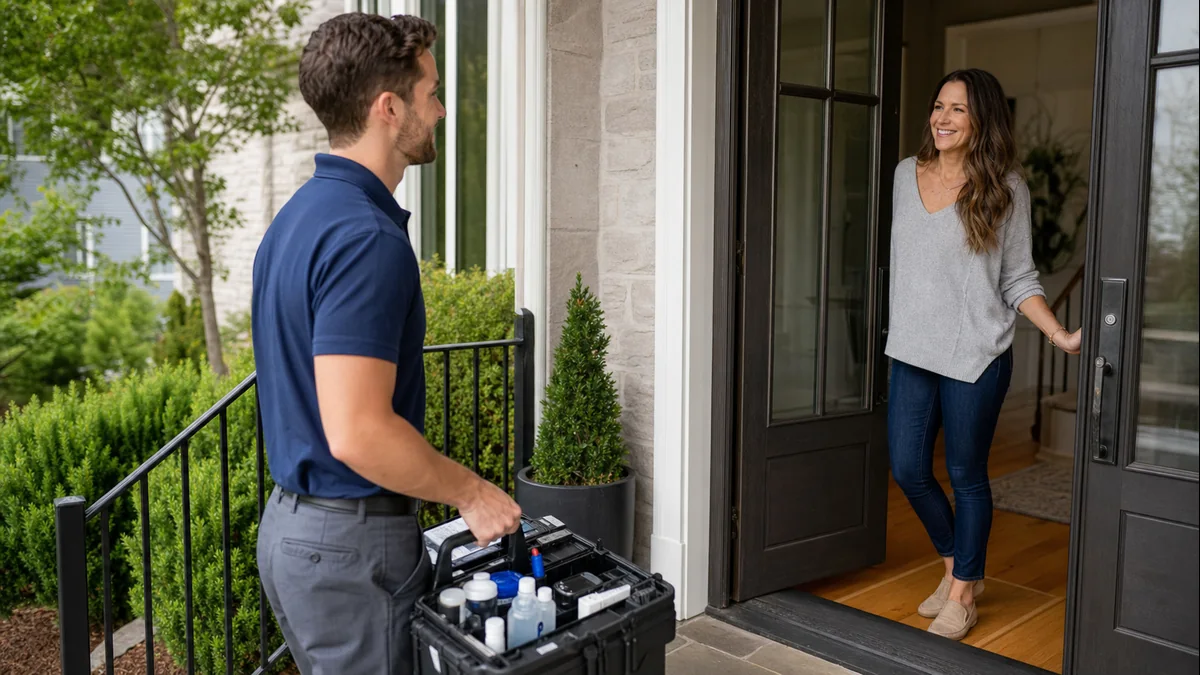
This is worth acting on now, not watching and wondering. Start with a free water analysis rather than guessing from taste or appliance inspection — a technician tests your home's actual tap water at your kitchen sink, not at a treatment plant 20-plus miles away.
Since no verified hardness or contaminant figure exists for Harnett Regional Water specifically, testing your own address is the only honest way to know what you're actually working with — and it's also what a system needs to be sized correctly instead of guessed at. See our full breakdown of Holly Springs water treatment and our guide to testing your tap water's hardness for more on that first step.
From there, most Holly Springs homes on a surface-water supply are best served by a single all-in-one system:
- Softening resin sized to your home's tested hardness, protecting your water heater, dishwasher, washer, and plumbing from buildup that's already starting before it's visible
- A carbon filtration stage removing chlorine/chloramine taste, disinfection byproducts, and PFAS — none of which a "the water tastes fine" check can catch
- One footprint and one installation instead of stacking a softener and a separate filter unit
Frequently Asked Questions
Do I need a water filter if my Holly Springs water already tastes and smells fine? Yes — taste and smell only tell you whether chloramine disinfection is doing its job of staying low-odor, not whether PFAS or disinfection byproducts are present. Both are odorless and tasteless at the levels found in treated tap water, so a clean-tasting glass doesn't rule either one out.
I just moved to Holly Springs and haven't noticed any hard water spots on my faucets — should I still get my water tested? Yes. Mineral buildup accumulates slowly and shows up inside a water heater or dishwasher well before it's visible on a faucet or shower door, so "no spots yet" mostly means buildup hasn't reached the surfaces you can see. A free analysis gives you a real hardness number instead of waiting for visible signs.
Does Harnett Regional Water treat Holly Springs' tap water enough that filtering is unnecessary? Treatment keeps the water legally safe and compliant with EPA standards, which is a real and verifiable status. But compliant is a ceiling EPA set for long-term exposure to compounds like disinfection byproducts and PFAS, not a guarantee of zero risk — a carbon filtration stage removes them directly rather than leaving you to rely on staying under that line.
What's the difference between a water softener and a whole-house filter for my home? A softener handles hardness minerals only, using ion exchange to remove calcium and magnesium. A whole-house carbon filter handles taste, chlorine/chloramine, disinfection byproducts, and PFAS, and does nothing about scale. See our softener versus all-in-one system comparison for how the two get combined into one unit.
How do I find out if my specific Holly Springs address has hard water or contaminants worth filtering for? Test it directly — no verified figure has been published for Harnett Regional Water that applies to every address. A free water analysis checks your actual tap for hardness, chlorine, and other readings, which is also what a system needs to be sized correctly rather than guessed at.
Is it worth getting a whole-home system if my water is already technically compliant with EPA rules? Compliant means legally safe, not free of everything worth addressing. EPA's own regulations table lists real long-term health effects — including increased cancer risk — for the disinfection byproducts a compliant system can still carry below the legal limit, and hardness minerals accumulate regardless of compliance status. Raleigh homeowners run into the same question from a different angle; see is Raleigh tap water safe, do I still need a filter for how the same "compliant isn't the same as nothing to remove" logic plays out there.
Sources
- U.S. EPA — National Primary Drinking Water Regulations
- U.S. EPA — Stage 1 and Stage 2 Disinfectants and Disinfection Byproducts Rules
- EWG Tap Water Database — Disinfection Byproducts Review
- Town of Holly Springs, NC — Drinking Water
Ready to Find Out What Your Holly Springs Water Actually Needs?
This is worth addressing, not living with. Take the 60-second water quiz to get matched with the right starting point for your home, or book a free water analysis so a technician can test your actual tap water instead of relying on taste or appliance inspection alone — the fix is a free water analysis away, not a guessing game.
For most Holly Springs homes on Harnett Regional Water's Cape Fear River supply, that leads to one all-in-one system handling softening and carbon filtration together, covering both what you can notice and what you can't.
Answer nine practical questions, then request a written quote or well-water analysis.
Start My Water Analysis