
Does Soft Water Protect Appliances in Durham, NC?
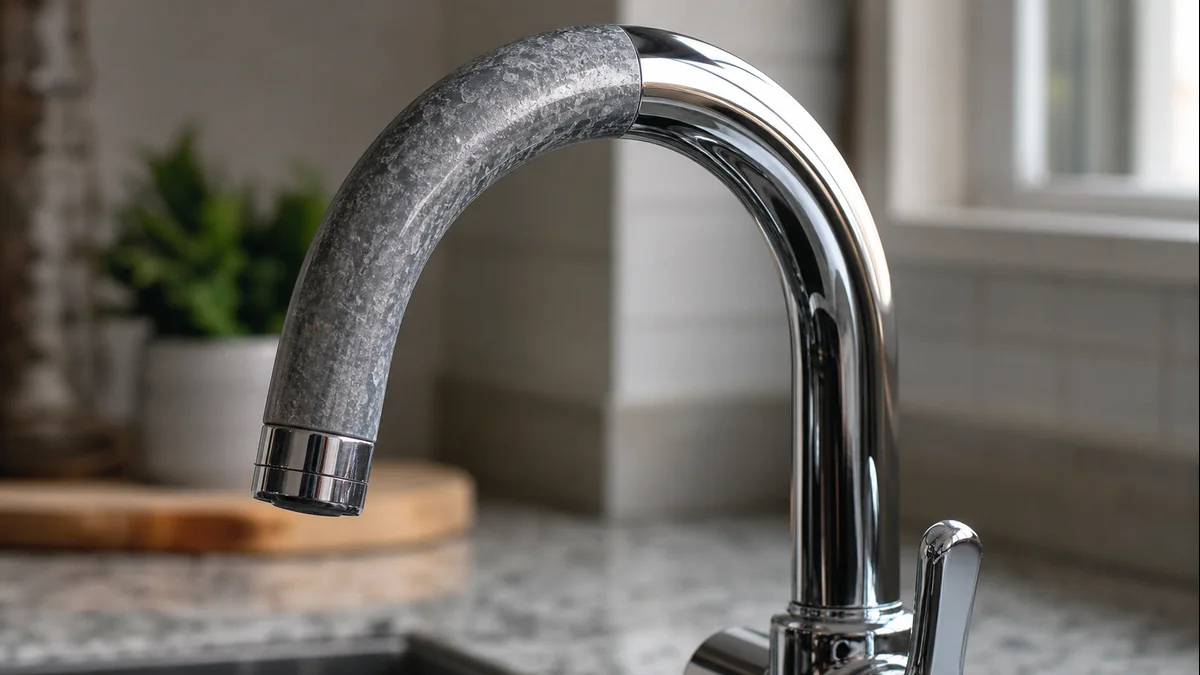
Direct answer: Yes. Softening removes the calcium and magnesium that deposit as scale inside a water heater, dishwasher, clothes washer, ice maker, and coffee maker every time they run. Durham publishes no hardness figure, so the only way to know your number is a free water analysis. Durham's water also carries disinfection byproducts a softener never touches — why the fix pairs softening resin with carbon filtration.
Why Doesn't Durham Publish a Hardness Number Like Some Neighboring Towns Do?
Durham's current Annual Drinking Water Quality Report, read in full this run, contains no total hardness figure anywhere in it. That's simply a gap in what the report discloses, not a claim that Durham's water carries zero calcium or magnesium — every surface-water utility in the region has some hardness, and Durham draws from the same kind of source as its neighbors.
Durham's water comes from Lake Michie and the Little River Reservoir, treated at the Williams and Brown plants. The report also discloses that Durham purchased water from the Town of Cary during the reporting year, so some customers may receive a blend depending on where they sit in the system. Without a published average to point to, a free in-home water analysis is the only reliable way to find out what a specific address is dealing with.
What Does Scale Actually Do Inside a Water Heater?
A water heater is where hardness does its most consistent damage, because heat is what forces dissolved calcium and magnesium to come out of solution. As the tank heats water day after day, those minerals settle onto the heating element or gas burner and along the tank's interior walls, building a layer between the heat source and the water it's meant to warm.
That layer sits there permanently until it's descaled or the unit is replaced — it doesn't dissolve back into the water on its own. Sediment collecting at the bottom of a tank-style heater also narrows the space actually available for hot water, on top of whatever forms on the heating surfaces themselves.
What Happens Inside a Dishwasher Over Time?
A dishwasher runs hot water through a much narrower set of passages than a water heater does — spray arm holes, valve seats, and the heating element that helps dry a load. Mineral deposits accumulate inside those narrow openings the same way they do on a heating element, just faster, because the passages are smaller to begin with.
The most visible sign is usually on the dishes themselves before it's obvious inside the machine: a cloudy, spotty film on glassware that a normal cycle doesn't rinse away. That film is mineral residue left behind as water evaporates from the glass surface, and it's a preview of the same deposits building up out of sight on the machine's internal components.
What About a Clothes Washer?
A clothes washer that heats its own water exposes its internal heating element to the identical mineral-deposit process a water heater experiences, just on a smaller scale per cycle. Valves and hoses inside the machine are also exposed to the same mineral content on every load, whether the water is heated or run cold.
There's a second effect specific to laundry: soap and detergent don't dissolve or rinse as completely in water carrying dissolved calcium and magnesium, since the minerals react with cleaning agents the same way they do on skin and dishes. Softened water changes both sides of that — less mineral content available to deposit inside the machine, and detergent that rinses more completely out of the fabric.
Why Does Ice Come Out Cloudy or Small?
An ice maker draws water through some of the narrowest tubing in a typical home, feeding a small reservoir that fills and freezes repeatedly, all day, every day. Mineral deposits that would take much longer to matter in a wider pipe have an outsized effect here, narrowing flow through that tubing and sometimes coating the mold itself.
Cloudy, oddly shaped, or unusually small ice is a common downstream sign of that narrowing — not necessarily a sign the refrigerator itself is failing. Take the calcium and magnesium out upstream and there is nothing left to accumulate in that tubing in the first place.
Does a Coffee Maker Really Scale Up That Fast?
Yes, faster than most other appliances in a kitchen, for the same reason an ice maker does: narrow internal lines and a small heating element that's exposed to the same mineral content every single brew cycle. Unlike a water heater's occasional descaling schedule, a coffee maker is small enough that scale buildup shows up in taste and brewing performance relatively quickly.
Softened water reaching a coffee maker means less material available to deposit in those narrow lines cycle after cycle, which is the same mechanism protecting every other appliance on this list.
What Does Hard Water Do to Each Appliance? A Side-by-Side Look
| Appliance | Where scale forms | What softened water changes |
|---|---|---|
| Water heater | Heating element/burner and tank walls | Minerals removed before they reach the tank |
| Dishwasher | Spray arm holes, valve seats, heating element | Less residue on internal parts and on glassware |
| Clothes washer | Heating element, valves, hoses | Less internal buildup; detergent rinses more completely |
| Ice maker | Narrow supply line and ice mold | Clearer line, less material reaching the mold |
| Coffee maker | Internal lines and heating element | Less scale buildup per brew cycle |
Does Durham's Water Carry Anything Besides Minerals Worth Knowing About?
Yes — and this is where softening alone stops being the complete answer. Durham's 2025 report lists total trihalomethanes (TTHM) at a highest running annual average of 56 ppb against an EPA limit of 80, and haloacetic acids (HAA5) at 49 ppb against a limit of 60. Both are legally compliant, and both are disinfection byproducts formed during the same chlorine-based treatment every municipal system relies on.
EPA's National Primary Drinking Water Regulations table lists the potential health effects of long-term exposure above the legal limit for TTHMs as "Liver, kidney or central nervous system problems; increased risk of cancer," and for HAA5 as "Increased risk of cancer."
That's not a claim that Durham's current, compliant water is causing those effects — it isn't, and saying otherwise would misrepresent what compliance means. It's the opposite point: "legally compliant" is a ceiling EPA set at its own acceptable risk tolerance, not a guarantee of zero exposure, and TTHM and HAA5 are the exact compounds EPA had in mind when it drew that line.
A carbon filtration stage removes them directly rather than relying on staying under a legal number. The same report also shows PFOA up to 5.7 parts per trillion and PFOS up to 7.2 ppt, and carbon certified for PFAS — or reverse osmosis — is what addresses those.
Softening resin does nothing for any of it. Resin performs ion exchange on calcium and magnesium only, which is why the carbon stage is a separate job inside the same system.
Softening Alone vs. Pairing It With Carbon: What Each One Actually Covers
- Softening resin — protects every appliance on the list above from mineral scale by removing calcium and magnesium through ion exchange. It has no effect on chlorine, chloramine, TTHM, HAA5, or PFAS.
- Carbon filtration — removes chlorine and chloramine taste, disinfection byproducts, and (when certified for it) PFAS. It has no effect on hardness.
- An all-in-one system — pairs both stages in a single install, so a Durham home gets appliance protection and water-quality coverage from one piece of equipment rather than two separate purchases.
Frequently Asked Questions
I've replaced two water heaters in nine years in my Durham home — could hard water actually be behind that? It's a reasonable factor to check. Scale insulates the heating element and tank walls, forcing the unit to work harder over years of use, and that buildup happens regardless of Durham's published figures since the city doesn't report a citywide hardness number at all. A free water analysis at your address is the way to find out.
My ice maker has been making small, cloudy cubes for months — is that connected to water hardness? It can be. The tubing feeding an ice maker is narrow enough that mineral deposits have an outsized effect on flow and ice clarity well before other appliances show a problem. A free water analysis would confirm whether hardness is the cause at your address.
Durham doesn't publish a hardness number — does that mean the water here is actually soft? No, and that's an important distinction. A missing figure in the city's report means Durham hasn't disclosed one, not that the water contains no calcium or magnesium. The only way to get an actual number for your home is to test it directly.
Should I worry about the TTHM and HAA5 levels in Durham's own report, or is that overblown? Durham's reported levels are legally compliant, so there's no violation to be concerned about in that sense. At the same time, compliance is a ceiling rather than a zero-risk guarantee, and a carbon filtration stage removes those compounds directly instead of relying on staying under the legal limit.
Does a water softener fix the chlorine taste I notice in my Durham tap water too? No — softening resin only performs ion exchange on calcium and magnesium, so it has no effect on chlorine, chloramine, or disinfection byproducts. That's specifically what the carbon filtration stage in an all-in-one system is built to handle.
How do I find out what my own Durham address actually measures, since the city doesn't publish a citywide figure? A free in-home water analysis tests your tap directly and gives you a real number instead of an estimate. See how to test water hardness at home in Durham, NC for how that process works.
Protect Every Appliance With a Free Water Analysis
Mineral scale and disinfection byproducts affect different parts of a Durham home, and both are worth addressing before years of buildup add up. Take the 60-second water quiz to see how an all-in-one softening-and-carbon system fits your home, or book a free in-home water analysis with Triangle Waterworks.
For the fuller local picture, see Water Softener in Durham, NC, what hard water costs in appliance damage, tankless water heater scale in Durham, NC, and trihalomethanes and haloacetic acids in Durham, NC water.
Sources
Answer nine practical questions, then request a written quote or well-water analysis.
Start My Water Analysis