
Does Soft Water Protect Appliances in Wake Forest, NC?
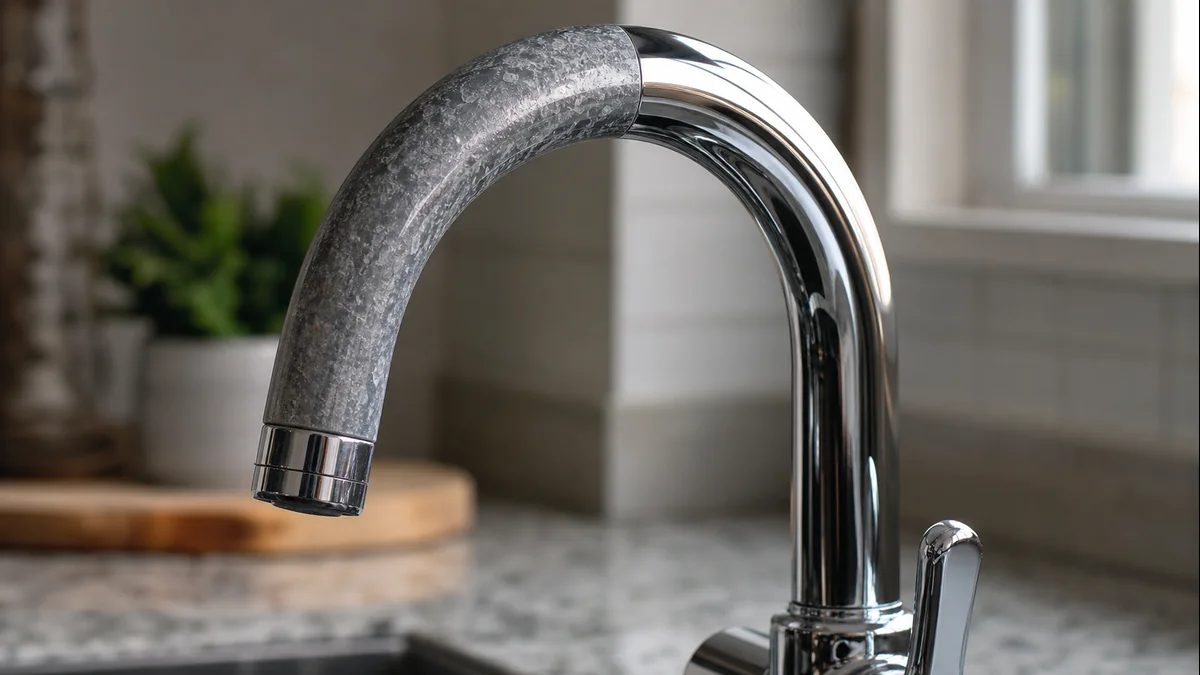
Direct answer: Yes. Wake Forest receives Raleigh Water, and Triangle Waterworks' own testing measures 1.6–3.7 grains per gallon across the service area — slightly hard to moderately hard on the Water Quality Association scale. Every gallon still carries calcium and magnesium that deposits on heating elements, valves, and narrow passages over years of use. An all-in-one softening-and-carbon system removes those minerals before they reach any appliance, while also handling the chlorine and disinfection byproducts that softening alone leaves behind.
Does Wake Forest Have Enough Mineral Content to Affect Appliances?
Yes, though it's a gradual effect rather than a dramatic one. Wake Forest doesn't run its own treatment plant — it's served by Raleigh Water, the same utility supplying Raleigh, Garner, Knightdale, Rolesville, Wendell, and Zebulon. Raleigh Water's own reported figure is about 1.6 gpg, which classifies as "slightly hard" on the Water Quality Association (WQA) scale, the same scale used by the Hach Total Hardness Test Kit, Model 5-B. Triangle Waterworks' testing across the broader service area finds a wider range at the tap — up to 3.7 gpg (about 63 mg/L) depending on the address, which crosses into "moderately hard" territory. Even at the lower end of that range, calcium and magnesium are present in every gallon an appliance processes, and that's what matters for long-term protection — not whether the water crosses into a more severe classification.
How Does Mineral Buildup Actually Affect an Appliance Over Time?
It's a cumulative process, not a single event. Every time water is heated, calcium and magnesium precipitate out of solution and bond to the nearest surface — a water heater's heating element or tank bottom, a dishwasher's internal heat exchanger, a coffee maker's boiler coil. Scale is a poor conductor of heat, so a scaled surface has to work harder and run longer to reach the same temperature as a clean one. In appliances with moving parts — washing machine inlet valves, dishwasher spray arms, ice maker solenoids — the same minerals collect in narrow passages and around seals. None of this happens after one wash or one tank refill. It builds gradually, gallon after gallon, across the years an appliance is expected to last, which is why a new appliance in Wake Forest starts that clock from its very first use.
Which Appliances Are Most Affected by Mineral Deposits?
Appliances that heat water or push it through narrow passages see the most buildup, since both heat and tight tolerances give minerals a place to collect. Here's how that plays out appliance by appliance, and what softened water changes:
| Appliance | What mineral deposits do over time | What softened water changes |
|---|---|---|
| Water heater | Scale coats the heating element and settles on the tank bottom, insulating it from the water it's meant to heat | Calcium and magnesium are removed before the tank fills, so surfaces stay clear of scale buildup |
| Dishwasher | Deposits collect on the internal heating coil and can leave spotting or film on glassware and dishes | Water reaches the wash cycle without minerals to leave behind on dishes or internal components |
| Washing machine | Scale accumulates in inlet valves, solenoids, and the internal heater on units that heat water | Valves and heating components see mineral-free water on every cycle |
| Ice maker | Mineral deposits build in the fill line and water valve, and can show up as cloudiness in the ice itself | Fill water carries no calcium or magnesium into the line, valve, or ice tray |
| Coffee maker | Scale forms inside the boiler and heating coil, the same buildup that eventually calls for a descaling cycle | Softened water going into the reservoir means less mineral scale forming inside the unit |
| Fixtures (faucets, showerheads) | Mineral spotting and film build on fixtures and glass shower doors as water evaporates and leaves residue behind | Softened water evaporates without leaving the same mineral film on fixtures and glass |
Does Softening Handle Everything, or Is There More to Wake Forest's Water?
Softening only addresses the mineral side — it does nothing for taste, odor, or disinfection byproducts, which is exactly why Triangle Waterworks recommends the all-in-one system instead of a softener alone. Raleigh Water normally disinfects with chloramine, which the utility describes as having no taste or odor associated with it. Once a year, on the N.C. Department of Environmental Quality's recommendation, the system switches to free chlorine only and flushes the distribution network — a period that has historically run from late February into early April, though the exact dates shift year to year. EWG's review of Raleigh Water's data shows haloacetic acids (HAA9) at 19.9 ppb and trihalomethanes (TTHM) at 21.7 ppb — both legally compliant with EPA limits, but above EWG's stricter, non-regulatory health guidelines. Softening resin is ion exchange for calcium and magnesium, full stop — it does nothing about chlorine, chloramine, or disinfection byproducts. A carbon filtration stage is what handles that side, which is why the all-in-one system runs softening and carbon together rather than asking a homeowner to choose one problem to solve.
Why Does This Matter for Both New Construction and Wake Forest's Historic Homes?
Because Wake Forest has both, and the water reaching either one is identical. The town has a National Register historic district with homes dating back to the 1820s, alongside fast-growing new subdivisions — and both draw from the same Raleigh Water supply. In a new-construction home, treating the water from move-in day means a brand-new water heater, dishwasher, and washing machine start accumulating deposits from zero rather than from day one of ownership without protection. In a historic-district home, decades of prior mineral exposure may already sit in older plumbing and legacy fixtures, so treating the water going forward stops that accumulation from continuing rather than trying to reverse what's already there. Either way, the fix is the same: treat the water at the point it enters the home.
Benefits of Protecting Appliances With an All-In-One System
- Water heater, dishwasher, and washing machine internals stay clear of scale buildup over years of use
- Less strain on heating elements, since a clean surface transfers heat without a scale layer in the way
- Cleaner dishes and glassware, without the spotting or film mineral deposits can leave behind
- Ice makers and coffee makers see the same mineral-free water as every other appliance in the home
- Fixtures and shower glass stay clearer, without the mineral film that builds up over time
- Chlorine and chloramine taste and odor addressed by the carbon stage, alongside the softening side
- Low ongoing cost to run, since Wake Forest's measured hardness range means infrequent regeneration and modest salt use
- One installed system covering both the mineral side and the taste/odor side of the water
Frequently Asked Questions
I just closed on a new build in Wake Forest — is it worth treating the water before the appliances are broken in? Yes. A new water heater, dishwasher, and washing machine start accumulating mineral deposits from their very first use, regardless of how new they are. Treating the water at move-in means those appliances never process a single gallon of untreated water, which is the most direct way to protect them from day one.
My house is in Wake Forest's historic district and the plumbing is decades old — can soft water still help at this point? Yes, though it works going forward rather than reversing what's already deposited. Older plumbing and fixtures may already carry years of accumulated mineral residue, but installing an all-in-one system stops any further buildup in the plumbing and appliances you have now, including anything added or replaced later.
Is Wake Forest's water actually mineral-heavy enough for this to matter? It's on the lower end — slightly hard to moderately hard, not severe. Raleigh Water reports about 1.6 gpg, and Triangle Waterworks' own testing across the service area runs 1.6–3.7 gpg depending on the address. Even at the lower end of that range, calcium and magnesium are present in every gallon an appliance processes, and a free water analysis tells you exactly where your specific address falls.
Does a water softener alone protect my appliances, or do I need something more? A softener alone handles the mineral side but does nothing for chlorine, chloramine, or disinfection byproducts in Wake Forest's water. That's why Triangle Waterworks installs an all-in-one system pairing softening resin with a carbon stage, so both the mineral protection and the taste/odor side are covered from one piece of equipment.
I've heard national big-brand softeners quoted at $6,000 to $12,000 — is that what protecting my appliances costs? That range reflects national big-brand pricing, not a Triangle Waterworks figure. Pricing for your home is set after a free water analysis, which accounts for your household's specific water use and the system sized to it, rather than a generic estimate.
How do I know if my appliances are already showing signs of mineral buildup? Common signs include a water heater that takes longer to reach temperature, spotting on dishes and glassware after a dishwasher cycle, or visible film on fixtures and shower glass. A free water analysis can confirm what's happening at your specific address and how much mineral content your appliances are currently processing.
Ready to see what your own water is doing to your appliances? Take the 60-second water quiz to find out which all-in-one system fits your Wake Forest home, based on a free water analysis rather than a guess.
Related reading: Does Soft Water Make Appliances Last Longer? | Is Wake Forest, NC Water Hard? | Wake Forest Historic District: Old Home Plumbing | Water Softener Cost in Wake Forest, NC | New Construction Water Softener in Wake Forest, NC
Answer nine practical questions, then request a written quote or well-water analysis.
Start My Water Analysis