
First Time Well Owner in NC? Do This First
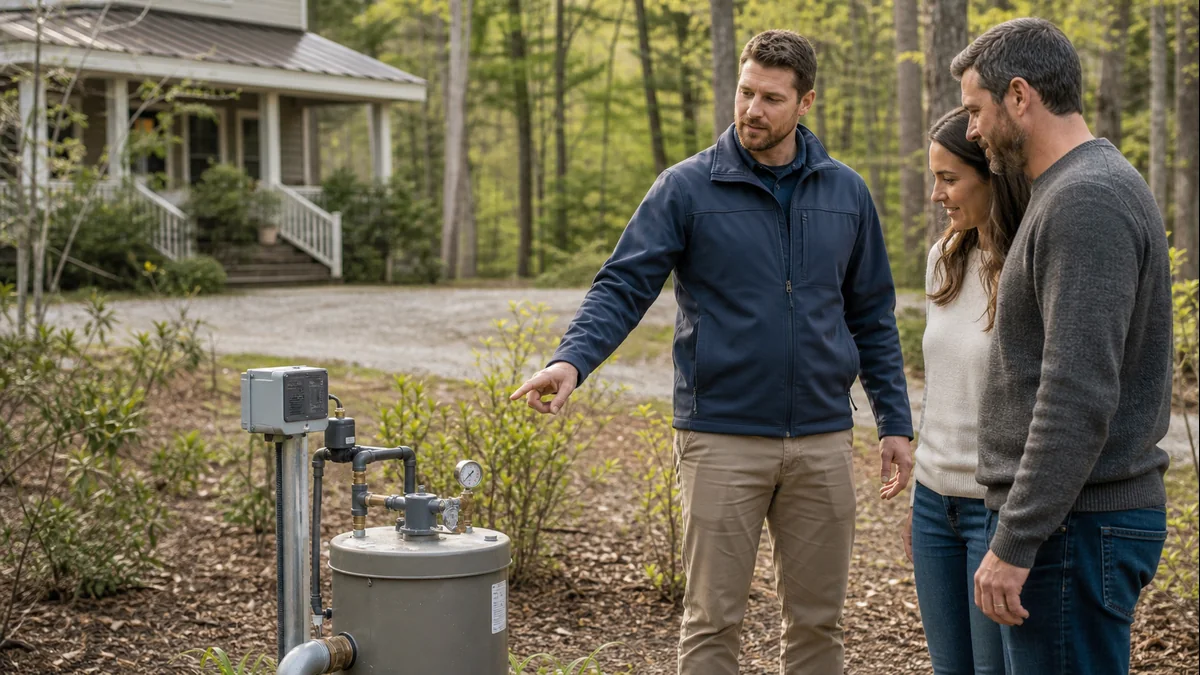
If you just bought a home on a private well in North Carolina, do two things first: get a comprehensive water test, and find your well cap, pressure tank, and shutoff. NC doesn't regulate private well water quality after construction, so nobody checks this for you automatically — it's on the new owner to establish a baseline and know the system.
What's the first thing to do as a new well owner?
Test the water — even if the seller or inspector already did. A pre-sale test tells you what the water looked like on one day, under one set of conditions. It doesn't tell you what you're dealing with month to month, and it's worth having your own current baseline before you settle into the house.
This is also the moment to figure out the basics of the system itself: where the well cap is, where the pressure tank and shutoff valve are, and roughly how old the components are. None of this is complicated, but if you've never lived on a well before, it's not obvious — and you'll want to know it before something goes wrong, not while it's happening.
What should you test for?
A comprehensive test, not just a bacteria strip. There are two categories:
| Category | Who tests it | What it covers |
|---|---|---|
| Bacteria & nitrates | County health department | Contamination risk — the core safety check |
| Iron, pH, hardness, sulfur, TDS | Comprehensive water analysis | What's actually driving taste, smell, and staining issues |
Both matter for a new owner. The health department test answers "is this water safe." The fuller panel answers "why does it smell/taste/stain the way it does, and what do I need to fix it."
What if you notice a smell, stain, or taste issue right away?
Common first-week discoveries and what they usually mean:
- Rotten-egg smell — almost always hydrogen sulfide. See well water that smells like rotten eggs.
- Orange-brown staining on sinks, tubs, or laundry — dissolved iron. See iron in well water orange stains.
- Metallic taste — often iron as well, sometimes pH-related.
- Cloudy water after the well hasn't run for a while — worth testing before assuming it's harmless.
None of these are emergencies, but none of them go away on their own either. They're diagnostic clues, and a comprehensive test turns the clue into an actual number you can act on.
How do you budget for well water treatment?
Whatever your test turns up, the cost of treating well water is driven by what your specific water needs — how many stages your results call for (sediment, pH, iron, softening, carbon, UV), not a generic template. A free water analysis is the step that tells you what your situation actually requires, so your system is sized and quoted to your well's actual water rather than a guess.
What should you check about the well itself?
Beyond water quality, know your system:
- Well cap location — usually a visible pipe or cover somewhere on the property, sometimes in a well house
- Pressure tank and shutoff — typically near where the water line enters the house, worth locating before you need it in an emergency
- Approximate age of the pump and pressure tank — ask the seller or previous owner if you can, since this affects what maintenance to expect
Is licensed work required to treat well water in NC?
Yes. Under North Carolina law (NCGS §87-21), whole-home water treatment installation is licensed plumbing work. If you're getting a system installed, confirm the installer is a licensed NC plumber — you can verify any license at the NC State Board's public lookup.
FAQ
Do I need to test my well water even if the home inspection included a water test? Yes, it's worth a fresh baseline once you're the owner — conditions can change, and a comprehensive panel covers more than a typical pre-sale bacteria check.
How often should I retest after the first year? Annually is the standard recommendation, more often if you notice any change. Full detail in how often to test well water in NC.
Is well water in NC regulated the way city water is? No. NC does not regulate private well water quality after construction — testing and treatment decisions are entirely the homeowner's responsibility.
What percentage of NC homes are on well water? Roughly 15% of homes in Wake County are on private wells, with a higher share in Johnston, Franklin, Chatham, and Granville counties.
What's the first fix most new well owners need? It varies by water, which is exactly why testing comes before buying equipment — iron, pH, hardness, and sulfur each have different fixes, and most wells need more than one.
Get a free well water analysis
Start with a free Triangle Waterworks water analysis — it covers iron, pH, hardness, sulfur, and TDS, so you know exactly what your water needs before spending on equipment. See the well water treatment guide for NC for the complete test-diagnose-treat order.
Answer nine practical questions, then request a written quote or well-water analysis.
Start My Water Analysis