
Does Hard Water Really Damage Appliances and Cost You Money?
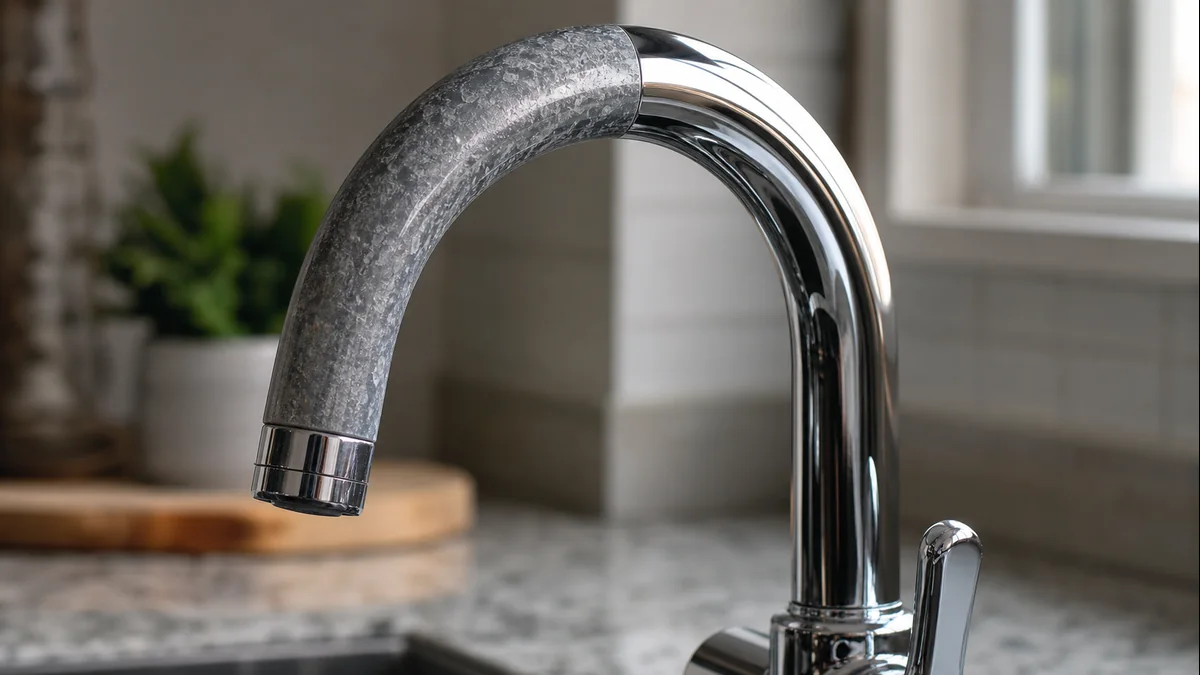
Direct answer: Yes, over time — even in the Triangle, where city water isn't classified as hard the way it is in many parts of the country. Dissolved calcium and magnesium settle out as scale wherever water sits or heats, and that buildup is cumulative across years of daily use inside a water heater, dishwasher, and washing machine. An all-in-one system with a softening stage prevents that buildup at the source, while a paired carbon stage handles the chlorine and disinfection byproducts softening never touches.
Is Triangle water actually hard enough to damage appliances?
Not in the way "hard water" gets talked about nationally. Raleigh Water tests at roughly 1.6 grains per gallon (gpg), which classifies as slightly hard on the Water Quality Association (WQA) scale — the same scale the Hach Total Hardness Test Kit (Model 5-B) uses. Cary, Apex, and Morrisville span a wider range — roughly 1.6–3.7 gpg — running slightly-to-moderately hard, with the top of that range crossing into moderately hard. Neither number is dramatic. The point of this article isn't that Triangle water is hard; it's that a low reading on the hardness scale doesn't mean "mineral-free," and any measurable calcium and magnesium accumulates given enough time.
Here's the distinction that matters: a single day of this low-hardness water leaves behind a negligible trace of mineral deposit. A water heater running the same water every day for years is a different story. Scale doesn't disappear between uses — it layers.
What actually happens inside a water heater over time?
Scale that forms on a heating element or tank wall doesn't conduct heat the way metal does. The U.S. Department of Energy's Building America program, which studies residential water heating performance, describes the mechanism directly: mineral deposits "do not conduct heat well and can reduce the flow of water through pipes." That's the core issue — not a specific percentage of lost efficiency, but a real physical layer sitting between the heating element and the water it's supposed to heat, and sediment building in the tank that narrows the effective volume and can restrict flow through fittings and pipes over years.
The heating element has to work through that layer to reach the water, tank sediment reduces usable capacity, and the appliance is working harder for the same result. Left unaddressed for years, this kind of buildup is the reason some water heaters get replaced well before a homeowner expected to need a new one — an expensive outcome that's far more avoidable than most people realize, and exactly the kind of cost a treatment system is bought to prevent.
Which other appliances show buildup over time?
Every appliance that heats, holds, or repeatedly cycles water is exposed to the same slow accumulation:
- Dishwashers — mineral deposits build on interior components and heating elements over repeated cycles, which is part of why glassware and dishes can come out with a persistent film even when the cycle ran normally.
- Washing machines — scale can accumulate on internal heating elements and in valves over years of cycles, alongside the separate issue of soap and detergent not rinsing as cleanly in mineral-heavy water.
- Faucet aerators and showerheads — these show buildup first and most visibly, since water passes through small openings that mineral deposits narrow gradually.
- Fixtures and glassware — chalky spots and a dulled finish on faucets, shower doors, and drinking glasses are the most visible day-to-day evidence that deposits are accumulating somewhere in the system.
None of these show dramatic damage after one week or one month. They show it after years — which is exactly why the buildup argument is about cumulative exposure, not about how hard the water tastes or feels on a given day.
Does a water softener alone solve this?
A softener addresses the calcium and magnesium that cause scale, through ion exchange — it's the direct fix for everything described above. But it does nothing about chlorine taste and odor, or the disinfection byproducts (haloacetic acids and trihalomethanes) that are separately documented in Triangle city water. Raleigh's system shows HAA9 at 19.9 ppb and TTHM at 21.7 ppb; Cary's shows HAA9 at 27.5 ppb and TTHM at 38.2 ppb. Softening resin has no effect on any of that — it's a completely separate treatment stage.
That's the reasoning behind pairing softening with a carbon stage in one all-in-one system: the softening resin protects the equipment from scale, and the carbon stage handles what softening structurally cannot. Neither stage substitutes for the other.
What does treating it cost compared to not treating it?
Triangle Waterworks sizes and prices whole-home systems on city water by bathroom count, with the exact number set after a free water analysis. Every tier includes an under-sink reverse osmosis system, a lifetime warranty with terms in writing, and installation by an NC-licensed plumber, typically completed in one visit of 2–4 hours. National big-brand quotes for comparable whole-home systems commonly run $6,000–$12,000 — one documented case showed a Leaf Home Water Solutions quote drop from $12,241 to $4,825 after the homeowner pushed back.
| All-in-one system (Triangle Waterworks) | Doing nothing | |
|---|---|---|
| Scale on water heater element/tank | Prevented at the source by softening resin | Accumulates every year appliances run |
| Dishwasher and washer buildup | Prevented | Accumulates gradually |
| Fixtures and glassware film | Prevented | Visible buildup over time |
| Chlorine taste and disinfection byproducts | Addressed by the carbon stage | Not addressed by scale alone — separate exposure |
| Upfront cost | Sized by bathroom count, priced after a free water analysis, city water | No upfront cost, cost shifts to appliance wear over years |
| Warranty | Lifetime, terms in writing | N/A |
Well systems are priced entirely off what a free water analysis finds, since well water varies household to household and can carry hardness, iron, or pH issues city water doesn't have.
Comparison: softening alone vs. the all-in-one system
| Softening alone | All-in-one (softening + carbon) | |
|---|---|---|
| Protects water heater, dishwasher, washer from scale | Yes | Yes |
| Reduces chlorine taste and odor | No | Yes |
| Addresses documented HAA9/TTHM levels | No | Yes |
| Under-sink RO included | Varies by installer | Included (Triangle Waterworks) |
| Handles both mineral and chemical exposure | No | Yes — "best of both worlds" |
Frequently Asked Questions
Does hard water really shorten a water heater's life? Scale buildup on heating elements and tank walls doesn't conduct heat well and can restrict water flow, according to the DOE's Building America research — that's a documented mechanical mechanism, not a specific percentage. Over years of daily use, that buildup is the kind of thing that leads to premature water heater problems, which is why preventing scale at the source with a softener matters.
I just moved to Cary and my dishwasher already leaves a film on glasses — is that from the water? It can be, especially since Cary's range reaches higher than Raleigh's and the top of that range is moderately hard. A water softener addresses the mineral deposits causing that film; it's worth confirming with a hardness check rather than guessing.
My water heater is only a few years old and already needs attention — could mineral buildup be why? It's possible. Scale accumulates from day one of use, even at the low end of the hardness scale, and the effect compounds over years. If you haven't had your water tested, that's the first step before assuming it's unrelated to water quality.
Does a whole-house filter by itself protect my appliances from scale? A standard carbon filter targets chlorine, taste, and disinfection byproducts — not calcium and magnesium. Preventing scale specifically requires a softening stage, which is why the all-in-one system pairs both rather than relying on carbon filtration alone.
Raleigh water tests slightly hard, not hard — so what is a system actually protecting against? Raleigh measures about 1.6 gpg, which classifies as slightly hard on the WQA scale, and nothing here claims otherwise. The point is narrower: even at that low end of the hardness scale, water carries calcium and magnesium in every gallon, and years of continuous appliance use deposit that mineral inside a water heater regardless of which band the supply falls in. The softening stage stops the deposition; the carbon stage handles the chlorine and disinfection byproducts that softening does nothing about.
What's the difference between the softening side and the carbon side of the system? Softening resin removes calcium and magnesium through ion exchange, which stops scale from forming. The carbon stage is a separate filtration media that reduces chlorine taste and disinfection byproducts. Each stage does a job the other doesn't — together they cover mineral buildup and water chemistry in one installed system.
Ready to see what your home actually needs?
Take our 60-second water quiz to see what system fits your home if you're on city water, or request a free water analysis if you're on a well — sizing and pricing depend on what's actually in your water.
Related reading: Raleigh Water Hardness | Water Softener Cost in Raleigh, NC | Signs You Need a Water Softener | Haloacetic Acids in Drinking Water | What Size Water Softener Do I Need?
Answer nine practical questions, then request a written quote or well-water analysis.
Start My Water Analysis