
How to Choose a Water Treatment Company in Fuquay-Varina, NC
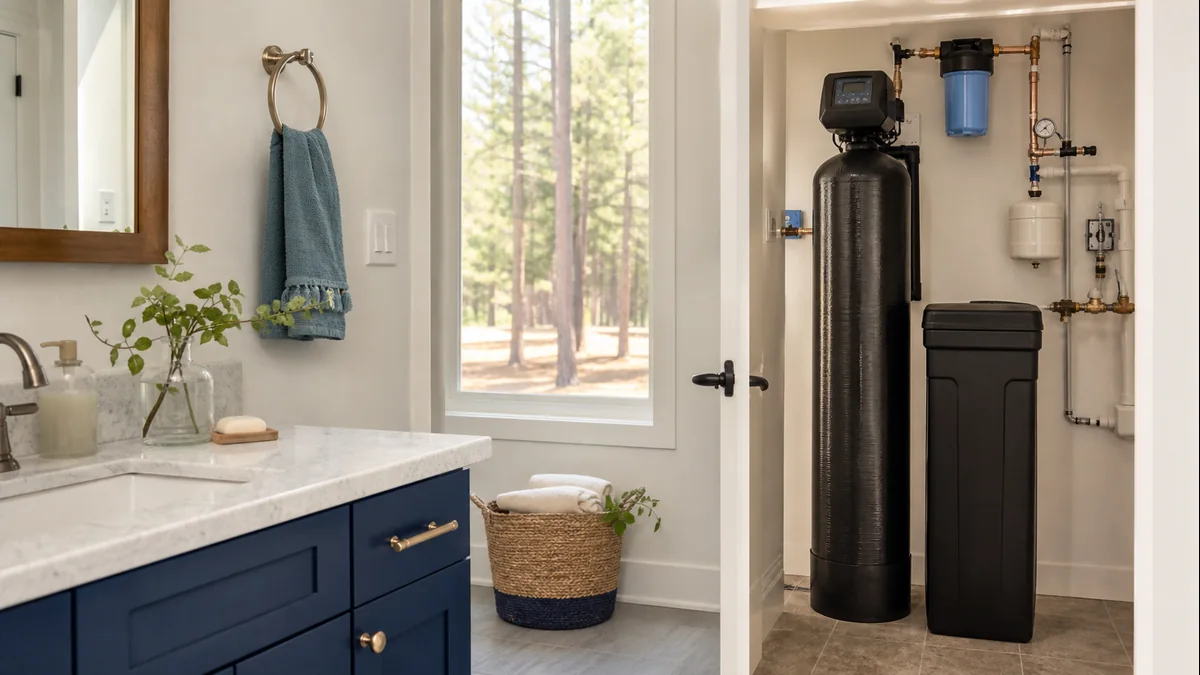
Direct answer: Choosing a water treatment company in Fuquay-Varina comes down to five checks: a valid NC plumbing license, proof of insurance, real local references, a sizing method based on a test of your actual water rather than a generic chart, and warranty terms you get in writing before you sign. A company confident enough to test your specific address — instead of quoting off a catalog — is the one qualified to size and install an all-in-one softening-and-carbon system correctly.
Fuquay-Varina sits on a blended water supply — depending on where in town you are, your tap draws from Raleigh Water, Harnett Regional Water, or Johnston County, and the mix can shift block by block near the service-area boundaries. That makes vetting more important here than almost anywhere else in the Triangle: a company that hands you a price before testing your water is guessing at what's coming out of your faucet, while a company that tests your address first is working from a real number. Here's what to check before you hire either one.
What Should I Check Before Hiring a Water Treatment Company in Fuquay-Varina?
Start with licensing and insurance, then move to references, sizing method, and warranty terms — in that order, since each is faster to verify than the last. Licensing and insurance are yes/no questions you can confirm independently. References and sizing method take a conversation. Warranty terms take a document. A company that's straightforward on all four is one worth getting a quote from.
Is the Company Actually Licensed to Install a Whole-Home System in NC?
It has to be — North Carolina law treats this as licensed plumbing contracting work, not a DIY-adjacent appliance install. N.C. Gen. Stat. § 87-21 defines plumbing contracting to include the installation or replacement of "whole-house water purification or treatment systems," which puts a whole-home softening-and-carbon system in the same licensing category as any other plumbing tie-in to your home's water supply. Ask for the license number directly — a real company gives it without hesitation, since it's public information either way.
Does the Company Carry Insurance, and Why Does That Matter?
Insurance matters because the installer is tying into your home's main water line, and general liability coverage is what protects you if anything goes wrong during that work. Ask for a certificate of insurance, not just a verbal assurance. It's a one-line request that any properly run company can fulfill in minutes, and it costs you nothing to ask before a crew is inside your house.
How Do I Vet Local References and Reviews?
Ask for references from recent installs in the Triangle specifically, not a generic list — you want to hear from a homeowner whose water source and home type are similar to yours. When you read online reviews, look for whether the company answers questions clearly and follows through on what it commits to, rather than fixating on any single number. A company that's willing to connect you with a recent local customer, and that engages directly with the reviews it gets, is telling you something real about how it operates.
What Questions Should I Ask About Sizing My System?
Ask exactly how the company plans to size your system, and be wary of any answer that isn't tied to a test of your water. The honest answer starts with a water analysis — measuring the hardness at your tap, not an assumption based on your ZIP code or a generic household-size chart — because a system sized off a template can be under- or over-built for what's actually running through your pipes. A custom-sized system built from your own water test performs differently than one sized off a generic chart, and that distinction is exactly what separates a company that tests your address from one that doesn't.
What Should I Ask About the Warranty Before I Sign Anything?
Ask what's covered, for how long, whether it's transferable if you sell the home, and what would void it — and get every answer in writing before installation, not after. A written warranty should spell out parts and labor coverage separately, name the control valve and media coverage explicitly, and state plainly whether professional installation by that company is a condition of the coverage. Here's a fuller breakdown of what to look for in a system warranty before you compare offers side by side. A company that hesitates to put warranty terms on paper is telling you something important before you've spent a dollar.
Why Does a Company That Tests My Actual Address Beat a Catalog Quote?
Because a catalog quote is built on an assumption about your water, and a test-based quote is built on a measurement of it. In Fuquay-Varina specifically, that gap is wider than usual: the town's blended Raleigh Water, Harnett Regional, and Johnston County supply means two homes a few streets apart can be drawing from different sources with different hardness readings. Across the wider service area we measure 1.6 to 3.7 grains per gallon in homes we've tested, varying by ZIP and by exact address — which is exactly why a free water analysis, not a phone estimate, is the only number that actually settles what your household needs.
Local Company vs. National Big-Box Installer: What's the Real Difference?
The practical difference usually comes down to whether the quote is based on your water or on a national average. National big-brand whole-home system quotes commonly run $6,000–$12,000 — cited here strictly as third-party context, not a Triangle Waterworks price — and those quotes are frequently generated before anyone has tested the water at the actual address. See a fuller side-by-side of local versus big-brand water treatment for what else differs beyond the quote itself.
| What to Verify | Why It Matters | What to Ask For |
|---|---|---|
| NC plumbing license | This is licensed plumbing contracting work under state law | The license number, before the quote |
| General liability insurance | Protects you during a tie-in to your main water line | A certificate of insurance |
| Local references | Confirms real, recent work in the Triangle | Names of nearby, similar installs |
| Sizing method | A generic chart can under- or over-size your system | An explanation tied to your own water test |
| Water analysis | Your blended supply means a catalog estimate can't know your actual reading | A free test of your specific address |
| Warranty terms | Verbal promises aren't enforceable later | Coverage, length, and transferability in writing |
Choosing Between a Softener Alone and an All-in-One System
Part of vetting a company is listening to what it recommends and why. Understanding the difference between a standalone softener and an all-in-one softening-and-carbon system helps you evaluate whether a recommendation is built around your water — chlorine, chloramine, and disinfection byproducts aren't touched by softening resin alone, so a company that only talks about hardness is leaving half the picture out.
Why This Vetting Process Works in Your Favor
None of this is about being suspicious of every company that knocks on your door — it's about giving yourself a fast, five-point way to tell a well-run local installer from one that isn't. A company that's licensed, insured, backed by real local references, sizing off your own water test, and willing to put warranty terms in writing is a company that has nothing to hide and every reason to earn the work. That's the company that should be sizing and installing your all-in-one system.
Frequently Asked Questions
I just moved to Fuquay-Varina and I don't know if my water comes from Raleigh Water, Harnett Regional, or Johnston County — does that matter when I'm picking a company? It matters more here than in most of the Triangle, because Fuquay-Varina's supply is genuinely blended and can shift by address. Rather than trying to figure out your source yourself, ask any company you're considering whether they test your water at your address before quoting — that test tells you what you actually need regardless of which utility is behind your tap.
How do I confirm a company is actually licensed and not just claiming to be? Ask for the license number directly. North Carolina treats whole-home water treatment installation as licensed plumbing contracting work under N.C. Gen. Stat. § 87-21, so any legitimate company will provide that number without hesitation, since it's public information either way.
I got a quote from a big national brand before anyone even looked at my water — should that concern me? It's worth pausing on. A quote generated before a water test is built on an assumption, not a measurement, and national big-brand whole-home quotes commonly run $6,000–$12,000 based on generic sizing rather than your specific home. A company that wants to test your water first before naming a number is working from better information.
What's a reasonable warranty to ask for? Rather than expecting a specific number, ask the company to put coverage, length, and transferability in writing, along with anything that would void it. A company that answers clearly and documents it is giving you exactly what you need to compare offers fairly.
Do I need to get multiple quotes before choosing a company? Comparing a couple of quotes is reasonable, but the more useful comparison is which companies actually tested your water before quoting versus which ones didn't. A quote built on your own address-level test tells you far more than a second phone estimate built on assumptions.
What if a company won't test my water before giving me a price? That's a fair reason to keep looking. Given how much Fuquay-Varina's blended supply can vary by address, a company willing to run a free water analysis before quoting is showing you it's sizing the system to your home rather than to a generic average.
Ready to Get a Quote Based on Your Actual Water?
Skip the guesswork a catalog quote is built on. A free water analysis measures exactly what's coming out of your tap in Fuquay-Varina, whatever mix of Raleigh Water, Harnett Regional, or Johnston County supply serves your address, and that reading is what a properly sized all-in-one softening-and-carbon system gets built around. See what a fully vetted local install looks like from the Fuquay-Varina side, or take the 60-second water quiz at /quiz to get started.
Answer nine practical questions, then request a written quote or well-water analysis.
Start My Water Analysis