
How to Prevent Hard Water Spots on Your Car in Fuquay-Varina, NC
Direct answer: Hard water spots on a car form when mineral-laden droplets evaporate off the paint and leave calcium and magnesium behind — the water disappears, the minerals don't. Washing in shade, drying fast, or using a deionized rinse only manage that residue. A whole-home softener removes calcium and magnesium before water ever reaches your hose bib, and pairing it with carbon filtration also clears the chlorine taste your wash water carries.
Why does my car get white spots after I wash it at home?
Those white, chalky spots are mineral deposits, not dirt. Every gallon from your hose bib carries some dissolved calcium and magnesium. When a droplet sits on a hood, windshield, or side panel and evaporates in the sun, the water leaves and the minerals stay behind as solid residue.
This is the same chemistry behind scale inside a water heater or a cloudy drinking glass — it's just happening on paint instead of on a fixture. The spots are cosmetic; the cause is dissolved minerals in the supply, not how carefully you washed.
Is Fuquay-Varina's water actually hard?
Fuquay-Varina doesn't operate its own treatment plant — the town purchases treated water wholesale and blends supply from three separate systems, drawing on the City of Raleigh, Harnett County, and Johnston County as sources.
Because the town blends three supplies rather than running one system, the mineral content reaching any address depends on where you live and how supply is being balanced that day. No single published hardness figure applies evenly across every Fuquay-Varina address, so the minerals behind your car's spots could genuinely differ from a neighbor's a few streets over. That's exactly why a free water analysis tells you more here than a town-wide average could — it measures what's actually coming out of your own hose bib.
What DIY tricks actually help with water spots on a car?
Several habits do reduce spotting, and they're worth using regardless of what else you do about your water:
- Wash in the shade or in cooler weather. Slower evaporation gives you more time to dry the car before minerals have a chance to settle out.
- Dry the car immediately with a microfiber towel, chamois, or air blade rather than letting it air-dry. If the water never sits long enough to evaporate on the paint, it can't leave a mineral ring behind.
- Finish with a deionized (DI) rinse. A DI filter attached to your hose strips dissolved minerals out of the final rinse water, so it sheets off the paint without leaving residue.
- Apply a spray wax or sealant. A slicker paint surface makes water bead up and roll off faster, giving droplets less time to evaporate in place.
Each of these genuinely helps at the car. None of them changes what's coming out of the hose bib in the first place — they manage the water after it's already left the tap.
DIY workarounds vs. a whole-home softener
| Approach | What it actually does | Ongoing effort | Where it applies |
|---|---|---|---|
| Wash in shade / cooler hours | Slows evaporation so droplets have less time to leave residue | Requires timing washes around weather, every time | Car only |
| Dry immediately (microfiber, chamois, air blade) | Removes water before it evaporates on the paint | Adds real time to every single wash, indefinitely | Car only |
| Deionized (DI) final rinse | Strips minerals from the rinse water itself | Needs a DI filter and periodic resin replacement | Car wash rinse only |
| Spray wax / sealant | Makes water bead and roll off faster | Reapply every few weeks | Car paint only |
| Whole-home softener (with carbon filtration) | Exchanges calcium and magnesium out of the water before it reaches any hose bib, faucet, or fixture in the house | One water analysis, then the system runs itself | Car, windows, siding, driveway, dishes, showers, appliances — every tap in the house |
The DIY column is a list of things you keep doing, wash after wash, for as long as you own the car. The last row is a change made once, at the source, that carries over to everything else the water touches.
Do water spots on my car mean I should get a water softener?
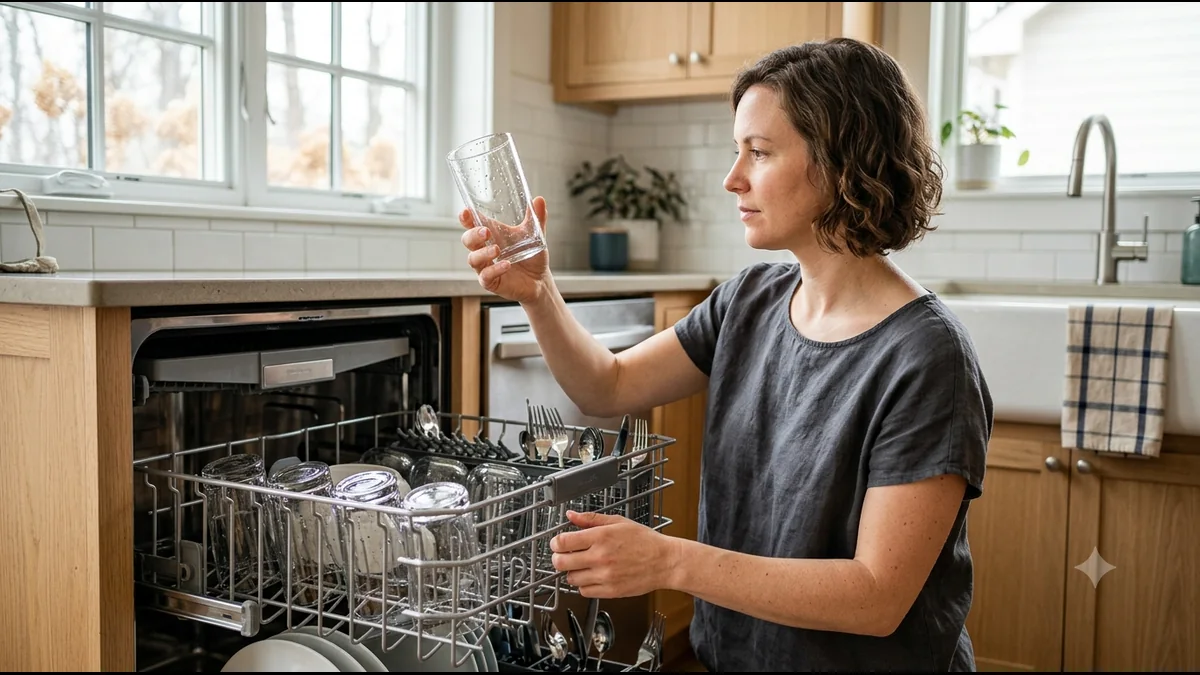
Water spots on your car are a visible, easy-to-photograph symptom of dissolved calcium and magnesium — but they're rarely the only place those minerals show up. The same minerals also build up gradually inside a water heater, cling to shower doors as soap scum, dull glassware in the dishwasher, and leave white residue on faucets over time.
A whole-home softener addresses the shared cause: it exchanges calcium and magnesium out of the supply before it reaches any tap, hose bib, or appliance. Softened water carries far less mineral residue than untreated water, so spotting on the car, streaking on glassware, and buildup on fixtures all drop off together instead of needing a separate fix for each symptom. Pairing the softener with a carbon stage also handles what softening alone never touches — chlorine or chloramine taste and smell, and disinfection byproducts — so one system covers both the mineral side and the taste-and-odor side.
What about spotting on my windows, siding, and driveway?
The same mineral-laden water coming out of your sprinkler heads and hose leaves windows, siding, and driveway concrete with the same white film wherever irrigation or wash-down water evaporates in place. It typically shows worst on windows near sprinkler spray patterns, on siding just below a hose bib or gutter overflow point, and on driveway sections where puddles dry in direct sun.
The DIY fixes are similar in spirit — squeegee windows dry, keep sprinklers off glass, rinse siding before it dries — but they hit the same limit as the car-washing workarounds: they manage residue after the water has already left the tap. A whole-home softener removes the minerals before water reaches a sprinkler valve or hose bib at all, which is why houses on softened water tend to see less exterior film building up in the first place.
Frequently asked questions
I wash my car every weekend in Fuquay-Varina and still get spots — what am I doing wrong? Your technique is fine — the spots are mineral residue from dissolved calcium and magnesium in the water itself, not a sign of a bad wash. Drying the car immediately with a microfiber towel instead of air-drying will reduce spotting noticeably, and a deionized final rinse helps further. If you want the spotting to stop being a recurring weekend chore, a whole-home softener removes those minerals before the water ever reaches your hose.
My neighbor's water looks different from mine — why would that be in Fuquay-Varina? Fuquay-Varina blends treated water from three wholesale sources, and the mix reaching any address depends on where you are in town and how supply is balanced that day. Two houses a short distance apart can genuinely see different mineral levels. A free water analysis is the only way to know what's coming out of your own hose bib rather than guessing from a neighbor's experience.
Does a water softener make my car spot-free forever? A softener won't guarantee an absolute zero-spot outcome on every wash, but it does remove the calcium and magnesium that cause most spotting, so softened water leaves far less mineral residue behind as it evaporates. Combining a softener with good drying habits — a microfiber towel or air blade right after washing — gets you the closest to spot-free results. The softener addresses the water itself; drying technique still matters for the last bit of evaporation.
Will a softener help with the white marks on my windows and siding too? Yes — the same minerals that spot your car are what's leaving film on windows and siding when irrigation or hose water evaporates on those surfaces. Because a whole-home softener treats water at the point it enters the house, every tap and hose bib it feeds carries less mineral content, which covers windows, siding, and the driveway along with the car.
What's the difference between a water softener and a water filter for this? A softener exchanges calcium and magnesium out of the water through ion exchange, which is what stops mineral spotting and scale buildup. A carbon filter handles a different job — removing chlorine or chloramine taste and odor and disinfection byproducts — which softening alone doesn't touch. An all-in-one whole-home system runs both stages together in a single setup.
How do I find out what's actually in my water before I decide what to do? The most reliable way is a free water analysis, which measures the calcium and magnesium level at your own tap rather than relying on a town-wide average. You can also test at home yourself with the Hach Total Hardness Test Kit, Model 5-B, which reads out in grains per gallon on the same scale used to classify household water hardness. Either approach gives you a real number for your address instead of a guess based on a neighbor's water or a citywide figure that may not describe your specific street.
Get your water tested before you buy another bottle of spray wax
If car spots, window film, and siding residue have become a recurring weekend chore, the fastest way to find out why is to see what's actually in your water. Take the 60-second water quiz or book a free water analysis to get a real reading from your own tap — not a town average, and not a guess. From there, an all-in-one whole-home system pairs softening with carbon filtration to handle both the minerals behind the spotting and the chlorine taste softening alone never touches.
For more on how Fuquay-Varina's blended water supply affects your home overall, see water treatment in Fuquay-Varina, NC. If faucets and glasses in your kitchen are showing the same mineral film as your car, white residue on faucets and glasses covers that symptom in more depth. To measure your own water before deciding anything, see how to test water hardness at home. And if you're weighing a standalone softener against a combined unit, water softener vs. all-in-one system breaks down the difference.
Answer nine practical questions, then request a written quote or well-water analysis.
Start My Water Analysis