
How to Remove PFAS from Drinking Water
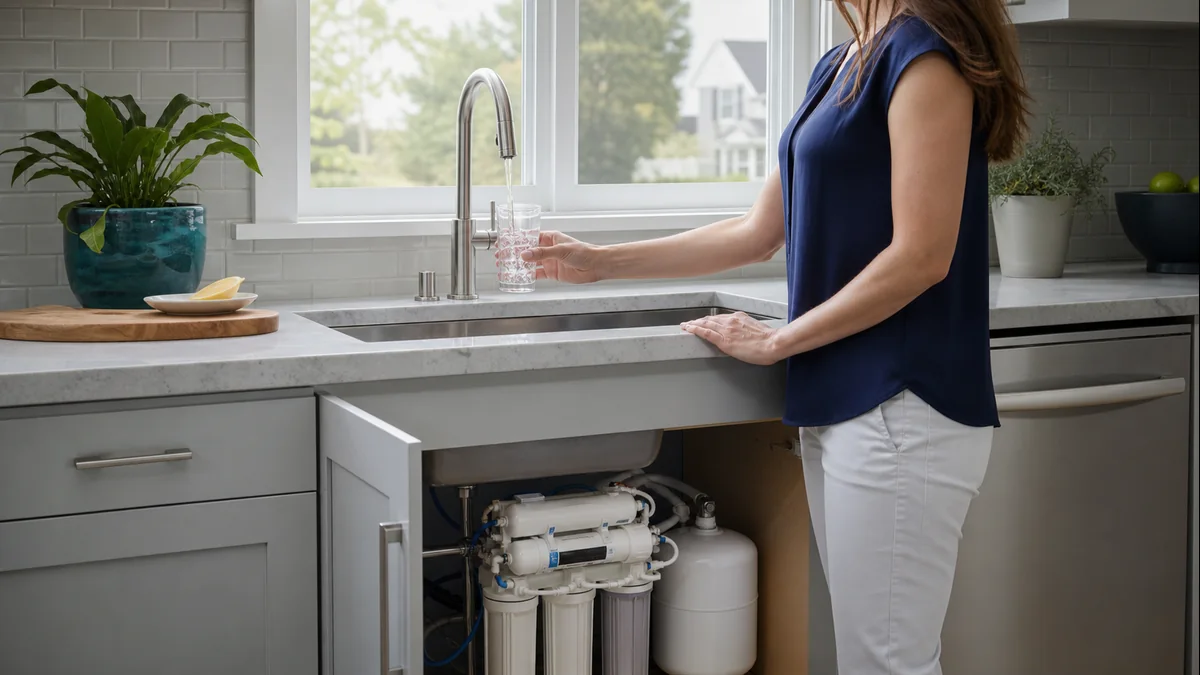
Reverse osmosis certified to NSF/ANSI 58 or P473 removes the most PFAS; NSF/ANSI 53-certified carbon filtration removes a meaningful amount too. Boiling, distilling on a stovetop, and most refrigerator or pitcher filters do not reliably remove PFAS — boiling in particular concentrates PFAS in the remaining water rather than removing it, since PFAS doesn't evaporate off with the steam. The certification number on the filter, not the marketing claim, is what actually tells you what it removes.
What actually removes PFAS from water?
There are two treatment approaches with real certification behind them:
- Reverse osmosis (RO), certified to NSF/ANSI 58 or the newer P473 standard specifically for PFAS reduction. RO pushes water through a membrane fine enough to block PFAS molecules along with most other dissolved contaminants.
- Activated carbon filtration, certified to NSF/ANSI 53, which adsorbs PFAS onto the carbon media. Performance depends heavily on the specific carbon type, contact time, and certification — not all carbon filters are tested or certified for PFAS specifically.
Between the two, RO is the higher-removal option because it doesn't depend as much on contact time or carbon type — the membrane itself is the barrier. Carbon can still meaningfully reduce PFAS when it's actually certified for it, which is why checking the certification (not just the word "carbon" on the box) matters.
Does boiling water remove PFAS?
No — and it can make PFAS concentration worse, not better. Boiling evaporates water, but PFAS compounds don't evaporate along with the steam. As water boils off, the PFAS that was dissolved in it stays behind in a smaller volume of remaining water, concentrating it rather than removing it. The same logic applies to most simple distillation setups without a dedicated PFAS-rated step. If PFAS is your concern, boiling is not the fix.
Does a pitcher or fridge filter remove PFAS?
It depends entirely on the specific filter's certification — not the brand or the fact that it says "filter" on it. Most standard pitcher and refrigerator filters are certified for taste and chlorine (NSF/ANSI 42), not PFAS. Unless the specific model is independently certified to NSF/ANSI 53 for PFAS reduction, don't assume it's doing anything for PFAS at all.
How do I check if a filter is actually certified for PFAS?
| Certification | What it verifies | What to look for |
|---|---|---|
| NSF/ANSI 53 | Health-effect contaminant reduction, including PFAS if specifically tested | The filter must be tested for PFAS specifically, not just certified generally |
| NSF/ANSI 58 | Reverse osmosis system performance | Standard RO certification, widely used |
| NSF/ANSI P473 | PFOA/PFOS reduction, specific to PFAS | The most directly PFAS-focused certification available |
The certification claim on a product page isn't enough on its own — verify it against NSF's public listings database (listings.nsf.org), which lets you search by manufacturer, model, and the specific contaminant reduction claim. If a filter's PFAS claim doesn't show up in the actual listing, treat the marketing claim skeptically.
Why does this matter for Triangle-area homeowners specifically?
Cary and Apex draw drinking water from Jordan Lake, and a 2017 Duke University sampling effort measured combined PFAS levels above 200 parts per trillion in that source water. Cary's own system data (via EWG's Tap Water Database) shows PFOA at 2.86 ppt — about 32 times the applicable EWG health guideline — and PFOS at 3.79 ppt, about 13 times its guideline. Raleigh Water, serving Raleigh and surrounding towns, shows the same contaminant classes at different levels. None of this means the water is illegal to drink — it means legal limits and health-guideline levels aren't the same number, and homeowners who want to close that gap need treatment that's actually certified for PFAS, not just labeled "filter."
What's the practical setup that handles PFAS?
For drinking and cooking water specifically, an under-sink RO system certified to NSF/ANSI 58 or P473 is the most direct fix — it treats water at the point you actually consume it. Whole-home carbon filtration, when it's certified for PFAS reduction, adds broader coverage across every tap in the house, including showers, which matters since disinfection byproducts (a separate contaminant class) are also present in Triangle tap water and are relevant to inhalation exposure, not just drinking.
FAQ
What's the single most effective way to remove PFAS from tap water at home? Reverse osmosis certified to NSF/ANSI 58 or P473 is the most effective widely available home option, since the membrane physically blocks PFAS molecules rather than relying on adsorption alone.
Is bottled water safer than tap water for PFAS? Not automatically — bottled water isn't required to be tested for PFAS the same way municipal tap water is monitored, and PFAS contamination has been found in some bottled water too. Certified filtration is a more verifiable answer than assuming bottled water is clean.
Does freezing water remove PFAS? No. Like boiling, freezing doesn't chemically remove or break down PFAS compounds — it's not a documented removal method.
How do I know if my specific filter is certified for PFAS? Check the model against NSF's public listings database at listings.nsf.org, searching for the specific contaminant reduction claim, not just the general certification number.
Do I need both an RO system and a whole-home carbon filter? Not necessarily — it depends on whether you're only concerned with drinking/cooking water (RO at the sink is often enough) or with water quality at every tap, including showers (which is where a whole-home carbon system adds value).
Want to know exactly what's in your water before choosing a filter? Take the 60-second water quiz — Triangle Waterworks's whole-home systems include an under-sink RO unit, so drinking water and whole-home coverage are handled together.
Related reading: Does activated carbon remove PFAS? · NSF certifications for water filters, explained · Does boiling water remove PFAS? · Whole-house water filter cost in Raleigh
Answer nine practical questions, then request a written quote or well-water analysis.
Start My Water Analysis