
Iron in Well Water: Why It Turns Everything Orange
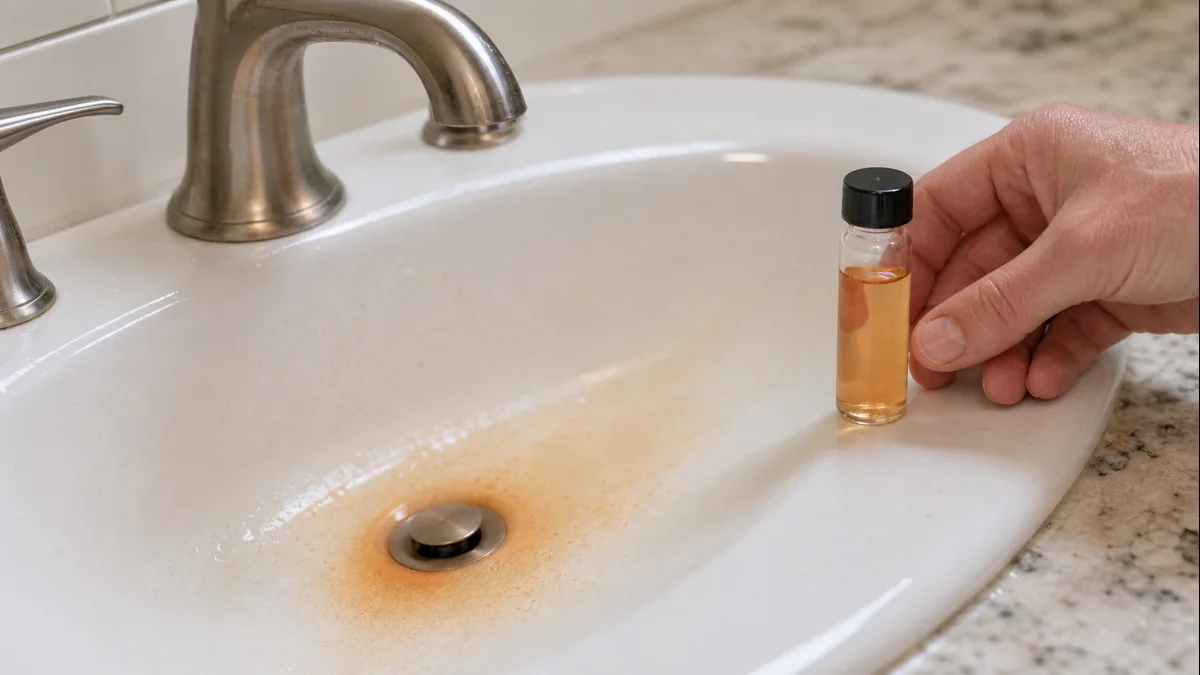
Orange or rust-colored stains on sinks, tubs, toilets, and laundry are almost always dissolved iron in your well water. Iron levels above roughly 0.3 ppm (parts per million) are enough to stain fixtures — a level far below anything that would make the water unsafe to drink. The permanent fix is an air-injection oxidation (AIO) system, which handles iron up to about 15 ppm without adding any chemicals.
Why does well water stain everything orange?
Groundwater picks up dissolved iron as it moves through soil and rock. As long as the iron stays dissolved, the water can look clear coming out of the tap. But the moment it hits air — in a toilet bowl, a sink basin, a washing machine — it oxidizes, turning from clear, dissolved iron into solid rust particles. That rust is what leaves the orange-brown stain on porcelain, tile, and fabric.
This is different from sediment or dirt. Iron staining is a chemical reaction, not just buildup, which is why scrubbing alone never fully solves it — the water keeps depositing new iron every time you run a tap.
How much iron does it take to stain a sink?
Iron concentrations above about 0.3 ppm are enough to cause visible staining over time. That's a very low threshold — many NC wells run well above it without the homeowner realizing until stains show up. Higher iron (several ppm or more) stains faster and more visibly, and can also affect taste, giving water a metallic edge.
Can iron in well water turn hair orange?
Yes. The same oxidation process that stains porcelain can tint light or gray hair orange or reddish with repeated exposure to iron-heavy well water in the shower. It's cosmetic, not caused by anything toxic in the water — but it's often the symptom that finally gets a household to test.
How do you remove existing iron stains?
For stains that are already there:
- Commercial rust removers (sold as "iron out" or similar products) are formulated specifically to dissolve iron oxide and are the most effective option for porcelain and tile.
- Lemon juice or citric acid can loosen lighter staining on non-porous surfaces.
- Avoid bleach and most all-purpose cleaners — they don't break down iron oxide and can sometimes set the stain further.
None of these are a permanent fix. As long as iron is dissolved in the water supply, stains come back.
What's the permanent fix for iron in well water?
| Iron level | Typical approach |
|---|---|
| Low-moderate (stains, but water tests clear-ish) | Air-injection oxidation (AIO) system |
| Higher iron (up to ~15 ppm) | AIO system — introduces oxygen to precipitate iron out, then filters it, no chemicals |
| Very high or combined with other issues | Needs a comprehensive water test to confirm the right treatment train |
An air-injection oxidation system works by introducing air into the water, which oxidizes the dissolved iron into solid particles before it reaches your fixtures — then filters those particles out. It handles iron up to roughly 15 ppm without chemical feed, which covers the majority of residential well iron problems in this area.
If your test comes back with iron beyond what a standalone AIO system is rated for, or iron alongside sulfur odor or hardness, the fix usually involves combining that oxidation stage with additional treatment — which is exactly what a full water analysis is for.
What this means for well owners in the Triangle area
Iron staining is one of the most common well complaints we see across Wake, Johnston, Franklin, Chatham, and Granville counties — anywhere groundwater runs through iron-bearing soil and rock, which is most of central NC. It's rarely a standalone issue: iron often shows up test alongside pH or hardness problems, which is why a comprehensive panel (not just an iron strip test) matters before you buy equipment.
FAQ
Is iron in well water dangerous to drink? Iron staining is a cosmetic and taste issue at the levels most wells produce, not a health hazard. See our full breakdown in is iron in well water dangerous.
Will a water softener fix iron staining? Softeners are built to remove hardness minerals, not iron, and can get fouled by iron over time if it's the primary issue. Iron needs its own oxidation stage first.
Does boiling or filtering with a pitcher remove iron? No. Iron staining requires whole-home treatment at the point where water enters the house — a pitcher filter only treats a glass at a time and won't stop staining in your tubs or laundry.
How do I know if it's iron or something else staining my fixtures? Orange/rust-brown = iron. Blue-green staining is a different issue entirely — corrosion from acidic (low pH) water. See blue-green stains well water if that's what you're seeing.
How much does an iron treatment system cost? Triangle Waterworks well systems are sized and quoted based on what your specific water needs — determined by a free water analysis, not a guess.
Get a free well water analysis
Before buying any iron filter, get your water tested. A free Triangle Waterworks water analysis checks iron, pH, hardness, sulfur, and TDS so you treat what's actually in your water — not just what stains you can see. See the well water treatment guide for NC for how iron fits into the bigger picture, or read about how air-injection iron filters work in more detail.
Answer nine practical questions, then request a written quote or well-water analysis.
Start My Water Analysis