
Is a Water Softener Worth It in Cary, NC?
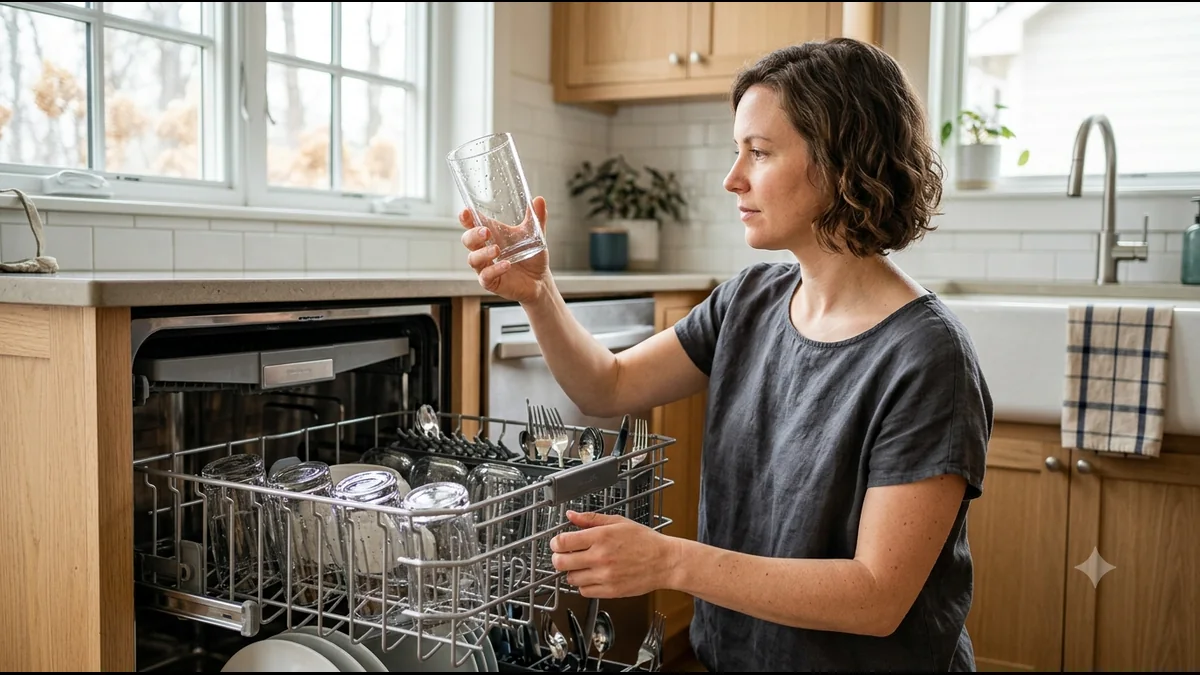
Direct answer: Yes — Cary is the strongest case for a water softener in our service area. Our testing measures 1.6–3.7 gpg across Cary ZIP codes; at the top of that range, 3.7 gpg (~63 mg/L) crosses into moderately hard on the WQA scale, above Cary's own 25–30 ppm plant figure. Add the 2025 CCR's TTHM and HAA5 levels, and the honest answer is an all-in-one softening-plus-carbon system.
Is a water softener actually worth it in Cary, NC?
Yes, and Cary is the clearest "yes" in the whole Triangle corpus, not just a generic one. Our own testing across Cary addresses measures 1.6 to 3.7 grains per gallon (gpg), and the top of that range crosses a real threshold on the water-treatment industry's own scale — into "moderately hard," not just a mild trace of minerals.
That's before the second half of the case even starts. Cary's supply also carries chlorine/chloramine, disinfection byproducts, and detectable PFAS — none of which a softener touches on its own. That combination is exactly why the honest recommendation for Cary is a whole-home system that pairs softening with a carbon stage, not softening alone.
How hard is Cary's water, really — why do two different numbers exist?
Both numbers are real, and neither one is wrong — they're measuring different things. The Town of Cary's own Public Works FAQ states finished water hardness runs 25–30 ppm, which the Town describes as very soft. Triangle Waterworks measures 1.6–3.7 gpg (roughly 27–63 ppm) in homes across the Cary service area — a wider, higher range at the top end.
Two honest reasons explain the gap, and neither involves the Town understating anything:
- Different scales. Cary's figure uses a general soft/very-soft framing. We classify on the Water Quality Association (WQA) scale — the same one the Hach Total Hardness Test Kit, Model 5-B, reads out on — which has a distinct "slightly hard" and "moderately hard" band that a plain soft/hard label doesn't capture.
- Plant average vs. your actual tap. Cary's number is an average for water leaving the treatment plant. What arrives at a specific address varies across the distribution system, and our measurements run as high as 3.7 gpg — which is why the number that actually matters is the one from your own tap, not the town-wide average.
What does "moderately hard" mean on the scale we use?
It means real, measurable mineral content — not a trace amount. Here's the Water Quality Association (WQA) 5-tier scale, the same one the Hach Model 5-B kit reads out on:
| Classification | Grains per gallon (gpg) | ppm (mg/L CaCO₃) |
|---|---|---|
| Soft | <1.0 | <17 |
| Slightly hard | 1.0–3.5 | 17–60 |
| Moderately hard | 3.5–7.0 | 60–120 |
| Hard | 7–10.5 | 120–180 |
| Very hard | >10.5 | >180 |
At 1.6 gpg, a Cary address sits in the slightly hard band. At 3.7 gpg (~63 mg/L), it crosses the 60 mg/L line into moderately hard — the strongest verified hardness figure anywhere in our service area. Where your specific address falls in that range determines how much scale you're actually accumulating.
What is a softener protecting against in a Cary home, day to day?
Calcium and magnesium don't pass through a home unnoticed — they deposit on anything the water touches repeatedly, and that buildup compounds year after year rather than resetting. A softener uses ion exchange to pull those minerals out before they reach your water heater, dishwasher, washing machine, or fixtures.
Homeowners in the moderately-hard end of Cary's range typically notice:
- Dishes and glassware come out of the dishwasher without spotting or film
- Soap and detergent lather more easily, so you use less of both per load
- Skin and hair feel less dry and tight after a shower
- Laundry comes out softer, and colors hold longer over repeated washes
- Faucets and glass shower doors stay clearer of mineral spotting instead of building scale
See what soft water protects in a Cary home for the fuller appliance-by-appliance case.
Does softening handle the chlorine taste and PFAS in Cary's water too?
No — and this is the half of the case hardness alone doesn't cover. Cary sources from Jordan Lake and disinfects primarily with chloramine, formed at the jointly owned Cary/Apex Water Treatment Facility. A softener is ion exchange for calcium and magnesium only; it has zero effect on chlorine taste, disinfection byproducts, or PFAS.
Cary's 2025 Annual Water Quality Report shows total trihalomethanes (TTHM) averaging 37 ppb, ranging up to 43, and haloacetic acids (HAA5) averaging 17 ppb, ranging up to 17, against legal limits of 80 and 60 ppb. It also shows PFOA averaging 1.3 ppt, from a plant whose treatment train includes powdered activated carbon added to the raw Jordan Lake water.
EPA's National Primary Drinking Water Regulations table lists TTHM's potential health effect from long-term exposure above the legal limit as "liver, kidney or central nervous system problems; increased risk of cancer," and HAA5's as "increased risk of cancer." Cary's water is legally compliant.
But "compliant" is a ceiling set by EPA's own risk tolerance, not a guarantee of zero risk. Those are the exact compounds EPA had in mind when it drew that line, and a carbon stage removes them rather than relying on staying under a limit.
Softener alone vs. an all-in-one system — what changes for a Cary address?
| Softener only | All-in-one (softening + carbon) | |
|---|---|---|
| Moderately hard water at the top of Cary's range | Addressed | Addressed |
| Water heater and appliance scale protection | Yes | Yes |
| Chlorine/chloramine taste and odor | Not addressed | Addressed |
| TTHM / HAA5 disinfection byproducts | Not addressed | Addressed |
| PFAS | Not addressed | Addressed via carbon certified for PFAS or RO |
| Installer | NC-licensed plumber (NCGS §87-21) | NC-licensed plumber (NCGS §87-21) |
Given both halves of Cary's case — real hardness at the top of the range, plus a documented chlorine/DBP/PFAS profile — softening alone leaves half the job undone. That's the reasoning behind the all-in-one system, not a sales add-on tacked onto a softener quote.
How do I find out where my own address actually falls?
A free water analysis is the only way to get a number specific to your tap rather than a town-wide average. A technician tests your actual water and walks your plumbing before anything gets sized. If you want a DIY read in the meantime, the Hach Total Hardness Test Kit, Model 5-B (Drop Count Titration), reads out in grains per gallon on the same WQA scale used throughout this article.
Buildup and disinfection byproducts don't pause while a number stays unconfirmed — every year without a test is another year of accumulation on your water heater and fixtures. Take the 60-second water quiz to see what your Cary address likely needs, or book the free analysis directly to get an exact reading.
FAQ
Is a water softener actually worth it if Cary calls its water "very soft"? Yes. Cary's 25–30 ppm figure is a plant average on a general soft/very-soft framing, while our testing measures up to 3.7 gpg (about 63 mg/L) at specific addresses — which crosses into "moderately hard" on the WQA scale the industry uses. Both numbers are accurate; they're measuring different things, and the address-level reading is the one that determines what your home actually needs.
I just moved to Cary and my dishwasher leaves spots on every glass — is that hardness? It very likely is. Spotting on glassware is a classic sign of calcium and magnesium reacting with detergent residue during the dry cycle, and it's common at the moderately hard end of Cary's measured range. A free water analysis confirms your exact number, and a softener addresses the spotting directly.
I've heard Cary's water is disinfected with chloramine — does a softener deal with that smell or taste? No. A softener is ion exchange for calcium and magnesium only, with no effect on chlorine or chloramine taste. That's specifically what the carbon stage in an all-in-one system removes, alongside the disinfection byproducts documented in Cary's own 2025 water quality report.
Does a softener remove PFAS from Cary's water? No. Softening resin doesn't interact with PFAS at all. Cary's 2025 report shows PFOA averaging 1.3 ppt in finished water — removing it requires carbon certified for PFAS (NSF/ANSI 53 or P473) or reverse osmosis (NSF/ANSI 58), which is why the all-in-one system pairs a carbon stage with softening rather than selling either alone.
Is Cary's hardness actually higher than Raleigh's? At the top of the measured range, yes. Raleigh's 2025 CCR shows hardness averaging about 1.3–2.1 gpg, while our testing measures up to 3.7 gpg across Cary — the highest verified figure in our service area, and the point where it crosses from slightly hard into moderately hard.
Will a softener actually pay for itself, or is that overstated for a town this "soft"? The mechanism doesn't depend on marketing language — mineral deposits accumulate wherever water above roughly 1 gpg repeatedly contacts a water heater, fixtures, or appliances, and that buildup compounds every year it goes untreated. At the moderately hard end of Cary's range, that accumulation is faster than in a genuinely soft-water town, which is exactly why Cary is the strongest case in our service area rather than the weakest.
Sources
- US EPA — National Primary Drinking Water Regulations
- Town of Cary — 2025 Annual Water Quality Report
- Town of Apex — 2024 Annual Drinking Water Quality Report
Related reading: Water Treatment Company Near Me in Cary, NC | Is a Water Softener Worth It in North Carolina? | Water Softener Cost in Cary, NC | The Triangle NC PFAS / Forever Chemicals Explainer | Does Soft Water Protect Appliances in Cary, NC?
Answer nine practical questions, then request a written quote or well-water analysis.
Start My Water Analysis