
Does Water Hardness Affect How Much Laundry Detergent You Need in the Triangle, NC?
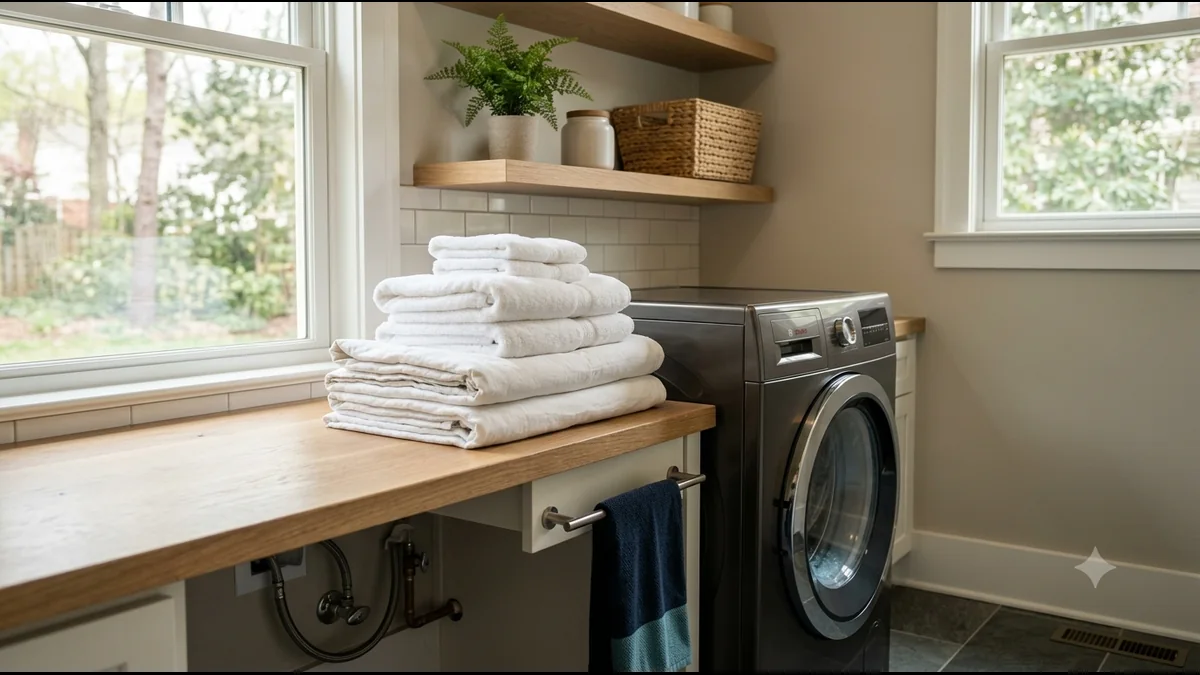
Direct answer: Yes. Calcium and magnesium bind detergent surfactants before they reach the fabric, so part of every scoop neutralizes minerals instead of lifting soil. Triangle mineral content varies by ZIP, from slightly hard to moderately hard on the water-treatment industry's scale. Softening removes those minerals first, so detergent goes further and towels stay brighter over years — the softening side of the whole-home system handles it while the carbon side handles chlorine and PFAS.
How do minerals actually interfere with detergent?
Detergent works by using surfactant molecules to surround soil and grease so they rinse away in the wash water. Calcium and magnesium ions get in the way of that process — they react with the surfactants first, forming a mineral-soap compound instead of letting the surfactant do its job on your clothes. The more mineral content in the water, the more of every dose is consumed this way before any actual cleaning happens. That's the mechanical reason a load can come out of the wash looking less clean than the detergent label promises, even when you've used the recommended amount.
The same minerals don't just neutralize detergent in the moment — they also settle into fabric fibers over hundreds of wash cycles. That's a separate, cumulative process from the detergent-binding effect, and it's the one that's easiest to see with your own eyes over time.
How hard is the water in Raleigh, Cary, Apex, and Morrisville?
Hardness in the Triangle isn't one number — it varies by town and, within a town's own distribution system, by ZIP code. Here's what's published and what we measure directly in homes.
| Water system | Published or measured hardness | WQA/Hach classification | Towns served |
|---|---|---|---|
| Raleigh Water | ≈1.6 gpg (utility FAQ: usually under 30 mg/L) | Slightly hard | Raleigh, Garner, Knightdale, Wake Forest, Wendell, Rolesville, Zebulon |
| Town of Cary | 25–30 ppm ≈ 1.5–1.75 gpg (published) | Slightly hard | Cary, and Morrisville by way of Cary's system |
| Town of Apex | 33.3 ppm ≈ 1.9 gpg (published, 2024 report) | Slightly hard | Apex |
| Triangle Waterworks testing | 1.6–3.7 gpg, varies by ZIP | Slightly hard to moderately hard | Across the service area |
Two things are true at once here, and neither contradicts the other. The towns publish a plant-average figure for water as it leaves the treatment facility, described in their own reports as soft to moderately soft on the scale they use. We classify the same measured range on the Water Quality Association scale the Hach test kit uses, where 1.0–3.5 grains per gallon is slightly hard and 3.5–7.0 is moderately hard — so the identical 1.6–3.7 gpg reads as slightly hard to moderately hard on the water-treatment industry's own scale. It's a difference in scale and in measurement point, not a disagreement about the numbers. What actually comes out of a specific tap depends on where that address sits in the distribution system, which is why the range runs as high as 3.7 gpg at the top end even though every town's own plant average sits lower.
For laundry specifically, what matters is the number at your washing machine's inlet, not the citywide average — a home near the top of that 1.6–3.7 gpg range is doing meaningfully more mineral-neutralizing work with every load than a home near the bottom.
Why do towels and whites show it before anything else?
Towels and whites are the most-washed, most-repeated textiles in most households, which makes them the earliest visible marker of a cumulative process. Every wash cycle deposits a small amount of mineral residue into the fabric fibers, on top of whatever detergent didn't get to do its job that load. Individually, one wash makes no visible difference. Stacked across years of laundry, it does — towels lose the soft feel they had new and start to feel stiff or scratchy, and whites gradually shift from bright to a duller shade rather than staying crisp.
This is the honest, gradual version of the story, and gradual is exactly the point: the effect isn't dramatic in any single load, which is also why it's easy to miss until you compare an older towel to a newer one washed in the same machine. Softened water changes both halves of the problem at the source — less mineral content to bind detergent means more of every dose is actually available to clean, and less mineral content depositing in the fibers means the stiffening and dulling process slows down.
Does hot water make the problem worse?
Hot-water washes concentrate the effect, and not just on the clothes. Heat accelerates the mineral reactions that happen in hard-to-moderately-hard water, and it also promotes scale formation inside the washing machine itself — on the heating element in machines that heat their own water, and along the drum and internal plumbing. Scale buildup inside the machine is a separate mechanical issue from what happens to the clothes, and it compounds over the same years of laundry. A washer running mineral-laden hot water is dealing with buildup in two places at once: the appliance and the fabric.
Is fabric softener a real fix?
Fabric softener works around the fabric-feel symptom rather than fixing what's causing it. It coats fibers with a lubricating layer to make towels and clothes feel softer to the touch, which can mask the stiffness that mineral deposits cause. But it doesn't stop those minerals from binding detergent surfactants in the wash, and it doesn't stop them from continuing to deposit in the fibers underneath the softener coating. It's a per-load patch you have to keep buying and keep applying, not a change to the water causing the problem in the first place. Softening the water addresses the mineral content directly, so there's less for a fabric softener to compensate for to begin with.
Does softening handle everything in my wash water?
No — softening resin is built specifically for calcium and magnesium, the minerals that cause the detergent and fabric effects above. It does nothing about chlorine, chloramine, PFAS, or the disinfection byproducts your municipal water supplier adds or that show up in treated tap water — those need activated carbon. That's why the system Triangle Waterworks installs pairs softening resin with a carbon stage in one whole-home unit: the softening side protects detergent performance, fabric feel, and the appliances themselves, while the carbon side handles taste, odor, and the compounds softening was never designed to touch. Neither half substitutes for the other.
How do I find my own home's exact hardness number?
Town-published averages are a starting point, not an answer for your specific address, since the measured range across the service area runs from slightly hard to moderately hard depending on ZIP code. The most reliable way to know where your home falls is a hardness test at your own tap. We recommend the Hach Total Hardness Test Kit, Model 5-B (Drop Count Titration) for at-home testing — it reads out in grains per gallon on the same WQA scale used throughout this article, so the number you get matches the classification system your softener sizing is based on. A free water analysis gets you the same answer with no guesswork, plus a system sized to your actual number rather than a townwide average.
Frequently asked questions
I just moved into a home in Cary and my towels already feel stiff after a few washes — is that normal? Yes, that's consistent with ongoing mineral deposit in the fibers rather than anything wrong with your machine or detergent. Cary's own reported hardness is on the lower end of the Triangle's range, but individual addresses can run higher depending on where they sit in the distribution system. A quick at-home test or a free water analysis will tell you your actual number.
I use extra detergent already because my clothes never seem fully clean — should I just keep adding more? Adding more detergent means more of it gets consumed by the same mineral-binding reaction, so you're often paying for more of the problem rather than solving it. Addressing the mineral content itself, through softening, changes how much of each dose is actually available to clean instead of requiring you to keep increasing the amount.
Does water hardness affect front-load washers differently than top-load machines? The mineral-binding effect on detergent happens in the wash water regardless of machine type, and heating-element scale is more relevant to machines that heat their own water internally. Front-load and top-load machines both accumulate the same fiber-deposit and appliance-scale effects over repeated hot washes in mineral-bearing water.
I have a newer high-efficiency washer — does that change any of this? High-efficiency machines use less water per load, which means the same mineral concentration is working on a smaller volume of wash water and a smaller amount of detergent. The underlying chemistry doesn't change; softened water still lets a high-efficiency machine's detergent go further per load.
Can I fix this by switching detergent brands instead of treating the water? Some detergents are formulated to perform better in mineral-heavy water, but no detergent formulation stops calcium and magnesium from depositing in fabric fibers over time. Switching brands can help at the margins; treating the water addresses both the detergent-binding and the fiber-deposit issues at the source.
I noticed my whites look duller than they used to even though I use the same detergent and settings — what changed? Nothing about your routine likely changed — the mineral deposit process is cumulative, so the same wash routine produces a visible difference only after enough cycles have passed. It's the same mechanism the rest of this article describes, and it's the reason older towels and whites show the effect before newer ones do.
Ready to see your home's actual hardness number and how a whole-home system would handle it? Take the quiz for a free water analysis.
Related reading: How hardness varies by town across the Triangle · How to test your water's hardness at home · The full benefits of soft water in the home · How scale builds up inside a water heater · Soft water and laundry in Wake Forest
Answer nine practical questions, then request a written quote or well-water analysis.
Start My Water Analysis