
Does Wake Forest, NC Water Have PFAS?
Direct answer: Wake Forest doesn't run its own plant — it's supplied by Raleigh Water, whose 2025 lab results show finished water with PFOS up to 2.98 ppt and PFOA up to 2.94 ppt, both under the EPA's 4.0 ppt limit but detected. Boiling doesn't remove PFAS; carbon does. An all-in-one system handles that plus chlorine byproducts and the hardness minerals a softener alone misses.
Does Wake Forest, NC water have PFAS?
Yes, in low but measurable amounts. Wake Forest buys its finished water from Raleigh Water, and Raleigh Water's own 2025 Perfluorinated Compounds Data Results — quarterly lab tests at its two treatment plants — show PFOS in finished water ranging from 1.15 to 2.98 ppt and PFOA ranging from 2.21 to 2.94 ppt across the year.
Both compounds stayed under the EPA's Maximum Contaminant Level of 4.0 ppt each in every quarter tested. That's a real, current, primary-source result — not an estimate — and it's genuinely different from "none detected." Low-level PFAS is present in the water reaching Wake Forest homes, and it's legally compliant at the same time. Both things are true.
Raleigh also tested for PFBS (2.58–3.14 ppt), PFHxS (non-detect to 0.996 ppt), and PFNA and GenX (HFPO-DA), which came back non-detect at both plants all year. None of these three are individually regulated yet, but they feed into a combined Hazard Index. Raleigh's own results sheet states that the Hazard Index running annual average does not exceed 1 and that no violation of the Hazard Index MCL has occurred.
Why does Wake Forest rely on Raleigh Water's testing instead of its own?
Because Wake Forest isn't the water source — Raleigh Water is. Wake Forest is one of several towns on Raleigh's distribution system, alongside Raleigh, Garner, Knightdale, Rolesville, Wendell, and Zebulon, so every household on that system drinks the same finished water tested at Raleigh's E.M. Johnson and D.E. Benton treatment plants. There's no separate Wake Forest sample to pull.
That's useful to know when you're comparing water-quality claims online: a number that says "Wake Forest" but doesn't cite Raleigh Water as the source is not tracing back to an actual test.
Does boiling water remove PFAS from Wake Forest tap water?
No — and this is the mistake that matters most. PFAS compounds don't break down or evaporate at boiling temperatures. As the water boils off, the PFAS stays behind in a shrinking volume of liquid, which means boiling can concentrate it rather than remove it.
Boiling is effective against biological contaminants like bacteria, not persistent chemical compounds like PFAS. If PFAS is your concern, boiling isn't just unhelpful — it actively works against you.
What actually removes PFAS from water?
Two treatment technologies are certified to reduce PFAS, and neither is a standard water softener:
- Activated carbon certified to NSF/ANSI 53 or NSF/ANSI P473 — water passes through carbon media that adsorbs PFAS molecules as it flows through.
- Reverse osmosis certified to NSF/ANSI 58 — a membrane fine enough to physically block PFAS molecules from passing through.
A standard water softener does neither. Softeners run on ion exchange, swapping calcium and magnesium ions for sodium ones — a mineral-hardness fix with zero effect on PFAS, chlorine, or disinfection byproducts. That's exactly why a softener-only setup leaves half the water-quality picture untouched, and why an all-in-one system pairs a certified carbon stage with the softening resin instead of selling one without the other.
Does Wake Forest's water have other issues besides PFAS?
Yes, and they're worth addressing in the same system rather than one at a time. Raleigh Water's supply — the same water Wake Forest receives — shows up in the EWG Tap Water Database at HAA9 19.9 ppb and TTHM 21.7 ppb. Both are disinfection byproducts, both are legally compliant, and neither is something a softener touches.
"Legally compliant" is a ceiling the EPA set, not proof of zero risk. EPA's own National Primary Drinking Water Regulations table lists the potential health effect from long-term exposure to TTHMs above the MCL as "liver, kidney or central nervous system problems; increased risk of cancer," and HAA5's listed effect as "increased risk of cancer."
Those are the exact compounds EPA had in mind when it drew that legal line — and a certified carbon stage removes them rather than relying on staying under the limit.
Raleigh Water also normally disinfects with chloramine, then switches to free chlorine for several weeks once a year on the N.C. Department of Environmental Quality's recommendation, flushing the distribution system as part of the changeover. Chlorine residual and taste run noticeably higher during that stretch — the same carbon stage that handles PFAS and DBPs handles that too.
Is Wake Forest's water hard on top of all this?
Yes — slightly hard to moderately hard, depending on ZIP code. Raleigh Water's supply tests around 1.6 grains per gallon (gpg), which lands in the "slightly hard" band on the WQA scale used by the Hach Total Hardness Test Kit, Model 5-B. Our own testing across the service area measures 1.6 to 3.7 gpg by address, with the top of that range crossing into "moderately hard."
Hardness minerals don't cause a health problem, but they're cumulative — scale builds inside a water heater, on fixtures, and on glassware year after year. That's the softening half of the equation, running alongside the carbon half that handles PFAS and disinfection byproducts.
What treats PFAS, disinfection byproducts, and hardness together?
An all-in-one whole-home system, because these are two different problems that need two different technologies working side by side.
| Contaminant | What's verified for Raleigh Water (Wake Forest's supply) | What treats it |
|---|---|---|
| PFOS | 1.15–2.98 ppt (finished water, 2025), MCL 4.0 ppt | Carbon (NSF/ANSI 53 or P473) or RO (NSF/ANSI 58) |
| PFOA | 2.21–2.94 ppt (finished water, 2025), MCL 4.0 ppt | Carbon (NSF/ANSI 53 or P473) or RO (NSF/ANSI 58) |
| TTHM | 21.7 ppb (EWG) | Activated carbon |
| HAA9 | 19.9 ppb (EWG) | Activated carbon |
| Hardness | ~1.6–3.7 gpg, slightly to moderately hard (WQA scale) | Softening resin (ion exchange) |
Softening resin handles the bottom row and nothing above it. A certified carbon stage handles everything above the bottom row and nothing below it. An all-in-one system runs both in one unit, sized to your home after a free water analysis — that's the fix for the whole table, not just one line of it.
How do I find out what's actually in my Wake Forest water right now?
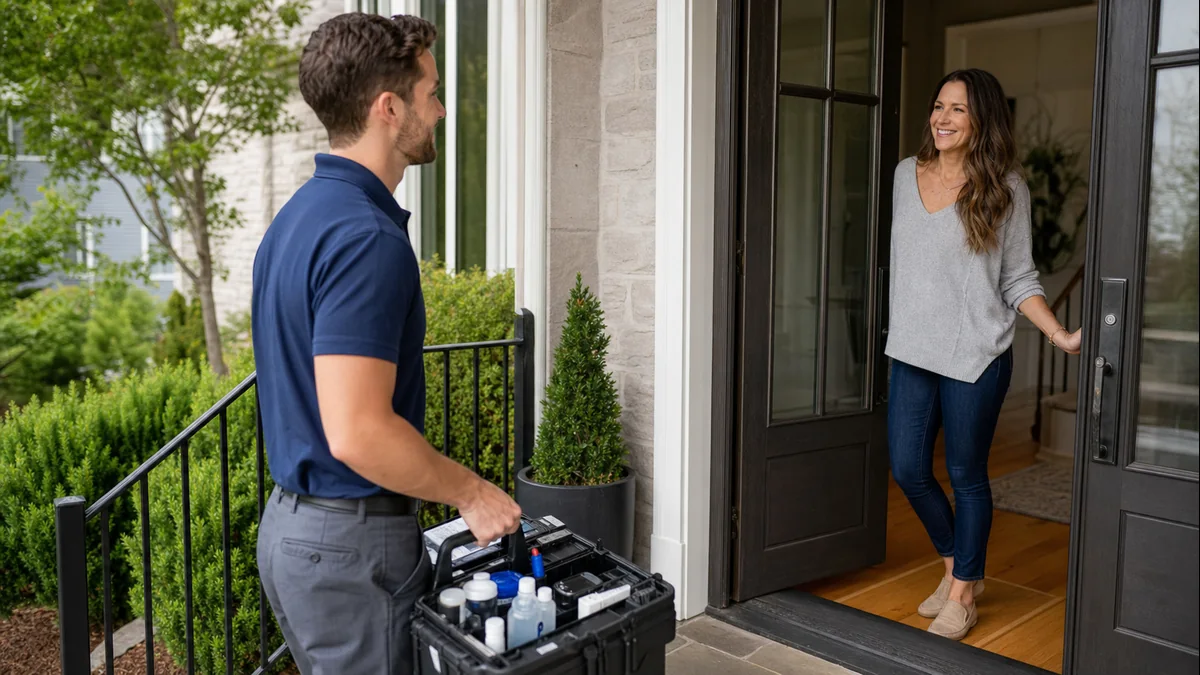
Start with a home hardness check using the Hach Total Hardness Test Kit, Model 5-B (Drop Count Titration) — it reads out in grains per gallon on the same WQA scale used throughout this article, so the number you get at your own tap is directly comparable. For PFAS and disinfection byproducts, a free water analysis is the fastest way to see what's actually reaching your fixtures rather than relying on a citywide average.
Raleigh Water's own PFAS results and EWG's DBP figures describe the finished water leaving the treatment plant — not what's sitting in your specific home's plumbing. That gap is exactly what an address-level test closes, and it's worth closing now rather than guessing.
FAQ
I just moved to Wake Forest and I've been using a pitcher filter — does that handle PFAS? Most basic pitcher filters use plain activated carbon that isn't certified to NSF/ANSI 53 or P473 for PFAS reduction, so it may reduce taste and odor without doing much for PFAS specifically. Check the filter's certification page or NSF's database for a PFAS-specific rating before assuming it covers you, and consider a whole-home carbon stage that's certified for it at every tap.
My neighbor told me boiling water kills whatever's in it — does that work on PFAS too? No, and this is a common mix-up. Boiling kills bacteria and other biological contaminants, but PFAS is a chemical compound that doesn't break down at boiling temperatures — it stays behind as water evaporates, which can concentrate it instead of removing it.
Does Wake Forest test its own water separately from Raleigh's numbers? No. Wake Forest is supplied by Raleigh Water's distribution system, so the PFAS, hardness, and disinfection-byproduct data that applies to Raleigh's finished water applies to Wake Forest households on that system too. There's no separate Wake Forest-only test.
Will my water softener remove any of the PFAS Raleigh Water detected? No. A softener is ion exchange for calcium and magnesium — it has no mechanism for removing PFAS, chlorine, or disinfection byproducts. Removing PFAS requires activated carbon certified to NSF/ANSI 53 or P473, or reverse osmosis certified to NSF/ANSI 58, which is why an all-in-one system pairs both technologies instead of selling softening on its own.
How often does Raleigh Water test for PFAS? Raleigh Water's published Perfluorinated Compounds Data Results show quarterly testing — four rounds a year — at both of its treatment plants, with a running annual average calculated against the EPA's Hazard Index limit. That's more frequent than the federal minimum requires.
What's the fastest way to know exactly what's in my own tap water? A free water analysis measures hardness, chlorine residual, and other conditions at your actual address rather than relying on a citywide average, and it's the basis for sizing an all-in-one system correctly. Pair it with the Hach Model 5-B test kit if you want to verify hardness yourself between visits.
Get your own water tested, not just Raleigh's average
Raleigh Water's own 2025 results show detectable PFAS below the legal limit, real disinfection byproducts, and slightly-to-moderately hard water reaching Wake Forest — three separate issues, one system that handles all of them. Take our 60-second water quiz to see which all-in-one system fits your home, or book a free water analysis today and find out exactly what's coming out of your own tap before you decide what to do about it.
Sources
- City of Raleigh Water — 2025 Perfluorinated Compounds Data Results
- Raleigh Water — Perfluorinated Chemicals Data and Information
- EPA — Per- and Polyfluoroalkyl Substances (PFAS)
- EPA — National Primary Drinking Water Regulations
- EWG Tap Water Database — City of Raleigh (PWS NC0392010)
Related reading: Water Treatment in Wake Forest, NC | Is Wake Forest, NC Water Hard? | How to Remove PFAS from Drinking Water | Does Activated Carbon Remove PFAS from Water? | Does Boiling Water Remove PFAS? No — Here's Why
Answer nine practical questions, then request a written quote or well-water analysis.
Start My Water Analysis