
How to Prep Your Home for a Water Softener Install in Holly Springs, NC
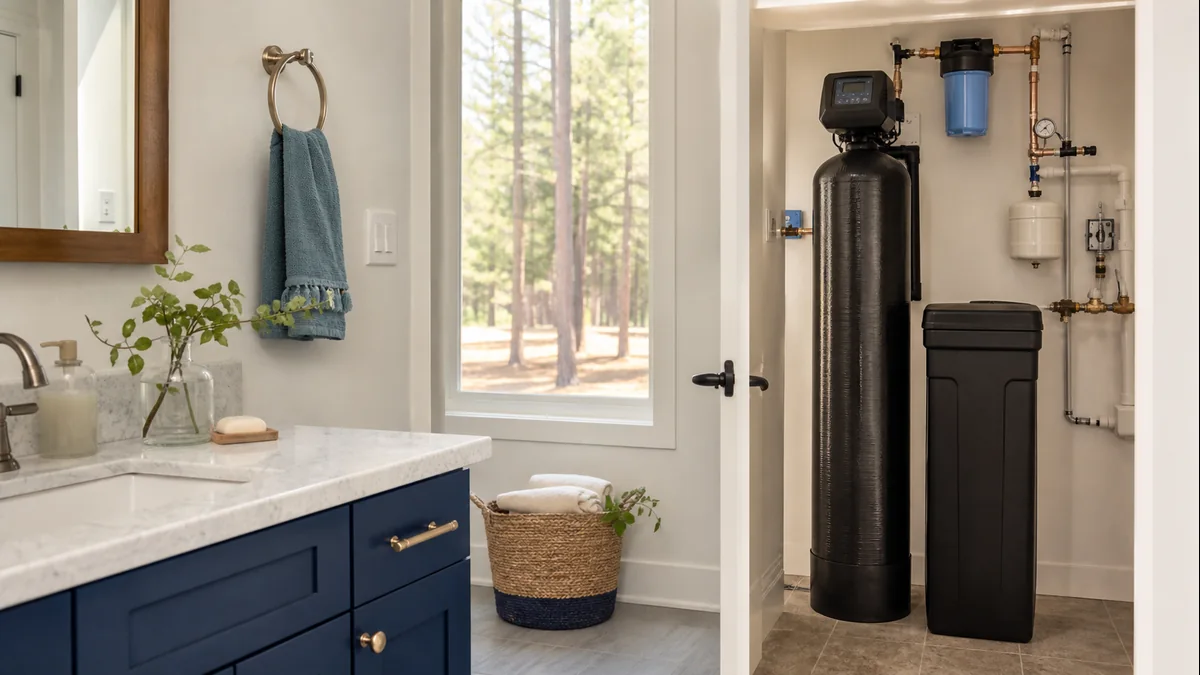
Direct answer: Prepping your Holly Springs home for a water softener install mostly means clearing a path — find where the main water line enters the house, pick a spot downstream of it with room to work, make sure a drain and a standard outlet are nearby, and keep the walkway from your door to that spot open on install day. The installer confirms exact placement, drain routing, and sizing during the visit, and everything starts with a free water analysis so the all-in-one softening-and-carbon system is sized and placed correctly for your home.
You've already decided to move forward — good call, especially on a Cape Fear River surface-water supply like Holly Springs runs on. Here's a short, practical checklist for the days before your installer arrives.
Where Should the Water Softener Go in My House?
The right spot is close to where your main water line enters the home and before it branches off to the rest of the house, so the softening and carbon treatment covers every fixture — kitchen, bathrooms, water heater, washing machine, all of it. Whatever comes after that point in the line has already passed through the system, so placing it too far downstream (past a branch to an outdoor spigot or a separate line) can leave part of the house untreated. In most homes the right point is a garage corner, a basement or utility room, or a dedicated closet, and the installer confirms the exact spot when they see your plumbing layout in person.
- Locate where the main line comes into the house (often near the meter, water heater, or a garage wall)
- Pick a spot downstream of that entry point, before the line splits off to individual fixtures
- Mention any plumbing quirks — additions, separate outdoor lines, multiple water heaters — before install day
What Kind of Space Does the Installer Need Around the Unit?
The installer needs enough clear working room around the chosen spot to maneuver the unit into place, connect the plumbing, and service it later — open floor space around where it will sit, not a spot wedged behind boxes or squeezed under low shelving. You don't need to measure anything precisely; just clear stored items, decorations, or yard tools that have accumulated near the water line. If the spot doubles as storage — common in Holly Springs garages — moving things out a day or two ahead saves time on install morning.
Does the Location Need a Drain Nearby?
Yes — the softening side of an all-in-one system periodically regenerates, and that process needs a drain the installer can route the discharge to. A nearby floor drain, standpipe, or laundry drain typically works, and the installer identifies what's usable and connects to it during the install. See our breakdown of how regeneration actually works for the fuller picture. You don't need to install anything new yourself — this is simply one reason utility rooms and garages tend to be common install spots.
Does the Spot Need to Be Near an Electrical Outlet?
Yes — the system's control valve runs on power, so the location needs a standard household outlet within reach of the unit. Most garages, utility rooms, and basements already have one nearby; if yours doesn't, mention it when you book your analysis so the installer can plan for it rather than discover it on install day. The technician confirms power access as part of the visit.
Does the Floor Need to Be Level or a Certain Type of Surface?
A stable, reasonably level surface is what matters — concrete, tile, or a solid utility room floor all work fine, and the installer checks this on arrival. You don't need to do anything special to the floor yourself beyond making sure it's clear and accessible; if there's an obvious issue like a section that's visibly uneven, cracked, or holds standing water, it's worth mentioning ahead of time.
Garage, Crawl Space, or Utility Closet — Where Do NC Homes Usually Put It?
Most Holly Springs homes land on a garage corner or a dedicated utility closet, since both typically offer easier access to the main line, a drain, and an outlet than a crawl space does. North Carolina homes commonly use crawl space foundations rather than basements, and while a crawl space can sometimes work, tight clearance and harder future-service access usually make an above-ground spot the more practical choice.
| Location | Typical access to plumbing | Drain nearby | Outlet nearby | Ease of future service |
|---|---|---|---|---|
| Garage | Usually straightforward | Often (floor drain) | Usually | Easy — walk-up access |
| Utility closet / laundry room | Straightforward | Often (laundry drain) | Usually | Easy — indoor, climate-controlled |
| Crawl space | Depends on layout | Varies | Often needs adding | Harder — tight clearance |
Whichever space your home has, the installer walks the property during your free analysis and tells you which spot makes the most sense for your specific plumbing — you don't need to guess or decide this yourself ahead of time. Once placement is set, the same visit is where the installer works out sizing; our water softener sizing guide walks through the household-use-and-hardness math once your home's real numbers are in hand.
Do I Need to Shut Off My Water for the Install, and For How Long?
Yes, your main water supply is shut off for part of the install so the installer can safely connect the system, and it's back on well before they leave. The exact timing depends on your home's layout, so the installer gives you a realistic window for your job rather than a generic estimate. Plan around a running-water gap that morning — fill a pitcher ahead of time if you have laundry or another task planned.
What Should I Do the Morning of the Install?
Keep a clear walking path from your front door (or garage entry) straight to the install location, since the installer will be carrying the unit and tools through that route. Move bikes, toys, delivery boxes, or parked cars out of the way if they'd block that path, and secure pets somewhere comfortable — a door propped open during carry-in isn't the moment for a dog to slip out.
- Clear the walkway from the entry point to the install location
- Secure pets away from the work area and any open doors
- Have your gate code, garage code, or access info ready if you won't be home the whole time
What Does the Installer Confirm When They Arrive?
The installer confirms exact placement, the drain connection, the plumbing tie-in point, and final sizing based on your home's actual tested water — all before anything is bolted down. This is also when your free water analysis happens if it hasn't already, since Holly Springs runs on Harnett Regional Water's Cape Fear River supply, a surface-water source with no verified hardness figure on record, so testing your actual tap is the only honest way to know what your home needs.
That surface-water source is also why the carbon side of an all-in-one system matters here — surface water typically needs more disinfection to travel safely from the river to your tap, and carbon filtration handles chlorine taste, smell, and disinfection byproducts that softening resin alone doesn't touch. See our softener-versus-whole-house-filter comparison for why most Holly Springs homes choose a combined system rather than one or the other.
Frequently Asked Questions
My garage is pretty cluttered — how much do I actually need to clear out before the installer comes? Just clear the area right around where the unit will go plus a clean path from your entry point — you don't need to reorganize the whole garage. Anything not directly in the way can stay put.
I have a crawl space instead of a basement — can the softener still go there? It can in some homes, but garages and utility closets are usually easier since they offer better access to a drain, an outlet, and future servicing. Your installer looks at your home's actual layout during the free analysis and tells you which location makes the most sense.
Do I need to hire an electrician or plumber before the installer shows up? No — a standard nearby outlet and existing plumbing are all that's needed in most Holly Springs homes, and the installer handles the plumbing connection as part of the job. If your preferred spot lacks a nearby outlet, just mention it when you book.
How long will my water actually be off during the install? Your water is off for part of the install so the connection can be made safely, and it's restored before the installer leaves — the exact length depends on your home's plumbing layout. Your installer gives you a specific window for your job rather than a generic number.
I'm not sure if my Holly Springs water is even hard enough to justify this — does the installer figure that out too? Yes — Holly Springs runs on Harnett Regional Water's Cape Fear River supply, a surface-water source with no verified hardness figure published, so the free water analysis is how your home's real numbers get measured. That same visit also confirms placement, drain access, and sizing.
What happens if the installer gets there and something doesn't match what we planned? That's normal and part of why the on-site visit exists — the installer adjusts placement, drain routing, or connection details based on what your plumbing actually looks like. Nothing is finalized until they've seen the real setup in person.
Ready for Install Day?
Book your free water analysis so a technician can confirm placement, drain access, and your home's actual water readings before install day — that's the step that determines exact sizing. Or take the 60-second water quiz first to see how your household lines up with an all-in-one softening-and-carbon system. Either way, prep is simple: clear the space, keep the path open, and let the installer handle the rest.
Answer nine practical questions, then request a written quote or well-water analysis.
Start My Water Analysis