
When Should I Install a Water Softener After Buying a House in Raleigh?
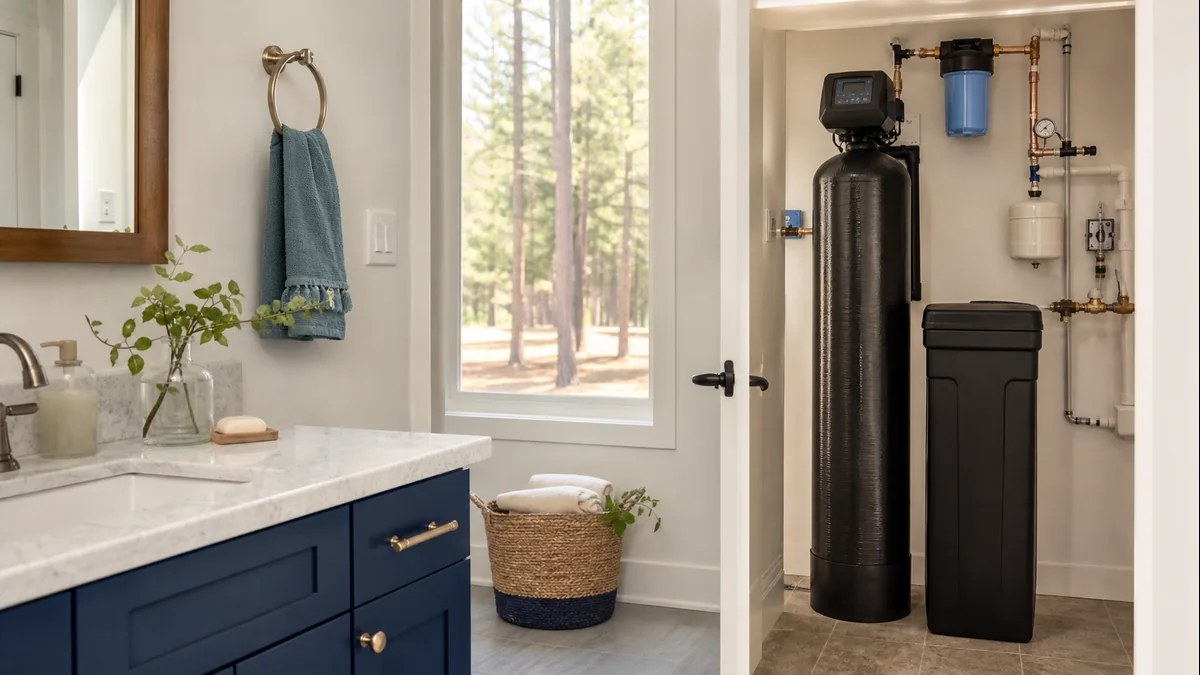
Direct answer: The best time is right after closing, ideally before or during move-in — not months later. An all-in-one softening-and-carbon system protects new-to-you plumbing, the water heater, and appliances from day one, and you get cleaner-tasting water immediately instead of adjusting to whatever the previous owner left behind. Scheduling it alongside your other move-in tasks (utilities, locks, inspections) means one clean visit from a licensed plumber and no retrofitting around furniture or a lived-in kitchen later.
When should I install a water softener after buying a house in Raleigh?
The window that works best is the same week you close, or the week you move in — before boxes are unpacked and while you're already coordinating other home-setup tasks. This isn't about urgency for its own sake: a whole-home system installs cleanly at the main water line regardless of when you do it, so there's no hard deadline. But every week you wait is a week the appliances, fixtures, and water heater in your new house are running without the softening and carbon protection the system provides. Since Triangle water carries dissolved calcium and magnesium (measured 1.6–3.7 gpg across our service area, depending on ZIP) plus chlorine or chloramine for disinfection, both the mineral and the chlorine question start on day one of ownership — not after you've settled in.
Where does a water system fit in my post-closing checklist?
It fits alongside the tasks most new Raleigh homeowners already handle in the first one to two weeks: transferring utilities, rekeying locks, scheduling a home inspection follow-up, and setting up internet. A whole-home water system is a similar category of task — a one-time setup that's easiest to schedule before your daily routine (showers, laundry, dishwasher loads) is fully underway in the new house. Many buyers treat it as part of the same punch list they use for a new-homeowner water softener checklist, since it groups naturally with the rest of the "get the house running the way I want it" tasks rather than sitting apart as its own project.
Why not wait and see how the water feels first?
You can wait, and nothing breaks by doing so — but "wait and see" answers the wrong question. The case for the all-in-one system isn't that Raleigh's water feels obviously harsh (at 1.6 gpg, Raleigh Water is only slightly hard on the WQA scale), it's that mineral buildup and chlorine exposure are cumulative and invisible in the short term. A few months of undetected buildup inside a water heater doesn't announce itself; it just quietly reduces the heater's efficiency and lifespan over years. Waiting to "see how it feels" evaluates a problem that shows up gradually, not the day you move in — so the wait doesn't actually tell you anything useful, it just delays the protection.
What happens if I wait months or years to install?
Nothing dramatic happens on any single day — that's exactly why it's easy to keep waiting. The cost of delay is cumulative, not immediate: every month without softening is another month of calcium and magnesium depositing inside pipes, the water heater tank, and fixture aerators, and every month without carbon filtration is another month of chlorine or chloramine exposure in drinking and cooking water. None of that resets when you finally do install — buildup that's already accumulated stays put, and the system only prevents new accumulation from that point forward. The earlier you start protecting the plumbing and appliances you just bought, the more of their working life you capture.
What does install day look like?
A licensed plumber connects the whole-home system at your home's main water line, typically where it enters the house (garage, basement, or a utility closet, depending on your home's layout). It's a single-visit installation — you don't need to be mid-renovation or have the house torn apart to accommodate it. Because it treats water for the entire home at one point, every fixture, the water heater, the dishwasher, and the washing machine benefit from both the softening and carbon stages without any additional plumbing work at each fixture. This is also why early installation is the clean option logistically: doing it before you've fully moved in means the plumber has clear access to the install location, without navigating around stored boxes or furniture placed in front of it.
How does timing compare across the three common approaches?
| Approach | When it happens | Protection starts | Logistics |
|---|---|---|---|
| Install before/at move-in | Same week as closing | Immediately | Cleanest access, fits the existing move-in punch list |
| Install a few months in | After settling in | Delayed by months | Requires clearing access to the install point around furniture/storage |
| Wait indefinitely ("someday") | No fixed date | Never starts | Buildup and chlorine exposure continue accumulating with no end point |
Does it matter if I'm buying new construction versus an older Raleigh home?
Not for timing — the same logic applies either way, though the plumbing history differs. A new-construction home has brand-new pipes and appliances with zero accumulated buildup, so installing early means you protect that clean slate from the very first day instead of letting even new plumbing start accumulating mineral deposits. An older home may already have some buildup from years of prior ownership; installing early there doesn't undo the existing buildup, but it stops adding to it immediately, which still matters for the water heater's remaining lifespan and every appliance you're now responsible for.
What actually gets installed?
The system Triangle Waterworks installs for city-water homes is an all-in-one unit combining two stages in a single footprint: a softening resin stage that exchanges calcium and magnesium for sodium (protecting against scale buildup) and a carbon filtration stage that addresses chlorine and chloramine taste and odor. Softening alone only handles the mineral side — it does nothing about chlorine, chloramine, PFAS, or disinfection byproducts, which is why the combined system, not a softener by itself, covers both categories of what's actually in Triangle tap water.
Frequently Asked Questions
I just closed on a house in North Raleigh — should I install before I move in?
Yes, if your schedule allows it. Installing before you move in gives the plumber clear access to the main water line without navigating around moving boxes, and it means every appliance you plug in and every fixture you turn on from day one is already protected. If move-in day is too tight to coordinate, the next best window is the first couple of weeks in the house — the earlier, the more protection you capture.
We bought a house in Cary that already has an old softener from the previous owner — do we need to replace it right away?
It depends on the unit's condition and how it's been maintained, which isn't something we can assess without seeing it. What we can say generally is that an aging system may not be softening or filtering as effectively as a current all-in-one unit, and Cary's tap-water hardness runs up to 3.7 gpg at the higher end of ZIP-level readings we've measured — worth having evaluated rather than assumed.
Is there a "too early" — like, can I install it before I even close?
No — the system installs at your home's main water line, so you need to own (or at least have access to) the property first. The earliest practical timing is at or immediately after closing, once you have keys and access.
What if my new house doesn't seem to have hard water at all?
Raleigh Water measures around 1.6 gpg, which is slightly hard on the Water Quality Association (WQA) scale — the same one the Hach Total Hardness Test Kit uses. But that low a hardness level only addresses minerals — it says nothing about chlorine, chloramine, or disinfection byproducts, which are documented in Triangle water regardless of hardness. The all-in-one system's carbon stage handles that side independent of how low your water's hardness already is.
Does the timing change if I'm renting the house out instead of living in it myself?
The logic is the same — earlier protects the property longer — but coordinating install day is easier before a tenant moves in, for the same access reasons that make it easier before you move in yourself.
How long does the actual install take once it's scheduled?
It's a single-visit job for a licensed plumber; exact timing depends on your home's layout and where the main line is accessible, but it does not require multiple return visits for a standard whole-home installation.
Get Your Water Assessed
The fastest way to find out what your specific address needs — and get it scheduled around your move-in timeline — is our short quiz. Take the free water quiz and we'll match your ZIP-level water profile to the right all-in-one system for your new Raleigh-area home.
Related reading: Water softener installation in Raleigh · New homeowner water softener checklist · Is a water softener worth it in NC?
Answer nine practical questions, then request a written quote or well-water analysis.
Start My Water Analysis