
Raleigh Water Hardness: The Actual Numbers
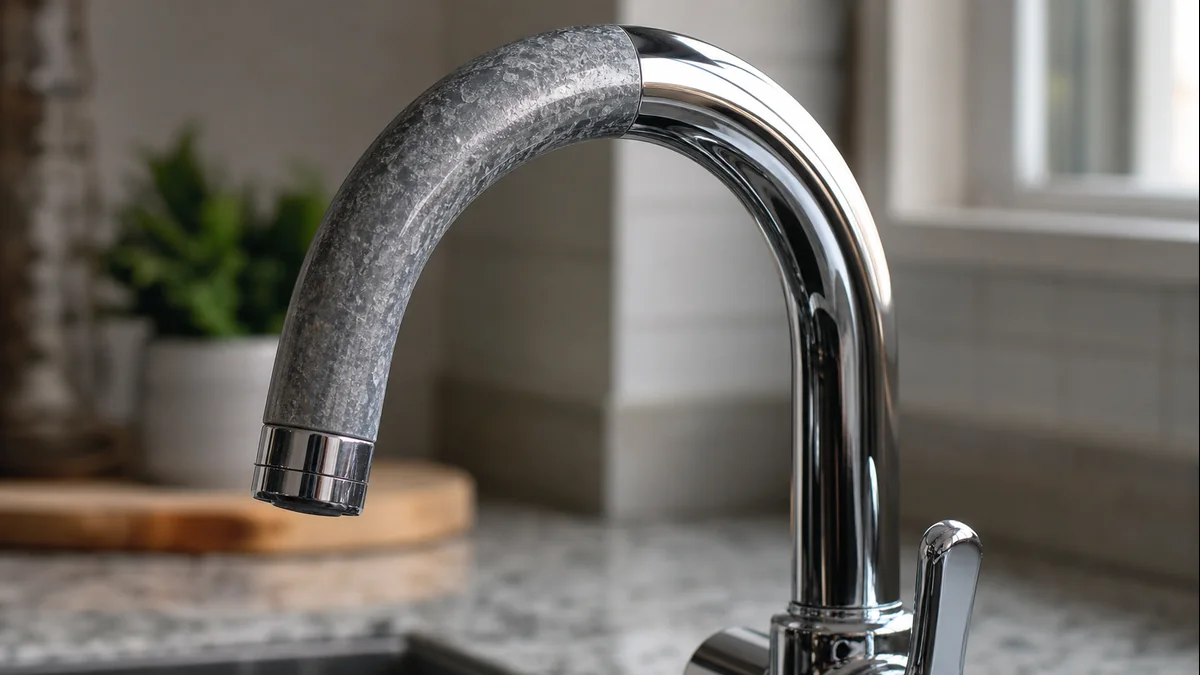
Raleigh water measures about 1.6 grains per gallon (gpg) — slightly hard on the WQA scale, the same one the Hach Total Hardness Test Kit (Model 5-B) uses. Cary, which draws from a different source, runs 1.6–3.7 gpg, and the upper end of that range crosses into moderately hard water. Softer water is good news for your home, but it isn't the whole story: minerals still accumulate gradually over years of use, and softness has nothing to do with chlorine taste/smell, PFAS, or disinfection byproducts — the contaminants that actually show up in Triangle water reports. That combination is exactly why an all-in-one softening + carbon filtration system is the smart standard for a Raleigh or Cary home: it runs efficiently on softer water while still handling everything softness doesn't.
How Hard Is Raleigh Water, Exactly?
Raleigh Water — the utility serving Raleigh plus Garner, Knightdale, Rolesville, Wake Forest, Wendell, and Zebulon — delivers water at roughly 1.6 gpg. That puts it at the low end of the scale: slightly hard, not soft. Cary's system, which sources differently, spans a wider range at 1.6–3.7 gpg — the top of that range crosses the 3.5 gpg line into the moderately hard band on the WQA scale.
Neither number is a guess. They come from the utilities' own water quality data, and they're the starting point for any honest answer about whether a Triangle homeowner needs a softener.
What Counts as Hard Water? (The Standard Scale)
Water hardness is measured in grains per gallon (gpg) or parts per million (ppm/mg/L), and classified using the scale from the Water Quality Association (WQA) — the water-treatment industry's trade association, and the same scale used by the Hach Total Hardness Test Kit (Model 5-B):
| Classification | ppm (mg/L) | Hardness (gpg) |
|---|---|---|
| Soft | <17 | <1.0 |
| Slightly hard | 17 – 60 | 1.0 – 3.5 |
| Moderately hard | 60 – 120 | 3.5 – 7.0 |
| Hard | 120 – 180 | 7 – 10.5 |
| Very hard | 180+ | 10.5+ |
The key lines on this scale are at 1.0 gpg and 3.5 gpg: below 1.0, water is soft; from 1.0 to 3.5, it's slightly hard; above 3.5, you're into moderately hard water. That matters more than most homeowners realize, because Cary's system runs 1.6–3.7 gpg — meaning the upper end of Cary, Apex, and Morrisville water crosses into the moderately hard range, where a softener earns its keep. Raleigh's 1.6 gpg sits in the slightly-hard range, but "slightly hard" isn't "mineral-free" — even at 1.6 gpg, calcium and magnesium keep building up on fixtures, glassware, and inside your water heater over the years. A softener sized to your home's actual gpg runs efficiently (low salt use, infrequent regeneration) while protecting your plumbing and appliances from that gradual buildup.
Why National Softener Sizing Charts Don't Apply Here
Most national softener sizing charts are built around national averages, and a lot of U.S. municipal and well water runs 15, 25, even 40+ gpg. Those charts don't reflect Raleigh or Cary. Run the actual softener sizing formula (people in the household × 75 gallons per person per day × your water's gpg × 7 days) using Raleigh's 1.6 gpg or Cary's 1.6–3.7 gpg, and the grain-removal number comes out modest — which is good news, not a reason to skip treatment. A modest grain load means a correctly sized softener (ideally built into an all-in-one system) costs very little to run in salt and maintenance while it keeps protecting your home. See our softener sizing breakdown for the full math with real household examples.
This is also why sizing off your home's real water report — not a national hardness average — matters: it's how you land on a system that's efficiently sized instead of oversized, without giving up the protection a softener provides.
Does Low Hardness Mean Raleigh Water Is Clean?
No — hardness and contaminant load are two different things. Raleigh water can be low in hardness and still carry contaminants above EWG health guidelines, including disinfection byproducts and PFAS. Softness is about mineral content (calcium and magnesium); it says nothing about chlorination byproducts, PFAS, or lead in older plumbing. That's exactly the gap an all-in-one system is built to close: the softening side handles minerals and protects your plumbing and appliances, while the carbon filtration side removes chlorine taste/smell, PFAS, and disinfection byproducts like HAA9/TTHM — best of both worlds, from one system. See is Cary NC water safe to drink for a detailed look at how a Triangle utility's contaminant testing breaks down, including disinfection byproducts.
Raleigh vs. Cary vs. Well Water Hardness
City water in the Triangle runs from slightly hard (Raleigh, ~1.6 gpg) up into moderately hard (the top of Cary's 1.6–3.7 gpg range), which is exactly why an efficiently-run all-in-one system (softening + carbon) is the right fit for city-water homes — low salt, low maintenance, full protection. Private wells are a different story — hardness on a well depends entirely on the geology under that specific property and can run anywhere from soft to genuinely hard, and wells often carry iron and other issues city water doesn't. There's no way to know your well's hardness (or what else is in it) without testing it. If you're on a well, start with a free water analysis so any system you install is sized to what your water actually needs.
Frequently Asked Questions
Is Raleigh water hard or soft? Raleigh Water tests at roughly 1.6 grains per gallon, which is slightly hard on the WQA scale the Hach Total Hardness Test Kit uses (soft is under 1.0 gpg; slightly hard runs 1.0 to 3.5 gpg). Cary spans a wider range, from about 1.6 gpg up to 3.7 gpg, with the top of that range reaching moderately hard. Even at this low end of the scale, water leaves gradual mineral buildup over the years, which is why a softener — ideally as part of an all-in-one system — still protects your appliances and plumbing.
Do I need a water softener in Raleigh? At 1.6 gpg, Raleigh's hardness is low, so a softener here runs efficiently — modest salt use, infrequent regeneration — while still protecting appliances and plumbing from gradual mineral buildup over time. Because chlorine taste/smell and contaminants like PFAS have nothing to do with hardness, most Raleigh homeowners get the most value from an all-in-one system that combines softening with carbon filtration in one unit, rather than treating hardness and contaminants as separate problems.
How does Cary's water hardness compare to Raleigh's? Cary spans a wider range, from about 1.6 gpg up to 3.7 gpg, versus Raleigh's steady 1.6 gpg, because it draws from a different source. Both ranges start on the softer side, which means a softener sized correctly for either area is inexpensive to run — and pairing it with carbon filtration in an all-in-one system covers what hardness alone doesn't.
Why does my Raleigh tap water still feel "hard" sometimes? If you're getting spotting, film, or scale despite low measured hardness, the cause is more likely appliance-specific (hot water heater buildup, local plumbing) or a perception issue than actual water hardness. A quick at-home test — like the Hach Total Hardness Test Kit (Model 5-B, drop-count titration) — can rule out whether something in your specific home differs from the utility's system-wide average.
How is water hardness actually measured? In grains per gallon (gpg) or parts per million (ppm) of dissolved calcium and magnesium. Utilities publish system-wide averages in their water quality reports; for a property-specific reading (especially on a well), you need an actual test. The Hach Total Hardness Test Kit, Model 5-B, is a simple drop-count titration kit that reads out directly in gpg on the WQA scale, making it a reliable way to check your own tap.
Not Sure What Your Water Actually Needs?
Hardness is only one piece of the picture. Take our 60-second water quiz to see what your Raleigh or Cary home needs — for most city-water homes, that means an all-in-one softening + carbon filtration system that runs efficiently on low-hardness water while removing chlorine taste/smell, PFAS, and disinfection byproducts. If you're on a well, start with a free water analysis instead so your system is sized to your actual water.
Answer nine practical questions, then request a written quote or well-water analysis.
Start My Water Analysis