
Renting vs. Buying a Water Softener — Which Makes Sense in the Triangle?
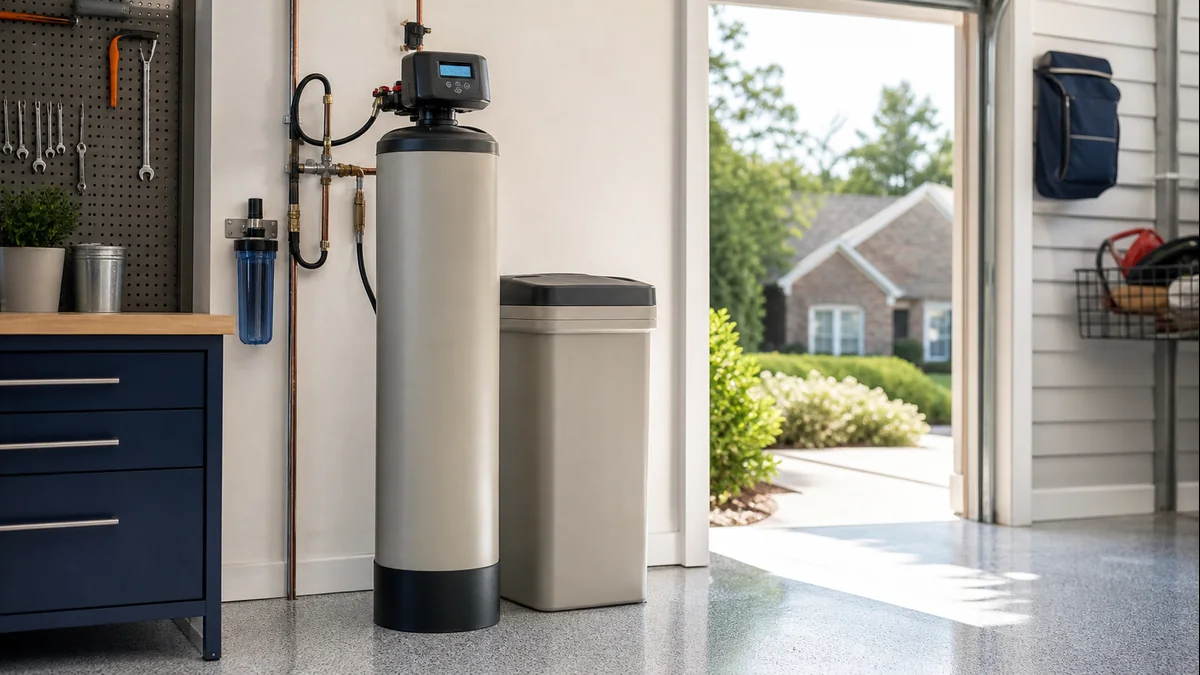
Direct answer: For anyone staying in their home, buying beats renting. A rental is a payment that repeats indefinitely and never becomes your property — stop paying and the equipment leaves. A purchase is a defined, one-time cost after which the only ongoing spend is salt and routine service. In the Triangle, where hardness runs slightly hard to moderately hard, a properly sized all-in-one system (softening plus carbon filtration) is inexpensive to run and fully yours from day one.
Is it better to rent or buy a water softener?
For a homeowner planning to stay put, buying is the stronger choice structurally, not just financially. A rental keeps you on a recurring payment with no end date — it doesn't shrink, it doesn't pay down a balance, and it doesn't convert into anything you own. A purchase works the opposite way: you pay once, installation is complete, and from that point forward the system belongs to you. The distinction matters most for anyone who expects to be in the same house for years, because a rental at that point is simply an ongoing bill with nothing to show for it, while a purchase is a fixed cost that's already behind you.
What's the real difference between renting and owning a water softener?
Ownership and rental aren't two pricing plans for the same outcome — they're structurally different arrangements.
| Renting | Buying | |
|---|---|---|
| Payment structure | Recurring, open-ended | One-time, defined cost |
| Who owns the equipment | The rental company, always | You, immediately after install |
| What happens if you stop paying | Equipment is removed | Nothing — it's already yours |
| Transfers with the house if you sell | No | Yes, as an owned fixture |
| Sizing | Whatever the rental fleet stocks | Sized to your actual water after a free water analysis |
| Ongoing cost after setup | The rental payment continues indefinitely | Salt and routine service only |
The sizing row matters more than it looks. A rental company is working from a fleet of standard units it already owns; you get whichever one fits its inventory. A purchase starts from a free water analysis of your actual water, so the system you install is sized for your household's real hardness and usage rather than a generic default.
How much does buying a water softener cost in the Triangle?
Triangle Waterworks prices systems after a free water analysis, with the final number depending entirely on your home's water and household needs. For comparison, national big-brand whole-home quotes commonly run $6,000–$12,000 for a similar scope. Whatever the number comes out to, it's a one-time, defined cost — you know it going in, and once it's paid, it's paid. There's no recurring line item after that beyond salt and periodic service, which keeps the total cost of ownership predictable in a way a rental payment, by design, cannot be.
Does renting ever make sense?
Renting can fit a narrow set of circumstances — someone renting the home itself and not planning to stay, or a short-term situation where installing owned equipment doesn't make sense. In those cases, a rental avoids the upfront number and gives flexibility to walk away. But for anyone who owns their home and plans to stay in it, that same flexibility becomes a drawback: the payments continue with no end point, and none of it builds toward anything you keep. For that homeowner, the better economics point squarely at buying — a one-time cost now versus an ongoing cost that never converts into ownership.
Why is buying more favorable in Raleigh, Cary, Apex, and Morrisville specifically?
Because the ongoing cost of owning a system here is genuinely small, which is exactly what makes ownership the stronger play in this market. Raleigh Water measures about 1.6 grains per gallon — slightly hard on the Water Quality Association (WQA) scale, the same one the Hach Total Hardness Test Kit (Model 5-B) uses — and Cary, Apex, and Morrisville run roughly 1.6–3.7 gpg, slightly hard at the low end and moderately hard at the top. A properly sized softener on water in that range doesn't have to work especially hard: it regenerates less often and uses less salt than the same system would on genuinely hard water elsewhere in the country. That means the one real recurring cost of ownership — salt — stays modest here, which strengthens the case for buying rather than renting. You're not just avoiding an open-ended payment; you're avoiding it in a market where the alternative (ownership) is unusually cheap to maintain.
What do I actually own if I buy instead of rent?
More than just a softener. The version worth owning is the all-in-one system — softening resin paired with carbon filtration in a single install. The softening side handles the calcium and magnesium that would otherwise build up on fixtures, inside the water heater, and around plumbing over years of daily use. The carbon side handles what softening alone never touches: chlorine and chloramine taste, documented disinfection byproducts (HAA9, TTHM) in Triangle water, and PFAS. A rental unit, sized generically and swapped between customers, typically covers only the softening half. Buying the combined system means the equipment addresses both problems at once, is sized to your specific water, and stays in the house — including if you sell it — as a fixture rather than a bill someone has to keep paying.
Frequently Asked Questions
I'm renting my house right now but might buy in a year or two — should I wait to install anything? If you don't yet own the home, a rental unit can be a reasonable stopgap since you're not paying to improve equipment you won't take with you. Once you own the property and plan to stay, a purchased system becomes the better move because the cost is one-time and the equipment becomes part of the house.
My neighbor rents their softener and says it's no big deal — why would I buy instead? A rental payment that feels manageable month to month still never stops and never becomes something you own — it's simply recurring. A purchase is a defined cost you pay once; after that, your only ongoing expense is salt and routine service, which is inexpensive on Triangle water's slightly-hard-to-moderately-hard range.
Does buying mean I'm stuck with whatever system I choose, with no flexibility? Not really — a purchased system is sized for your home from a free water analysis rather than pulled from a generic rental fleet, so it should fit your household's water and usage from the start. And because you own it, it's yours to keep, service, or eventually replace on your own terms, not the rental company's.
I've heard rentals include free repairs — doesn't that offset the ongoing payment? That's a question to confirm directly with any rental provider, since terms vary by company. What's structurally true either way is that a rental payment continues indefinitely and never becomes equity, while a purchase is a one-time cost after which the equipment is already yours.
What's the ongoing cost after I buy a system outright? Mainly salt, plus routine service — both modest here given how low Raleigh's hardness runs (slightly hard on the WQA scale) and how moderate Cary, Apex, and Morrisville run. There's no recurring rental-style payment continuing on top of that.
Is the all-in-one system worth buying over a softener-only unit? Yes — it handles the same hardness a softener-only unit does, plus chlorine and chloramine taste, disinfection byproducts, and PFAS that softening alone doesn't touch. Since you're already committing to a one-time purchase, the all-in-one version covers more of what's actually in Triangle water for a defined cost rather than a partial fix.
Ready to see what a system costs for your specific water?
Take our 60-second water quiz to see which all-in-one system fits your home and get a sense of where you'd land in the pricing range before you commit to owning.
Related reading: All-in-One Water System Cost in NC | Is a Water Softener Worth It in NC? | Water Softener Salt Cost Per Year | How Long Does a Water Softener Last? | Water System Warranty: What to Look For
Answer nine practical questions, then request a written quote or well-water analysis.
Start My Water Analysis