
Signs You Need a Water Softener (And Signs You Don't)
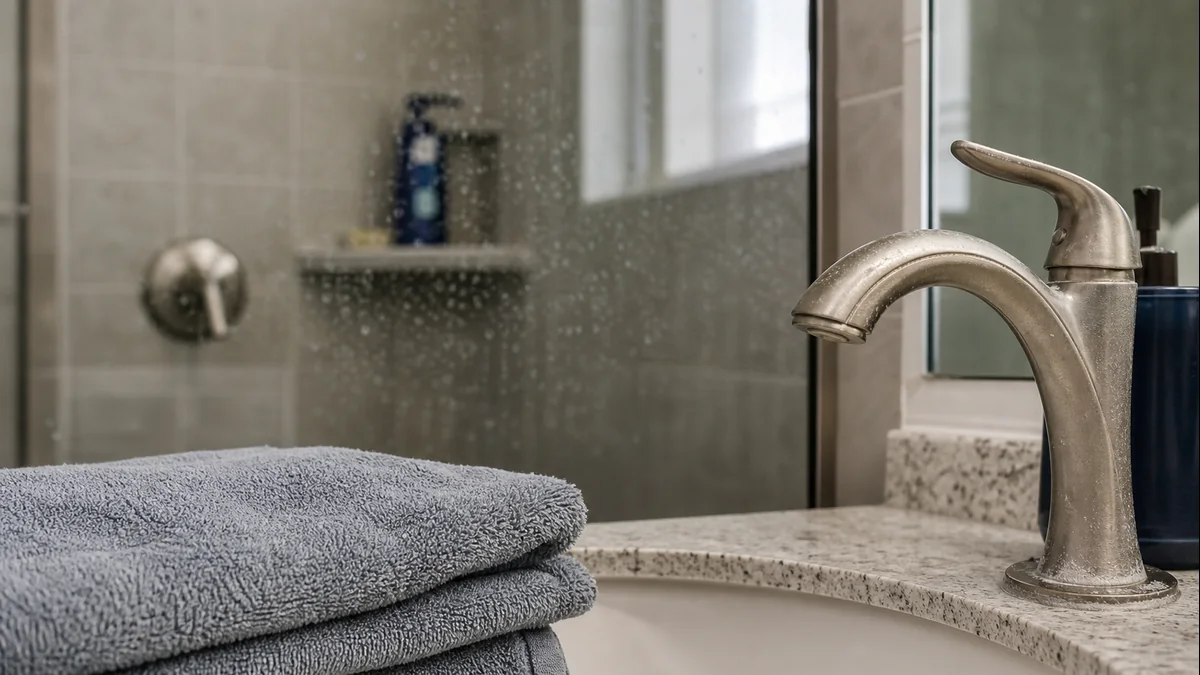
The real signs of hard water are white scale on fixtures, soap that won't lather, film on dishes, and dry skin/hair after showering — all caused by high dissolved calcium and magnesium. In Raleigh, which tests slightly hard at 1.6 gpg on the WQA scale, these symptoms — when they show up — often point to something other than hardness: a well with untested mineral content, an aging water heater, or a different water quality issue entirely. In Cary, where the system runs 1.6–3.7 gpg and the top of that range is moderately hard, some of these symptoms can be the real thing, which is exactly why a water test (not guesswork) should confirm it before you buy.
What Actual Hard Water Symptoms Look Like
Hardness leaves physical evidence because dissolved calcium and magnesium precipitate out as scale wherever water sits, heats, or evaporates. The classic list:
- White, chalky buildup around faucet aerators, showerheads, and inside kettles or coffee makers
- Soap and shampoo that won't lather well, or leave a filmy residue on skin
- Spots and film on dishes and glassware straight out of the dishwasher
- Stiff, scratchy laundry and clothes that fade faster
- Reduced water heater efficiency as scale builds up on heating elements over time
These are legitimate hardness signs. On Raleigh's slightly hard 1.6 gpg supply, they're less likely to be hardness-driven. On Cary's system, where the range runs 1.6–3.7 gpg and the top end is moderately hard, they're worth taking seriously — especially for households at the higher end of that range.
Symptoms That Need a Different Stage of the System
Not every water complaint is a hardness complaint. Some of these point to a different stage of treatment — which is exactly why an all-in-one system (softening + carbon, plus iron or pH stages when your test calls for them) solves more than a standalone softener can:
Etching or dulling on glassware and fixtures. This can come from low pH corroding surfaces or from disinfection byproducts, not hardness. If your water tests acidic (pH under 7), it's more likely eating at copper plumbing — showing up as blue-green stains — than depositing scale. That's a neutralizer problem, not a softener problem. See acidic well water and blue-green stains for that fix.
Skin irritation or dryness. Dry skin after showering gets blamed on "hard water" constantly, but chlorination byproducts are just as common a culprit on city water. That's what the carbon stage handles — pair it with softening in one all-in-one system and you address both the minerals and the chlorine chemistry at the same time.
Orange or rust-colored staining. This is iron, not hardness — a completely different mineral with a different fix (an air-injection oxidation system, not a softener). See iron in well water and orange stains.
A rotten-egg smell. That's hydrogen sulfide gas, unrelated to hardness. A softener does nothing for it.
Why This Matters More in Raleigh Than Elsewhere
Because Raleigh's tap water is genuinely slightly hard on the WQA scale and Cary's spans slightly hard to moderately hard (see Raleigh water hardness for the actual gpg numbers), a sales visit that diagnoses "hard water" based on generic symptoms — without an actual test — is a red flag here specifically. In a market where the utility's own numbers put hardness at 1.6–3.7 gpg, a softener recommendation should come with a water test showing why, not a symptom checklist alone.
Quick Reference: Symptom vs. Likely Cause
| Symptom | Likely Cause on City Water | Likely Cause on a Well |
|---|---|---|
| White scale on fixtures | Uncommon on Raleigh's slightly hard supply; possible on Cary's moderately hard upper range | Hardness, if well tests high |
| Soap won't lather | Uncommon on Raleigh's slightly hard supply; possible on Cary's moderately hard upper range | Hardness, if well tests high |
| Orange/rust stains | Not hardness — check plumbing age | Iron |
| Rotten-egg smell | Not hardness | Hydrogen sulfide |
| Blue-green stains on fixtures | Low pH, not hardness | Low pH, not hardness |
| Cloudy or gritty water | Not hardness | Sediment |
The Only Way to Know for Sure
Symptoms are a starting point, not a diagnosis. The only way to confirm whether hardness is actually your problem is a water test — for city water, checking the utility's published hardness number against your symptoms; for a well, an actual test since there's no public report to reference. If you want the math on what size softener would even be needed once hardness is confirmed, see what size water softener do I need.
Frequently Asked Questions
What are the most common signs of hard water? White scale buildup on fixtures and appliances, soap and shampoo that won't lather properly, spots on dishes after washing, and stiff or fading laundry. These result from dissolved calcium and magnesium in the water.
Can hard water cause dry skin? It's commonly blamed for it, but dry skin after showering has multiple possible causes, including disinfection byproducts and general water chemistry — not hardness alone. On Raleigh's slightly hard city water, hardness is an unlikely explanation.
Is orange staining a sign I need a water softener? No. Orange or rust-colored staining is caused by iron, which a standard water softener doesn't remove effectively at higher concentrations. That's handled by an iron-specific treatment system.
Does a rotten-egg smell mean I need a softener? No. That smell comes from hydrogen sulfide gas, a completely separate issue from water hardness. A softener has no effect on it.
How do I know for sure if I need a softener instead of guessing from symptoms? Get an actual water test. City water customers can check their utility's published hardness numbers; well owners need a direct test since there's no public data for an individual well.
Not Sure What's Actually Going On With Your Water?
Take our 60-second water quiz to match your symptoms to the right fix — so you get the system built for what's actually in your water.
Answer nine practical questions, then request a written quote or well-water analysis.
Start My Water Analysis