
What Are the Soft Water Laundry Benefits for Raleigh, NC Homes?
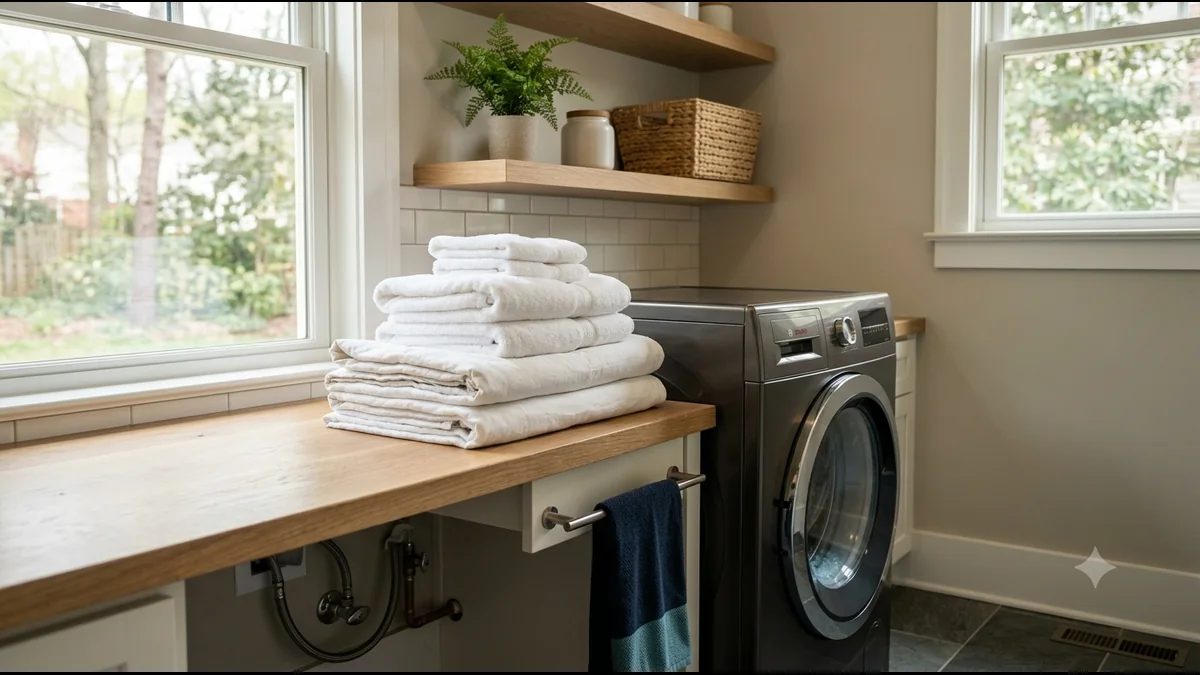
Direct answer: Raleigh Water measures about 1.6 grains per gallon — slightly hard on the Water Quality Association scale — and Triangle Waterworks' own testing finds up to 3.7 gpg across the service area. Calcium and magnesium at that level react with detergent instead of rinsing away, and the residue builds up in fabric fibers wash after wash. An all-in-one softening-and-carbon system removes the minerals and the chlorine taste together, so detergent goes further, rinses out more fully, and laundry feels softer over time.
Does Raleigh's Water Affect Laundry Quality?
Yes, gradually. Raleigh Water draws from Falls Lake and treats it at the E.M. Johnson Water Treatment Plant, with Lake Benson in Garner as a secondary source treated at the Dempsey E. Benton plant. The utility's own reported figure works out to about 1.6 grains per gallon (gpg), which lands as "slightly hard" on the Water Quality Association (WQA) scale — the same scale used by the Hach Total Hardness Test Kit, Model 5-B. Triangle Waterworks' testing across the service area finds a wider range at the tap, 1.6 to 3.7 gpg depending on address, crossing into "moderately hard" territory at the top end — enough calcium and magnesium to interact with detergent in every wash cycle.
Raleigh Water also supplies Garner, Knightdale, Rolesville, Wake Forest, Wendell, and Zebulon, so the same chemistry applies to any home on that system, not just addresses inside city limits.
What's Actually Happening When Detergent Meets Raleigh's Water?
Calcium and magnesium react chemically with detergent to form an insoluble residue — sometimes called soap curd — instead of staying dissolved and rinsing cleanly away. That single reaction drives most of what people notice about laundry over time:
- Part of every detergent dose gets consumed forming residue instead of lifting soil from fabric, which is why a load can start needing more detergent to get the same clean.
- The residue that doesn't rinse away deposits into fabric fibers over repeated washes rather than disappearing down the drain.
- That deposited residue is what stiffens towels and makes clothes feel scratchier as loads accumulate.
- The same residue dulls colors, since it sits on top of the fabric and changes how light reflects off it.
None of this is a single-wash event. It's a slow accumulation across the life of a wardrobe, which is exactly why it can go unnoticed for months and then feel like a sudden change.
For a closer look at the detergent chemistry itself, see how water hardness affects laundry detergent across the Triangle.
Why Do Towels and Clothes Get Stiffer the Longer You've Lived Here?
Because the residue from the reaction above doesn't wash back out once it's in the fibers — it builds with each cycle. A new set of towels in a Raleigh home starts out soft, and the mineral-detergent residue settles into the weave a little more with every load until stiffness, scratchiness, and duller colors are simply what that laundry feels like. Softened water breaks the cycle at the source: with calcium and magnesium removed by ion exchange before the water reaches the washer, detergent has nothing to react with, so it dissolves fully, lathers as intended, and rinses out completely. That's the mechanism behind why laundry washed in softened water is commonly described as feeling softer and looking brighter — a fabric-feel and cosmetic outcome, not a health claim.
For more on that mechanism, see how soft water makes clothes softer.
Untreated vs. Softened, Carbon-Filtered Water: What Changes in the Wash?
| Washing in Raleigh's untreated tap water | Washing in softened, carbon-filtered water | |
|---|---|---|
| Detergent needed per load | More, since part of every dose reacts with minerals first | Less — detergent isn't spent forming residue |
| Rinse-out | Residue can remain in fabric after the rinse cycle | Rinses out more completely |
| Towel and clothing feel over time | Gradually stiffer and scratchier | Stays softer as loads accumulate |
| Color brightness | Dulls gradually as residue deposits | Holds brightness longer |
| Wash smell | Chloramine residual, stronger during the annual free-chlorine switch | Chlorine and chloramine taste and odor reduced |
| Washing machine internals | Mineral scale accumulates on valves and the internal heater | Scale buildup is prevented |
What About the Chlorine Smell in My Laundry or Water?
That's a separate issue from hardness, and it's exactly why Triangle Waterworks routes Raleigh homes to the all-in-one system instead of a softener alone. Raleigh Water normally disinfects with chloramine, which the utility describes as having no taste or odor associated with it. Once a year, on the recommendation of the N.C. Department of Environmental Quality, the system temporarily switches to free chlorine only and flushes the distribution network to speed the changeover — chlorine residual runs higher than normal system-wide during that period. Timing shifts year to year, so Raleigh Water announces the exact dates itself. That higher chlorine residual is exactly what a carbon filtration stage is built to remove before the water reaches the washing machine. Softening resin does nothing about it — it's ion exchange for calcium and magnesium only. Pairing a carbon stage with softening resin in one system handles both sides of Raleigh's water from a single installation.
Is Raleigh's Water Actually Hard Enough for This to Matter?
It's slightly hard, not hard — and that's good news for how cheap the fix is to run. Raleigh Water's own figure is about 1.6 gpg, and Triangle Waterworks' address-level testing runs up to 3.7 gpg. On the WQA scale, that spans slightly hard to moderately hard: a real, verifiable case, just not a dramatic one. Calcium and magnesium are still reacting with detergent in every load at these levels; it simply takes longer to show up than in a harder-water market, which is why towels that felt fine when new can feel noticeably different a couple of years later.
That same slowness cuts the other way for cost. Because Raleigh's measured hardness sits at the lower end of the range Triangle Waterworks sees across its service area, a softening system here regenerates infrequently and uses comparatively little salt — inexpensive to keep running, not something that demands constant upkeep. For the full picture of what Raleigh Water publishes versus what we measure at individual addresses, see Raleigh water hardness.
What Fixes the Stiffness, Dulling, and Detergent Waste?
An all-in-one whole-home system — softening resin and carbon filtration in a single install — is built for exactly this two-part problem:
- Softening resin removes calcium and magnesium by ion exchange, which stops the detergent-mineral reaction before it starts. That changes lather, rinse-out, and how fabric feels over time, and it also protects the washing machine's own valves and internal heater from the same mineral buildup — see washing machine mineral buildup from hard water in Wake County for how that shows up mechanically.
- Carbon filtration removes the chloramine residual and chlorine taste and odor that softening alone can't touch, including during the annual free-chlorine period.
Because it's one system rather than two separate units, every load benefits at once, and Raleigh's comparatively low measured hardness keeps it cheap to run. Pricing depends on your home's plumbing and where your address falls in the 1.6–3.7 gpg range, which is why it isn't published here — a free water analysis is how a system gets sized and quoted. For context, national big-brand installers commonly quote $6,000 to $12,000 for comparable whole-home coverage.
Wake Forest, also on Raleigh Water, sees the same laundry chemistry play out across a similar range — see soft water laundry benefits for Wake Forest, NC for how it compares.
See What Your Own Raleigh Address Measures
Take the 60-second water quiz to see which all-in-one system fits your laundry room, or book a free water analysis to find out exactly where your address falls in the 1.6–3.7 gpg range Triangle Waterworks measures across the Raleigh Water service area.
Frequently Asked Questions
I just moved to Raleigh and my towels already feel stiffer than they did at my old place — is that the water? It can be, especially if your previous home had a softener or a different water supply. Calcium and magnesium in Raleigh Water react with detergent and leave residue in fabric fibers over repeated washes, which reads as stiffness. It's a gradual chemistry effect, not anything wrong with your machine.
My clothes seem to need more and more detergent lately — is that normal for Raleigh water? Yes. As mineral residue builds up in fabric over time, more of each detergent dose gets consumed reacting with minerals instead of cleaning, so the amount needed creeps up. Softened water reverses that, since detergent no longer has minerals to react with first.
Is Raleigh's water actually hard enough for this to matter, or am I imagining it? It's slightly hard, not hard — Raleigh Water reports about 1.6 gpg, and our address-level testing runs up to 3.7 gpg depending on ZIP code. Even at the lower end, the detergent reaction happens in every load; it's just slow enough that the effect takes time to show up.
Does a water softener alone fix the chlorine smell in my laundry? No. Softening resin only removes calcium and magnesium — it does nothing for chlorine, chloramine, or disinfection byproducts. That's a carbon filtration job. The all-in-one system runs both stages together so laundry gets the mineral fix and the taste-and-odor fix from one installation.
My washing machine is only a couple of years old — could mineral buildup already be affecting it? Yes, buildup starts from the first load regardless of how new the appliance is. Internal valves and the heating element accumulate scale the same way a water heater does, just less visibly. Softening resin addresses that from the point water enters the home.
How do I find out what my own Raleigh address's hardness actually is? A free water analysis reads your specific tap rather than a system-wide average. For at-home testing, the Hach Total Hardness Test Kit, Model 5-B, reports results in grains per gallon on the same Water Quality Association scale Triangle Waterworks uses across the service area.
Answer nine practical questions, then request a written quote or well-water analysis.
Start My Water Analysis