
Why Does My Skin and Hair Feel Different Since I Moved to Durham, NC?
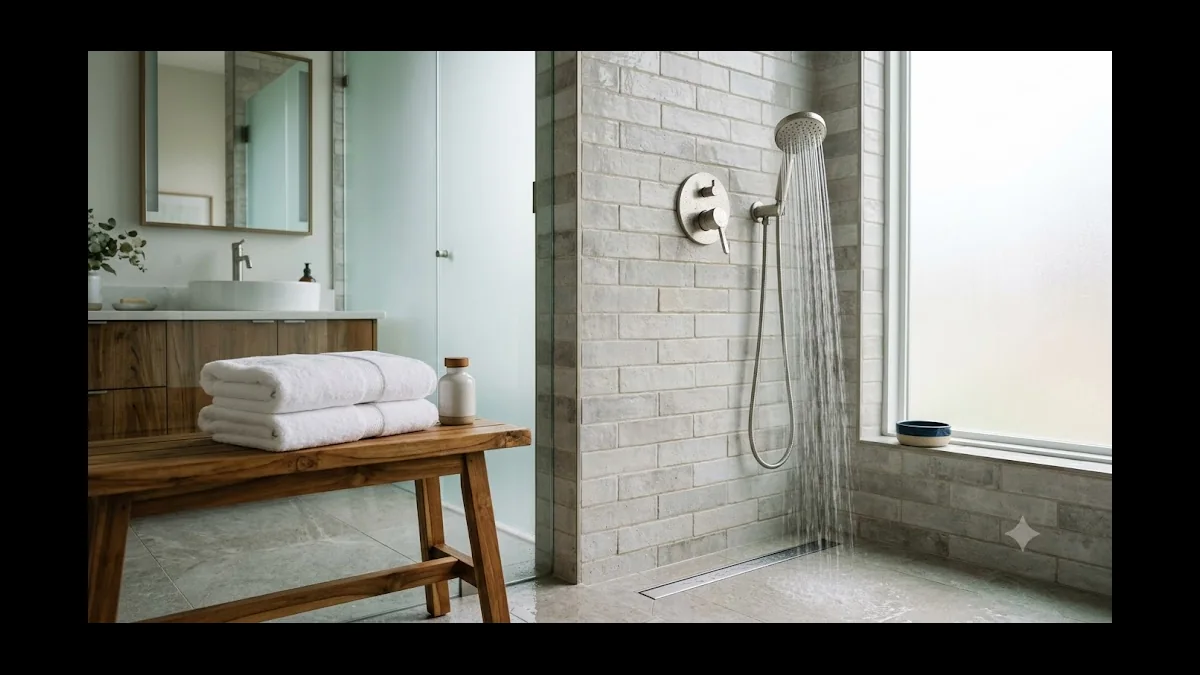
Direct answer: It's soap chemistry meeting whatever is actually coming out of your specific Durham tap — and Durham is the one Triangle city that publishes no hardness figure at all, so there's no townwide number to check yourself against. Add Durham's chloramine residual on top of that, and rough or dull-feeling skin and hair after a shower has two separate chemical explanations, both addressed by an all-in-one whole-home system that pairs softening resin with carbon filtration.
Why Does My Skin Feel Rough or Tight After a Durham Shower?
Because calcium and magnesium dissolved in your water are reacting with soap before it fully rinses away, leaving a light residue on skin that reads as rough, tight, or filmy. That reaction happens in every water supply to some degree — simple chemistry between minerals and soap, not anything specific to Durham. What makes it noticeable is a change: if you moved from a home with a softener, a different city's water system, or even a different neighborhood on Durham's own distribution network, your skin is registering that difference within the first few weeks. It's a chemistry shift, not a sign anything is wrong with you or with Durham's water — and the only way to know exactly what minerals are in your water is a test at your own address.
Why Doesn't Durham Publish a Hardness Number Like Raleigh or Cary Do?
Because Durham runs its own municipal system, and its public reporting simply doesn't include a hardness figure the way Raleigh's or Cary's utilities do. Durham draws from two surface sources — Lake Michie and the Little River Reservoir — treating that water at its own Williams and Brown treatment plants, and it also purchased water from the Town of Cary during the report year to help meet demand. That's a more layered supply picture than a single-source system, and Durham's own water quality reporting doesn't reduce it to one published grains-per-gallon number.
That gap matters for anyone trying to figure out what's behind rough skin or dull hair after a move to Durham. Raleigh and Cary each give homeowners a starting reference point, even if it's a plant average rather than a household reading. Durham gives none — so guessing a number, or assuming it matches a neighboring city's, isn't an honest answer. A free water analysis is the only way a Durham homeowner learns their own address's reading.
Why Does Soap Suddenly Stop Lathering the Way It Used To?
Because calcium and magnesium in the water react with your soap before it ever gets the chance to lather properly. When soap or shampoo meets water carrying those minerals, they combine into an insoluble residue — often called soap scum or soap curd — instead of staying dissolved and rinsing cleanly away. That reaction shows up in two ways people notice fast:
- More soap or shampoo is needed to work up a visible lather, because part of every application gets consumed forming residue instead of cleaning.
- A thin film gets left behind on skin and hair after rinsing, which is what most people describe as feeling less than fully clean right after stepping out of the shower.
Softening resin removes calcium and magnesium by ion exchange before water reaches a faucet, so soap and shampoo stay dissolved and rinse away far more completely. That's the mechanism behind the "soft water feels different" comment you may have heard from a Durham neighbor who already has a softener installed — soap chemistry, not a claim about anyone's skin or scalp health.
What Does Durham's Chloramine Residual Have to Do With Rinse Feel?
Because Durham's 2025 water quality report shows a chloramine running average of 1.5 ppm and a chlorine running average of 0.63 ppm — both comfortably under the federal 4.0 ppm limit — and disinfectant contact with skin and hair is a well-documented contributor to that dry, stripped feeling after a shower, separate from anything mineral-related. Both residuals are fully compliant; "compliant" describes a legal safety bar, not a promise the disinfectant is undetectable at your skin or in your hair.
This is the half of the story softening resin can't touch. A softener addresses calcium and magnesium only — it does nothing about chlorine or chloramines. If the dry, stripped feeling after a Durham shower is disinfectant-related rather than mineral-related, only a carbon stage removes it.
Skin and Hair Feel: Washing in Untreated vs. Softened, Carbon-Filtered Water
| Washing with Durham's untreated tap water | Washing with softened, carbon-filtered water | |
|---|---|---|
| Lather from soap or shampoo | Takes more product to build a lather | Lathers more easily with less product |
| Rinse feel on skin | Can feel rough, tight, or filmy after rinsing | Tends to feel more thoroughly rinsed |
| Hair after rinsing | Can feel coated, dull, or harder to comb wet | Often feels lighter and easier to comb through |
| Shower smell | Chloramine residual present (RAA 1.5 ppm) | Chlorine and chloramine taste and odor reduced |
| Product use | More soap, shampoo, and conditioner used per wash | Products go further per application |
Every row above describes soap chemistry and disinfectant contact with skin and hair — a rinse-feel comparison, not a statement about anyone's skin or scalp health.
What Actually Fixes the Rough, Filmy Feeling?
An all-in-one whole-home system — softening resin and carbon filtration in a single install — is built for this two-part problem, since Durham's water can involve both a mineral side and a disinfectant side at once:
- Softening resin removes calcium and magnesium by ion exchange, which stops soap curd from forming in the first place. That changes lather, rinse feel, and the residue left on skin and hair, and also protects your water heater, dishwasher, and washing machine from the same mineral buildup accumulating over years of daily use.
- Carbon filtration handles what softening resin can't: the chloramine and chlorine residuals behind that stripped, dry feeling after a shower. That's why a softener-only system leaves half the story unresolved for a Durham home.
Because it's one system instead of two, every fixture in the house gets the same feel-and-taste improvement at once — no juggling a softener and a separate carbon filter on different schedules. Pricing depends on your home's plumbing and what a free water analysis finds at your address, which is why no number is published here; for context, national big-brand installers commonly quote $6,000 to $12,000 for comparable whole-home coverage. See water softener Durham, NC for the fuller picture.
The same calcium and magnesium that leave a film on skin and hair also clog a kitchen faucet aerator with mineral deposits over time.
It's Not Just Durham — Soap Chemistry Works the Same Way Across the Triangle
If you moved from elsewhere in the Triangle rather than out of state, the mechanism is identical even though Durham's water picture differs from its neighbors. Homes on Raleigh Water — Raleigh and several surrounding towns — see the same soap-residue reaction, working from a published hardness figure Durham simply doesn't have. What changes house to house isn't the chemistry — it's the water at that address, which is why figuring out why soap won't lather across the Triangle always comes back to a test rather than a guess. For the fuller rundown of what treated water changes about a daily routine beyond the shower, see soft water skin and hair benefits.
See What's at Your Durham Address
Take the 60-second water quiz to see which all-in-one system fits your home, or book a free water analysis to find out exactly what Durham's layered water supply — Lake Michie, the Little River Reservoir, and purchased Cary water — actually delivers at your specific tap.
Frequently Asked Questions
I just moved to Durham and my skin feels tight after every shower — is that the water? It can be, and it's common to notice within the first few weeks after a move. Calcium and magnesium in the water react with soap and can leave a light residue behind after rinsing, which many people describe as a rough or tight feeling. It's a soap-chemistry effect tied to a change in water supply, not a skin condition, and softened water is designed to reduce that residue.
My hair felt fine in my old house, but in Durham it feels dull and hard to comb — why did that change? Most likely because your old water supply and Durham's aren't the same. Calcium and magnesium react with shampoo and leave a thin film on the hair shaft instead of rinsing away completely, which reads as dull or hard to comb while wet. Durham's chloramine residual can add a dry, stripped feel on top — both are addressed by an all-in-one softening-and-carbon system.
Why doesn't Durham publish a hardness number the way Raleigh and Cary do? Durham runs its own system, drawing from Lake Michie and the Little River Reservoir and treating it at the Williams and Brown plants, plus water purchased from Cary during the report year — and its public reporting doesn't reduce that into one published hardness figure. That's a gap in what Durham's reporting covers, not a claim about the water either way. A free water analysis is the only way to get a real number for your address.
Does Durham's chloramine residual affect skin and hair the same way chlorine does? Both are disinfectants and both leave contact residue on skin and hair, contributing to that dry or stripped feeling after a shower. Durham's 2025 report shows a chloramine running average of 1.5 ppm and a chlorine running average of 0.63 ppm, both well under the 4.0 ppm federal limit. Carbon filtration reduces that residual at the tap; softening resin doesn't touch it.
Does a water softener alone fix the dry, stripped feeling after a Durham shower? Only part of it. A softener's resin removes calcium and magnesium, fixing the soap-residue side of the problem. It does nothing about Durham's chlorine or chloramine residual, the other contributor to that stripped feeling. That's why the recommended system pairs softening resin with a carbon filtration stage in one install, not a standalone softener.
How do I find out what my own Durham address's hardness actually is, since the city doesn't publish one? A free water analysis is the only way — it reads your specific tap instead of a citywide figure that doesn't exist for Durham. For at-home testing between now and then, the Hach Total Hardness Test Kit, Model 5-B, reports results in grains per gallon on the same scale Triangle Waterworks uses across the service area.
Answer nine practical questions, then request a written quote or well-water analysis.
Start My Water Analysis