
How Does Soft Water Change Skin and Hair Feel in Garner, NC?
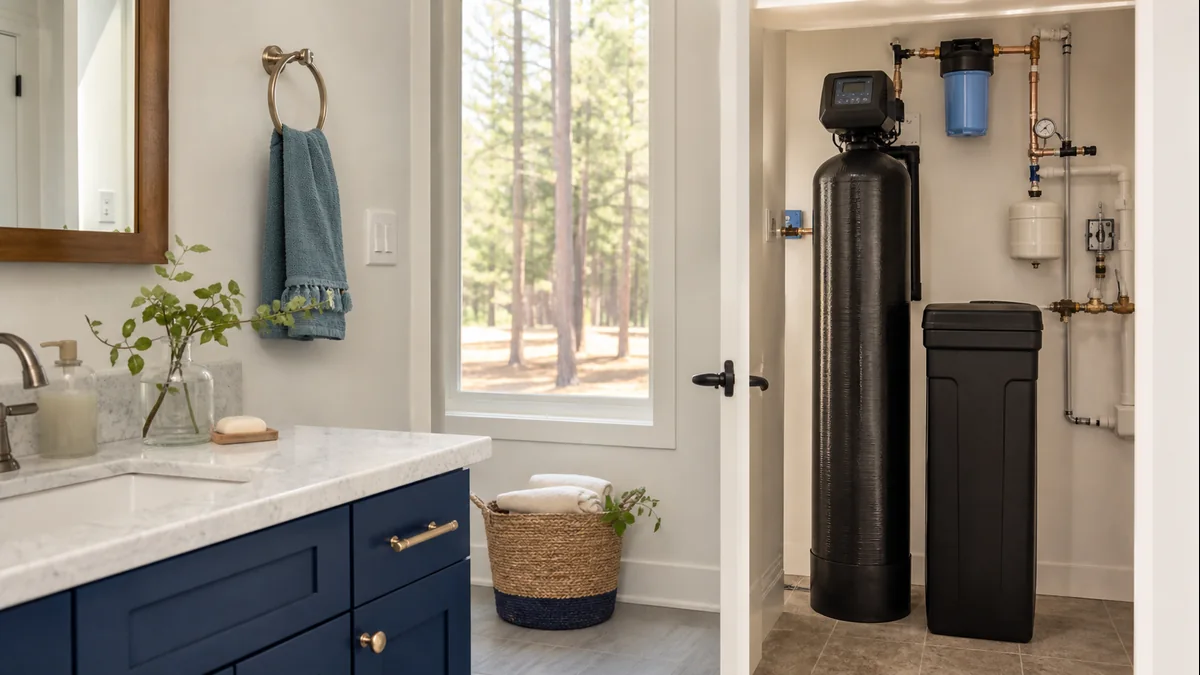
Direct answer: Yes — it's soap chemistry, not anything wrong with the water. Raleigh Water, which serves Garner, runs slightly hard at 1.6 gpg, and calcium and magnesium react with soap and shampoo to leave residue that doesn't rinse away, so lather takes more product and skin or hair can feel filmy. Softened water lets soap rinse fully; the carbon stage of an all-in-one system also handles chlorine taste at every shower.
Does Garner's Water Affect How Skin and Hair Feel After Washing?
Garner is served by Raleigh Water, and Triangle Waterworks measures 1.6 to 3.7 grains per gallon (gpg) across the service area from our own in-home testing, varying by ZIP code. On the Water Quality Association scale the Hach Total Hardness Test Kit, Model 5-B uses, that range runs from slightly hard (1.0–3.5 gpg) at the low end into moderately hard (3.5–7.0 gpg) territory at the top.
That's a range, not one fixed number, since hardness varies by address across the distribution system. Even at the low end, calcium and magnesium are present, and those two minerals change how soap and shampoo behave on skin and hair.
Why Does Soap Leave a Residue Instead of Rinsing Clean in Garner?
This is ordinary soap chemistry, and it plays out anywhere calcium and magnesium show up in the water supply. When soap or shampoo meets those minerals, they react and form an insoluble byproduct — often called soap scum — instead of staying dissolved and rinsing cleanly away.
Two things follow from that reaction. More soap or shampoo is needed to work up a visible lather, because part of what's applied gets used forming residue rather than cleaning. And residue can be left behind on skin and hair after rinsing, which many people describe as a filmy or less-rinsed feeling.
Softened water removes calcium and magnesium by ion exchange before they reach the faucet, so soap and shampoo stay dissolved and rinse away more completely.
Why Does Hair Feel Coated or Heavy After a Shower in Garner?
Shampoo is designed to lift oil and product from hair, then rinse away completely. When calcium and magnesium react with shampoo instead of letting it rinse fully, some of that residue can stay on the hair after a shower ends.
People commonly describe this as hair feeling coated, harder to comb through while wet, or less "squeaky clean" than elsewhere. It's the same soap-chemistry reaction happening at every sink in the house, just more noticeable on hair because of the surface area involved. Softened water addresses this at the source by removing the minerals before shampoo reacts with them.
How Does Washing in Softened, Carbon-Filtered Water Compare to Garner's Tap Water?
Here's how the two compare on what people actually notice at the sink and in the shower — all cosmetic and feel-based.
| Washing with Garner's untreated tap water | Washing with softened, carbon-filtered water | |
|---|---|---|
| Lather from soap or shampoo | Takes more product to work up a lather | Lathers more easily with less product |
| Rinse feel on skin | Can feel filmy after rinsing | Tends to feel more thoroughly rinsed |
| Hair after rinsing | Can feel coated or harder to comb through wet | Often feels lighter and easier to comb |
| Shower smell | Can carry a chlorine-type smell, especially during the annual conversion period | Chlorine taste and odor reduced by the carbon stage |
| Product use | More soap, shampoo, and conditioner used per wash | Products go further per application |
Every row describes how soap and disinfectant interact with what's in the water — a chemistry outcome, not a statement about anyone's skin or scalp.
Does Raleigh Water's Published Hardness Match What My Garner Home Actually Has?
Mostly, with a nuance worth knowing. Raleigh Water's 2025 Consumer Confidence Report lists average hardness at 25.2 ppm, with a range of 21.9 to 35.3 ppm — roughly 1.3 to 2.1 gpg, which lands in the slightly hard band.
It's also a plant-average number, not a reading at any one house. Triangle Waterworks tests in actual homes across the service area and measures 1.6 to 3.7 gpg depending on the address.
Both figures are correct — they're measuring different points on the same system, not contradicting each other. The only way to know exactly where a Garner address falls is a test at the tap, which is what a water treatment analysis for your home is for.
What About the Chlorine Smell in a Garner Shower?
This is a separate issue from hardness, and it's often the more noticeable one. Raleigh Water normally disinfects with chloramine, which the City describes as having no taste or odor associated with it.
Once a year, on the recommendation of the N.C. Department of Environmental Quality, the City switches to free chlorine only for a period to flush the distribution system. Chlorine residual runs higher than normal system-wide during that stretch, which is when a chlorine-type smell tends to show up most in a Garner shower. The exact dates shift year to year, so check the City's own announcement for the current schedule rather than a fixed date.
Softening resin does nothing about this — it only addresses calcium and magnesium. The carbon stage of a whole-home system is what pulls chlorine taste and odor out of every tap in the house, whether it's the everyday chloramine or the annual conversion period.
Why Does an All-in-One System Address Both Soap Feel and Chlorine Taste?
A standalone softener only ever does one job: ion-exchange resin that pulls calcium and magnesium out of the water before it reaches a faucet. That solves the soap-residue case above directly.
But Garner's water is also disinfected on the way to the tap, which can carry a chlorine taste a softener alone never touches. An all-in-one system pairs that same softening resin with a carbon filtration stage in one install — best of both worlds — so skin, hair, laundry, and every fixture in the house draw from the same treated water.
- Removes the calcium and magnesium behind soap residue on skin and hair
- Adds a carbon stage that pulls chlorine taste and smell out at every faucet
- Installs as one system instead of stacking a softener and a separate filter
- Gets sized to your home's actual water through a free in-home analysis
What Signs Point to Soap Residue Rather Than Something Else?
A handful of patterns tend to show up together rather than in isolation, and they're worth watching for as a set:
- Needing noticeably more soap, shampoo, or body wash to work up a lather
- Skin feeling filmy or not fully rinsed right after a shower
- Hair feeling coated or harder to comb through while still wet
- A dull, spotty film building up on shower doors or glass — the same reaction shows up as soap scum on shower surfaces
None of these on their own proves it's the water, but several showing up together on the same routine points toward minerals reacting with soap rather than a change in products.
What Happens When You Get Your Garner Water Tested?
A household at the low end of the 1.6–3.7 gpg range and one at the top can notice a different amount of residue from the same soap and routine, since hardness varies by ZIP code. It starts with a free water analysis at your address, the only way to know where your home falls.
From there, the all-in-one system gets sized to what that test finds and installed where water enters the home, so every fixture — sinks, showers, and the washer — draws from softened, filtered water. See the fuller rundown in the guide to soft water benefits, or read how the same soap chemistry plays out in nearby Raleigh homes.
FAQ
I just moved to Garner and my shampoo won't lather the way it did at my last house — what changed? Most likely the mineral content of the water. Calcium and magnesium react with shampoo and use up part of it forming residue instead of lather, so more product is needed for the same suds. Softened water lets shampoo lather more easily.
My skin has felt tight and filmy after every shower since we moved to Garner — is that the water? It can be. Calcium and magnesium in the water react with soap and can leave a film behind after rinsing, which many people describe as a tight or filmy feeling. That's a soap-chemistry effect, and softened water is designed to reduce that residue.
Does using more soap or shampoo fix the residue problem? Not really — more product gives the minerals more to react with, not less. The residue forms because calcium and magnesium bind to soap before it can rinse away, so using more can leave more residue behind.
Is Garner's water actually hard enough to matter, or is this overstated? Raleigh Water, which serves Garner, runs slightly hard at around 1.6 gpg, and Triangle Waterworks measures up to 3.7 gpg in homes across the service area. That's a real, measurable amount of calcium and magnesium — enough to react with soap in every shower.
Can I test my own water before deciding whether this applies to my house? Yes — a home hardness test kit like the Hach Total Hardness Test Kit, Model 5-B gives a grains-per-gallon reading to compare against the ranges above. A free in-home water analysis from Triangle Waterworks covers the same ground.
Is a whole-home system worth it just for skin and hair feel, or should I wait for other signs? Skin and hair are usually one of several places this shows up, alongside soap scum on shower doors and extra product use in the laundry room. A free water analysis shows the fuller picture across the whole house.
Get a Free Water Analysis for Your Garner Home
Soap residue and a coated feeling in the shower are worth addressing at the source, not managing wash after wash with more product. Take the 60-second water quiz to see how an all-in-one system fits your Garner home, or book a free in-home water analysis with Triangle Waterworks.
Sources
Related reading: Water Treatment in Garner, NC | Soft Water Laundry Benefits in Garner, NC | Soap Scum on Shower Doors in Garner, NC | Benefits of Soft Water in the Home | Soft Water Skin and Hair Feel in Raleigh, NC
Answer nine practical questions, then request a written quote or well-water analysis.
Start My Water Analysis