
Who Installs Water Treatment Systems Across Raleigh, Cary, Apex, Morrisville, and Wake Forest?
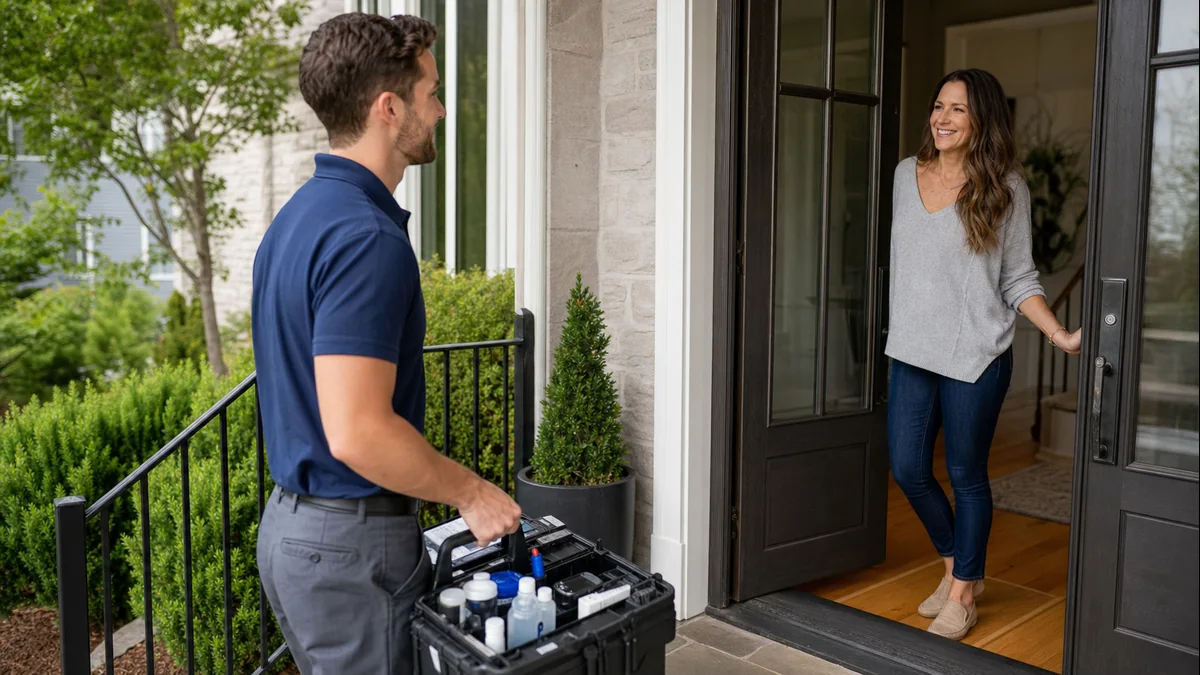
Direct answer: Triangle Waterworks is a local, licensed installer serving Raleigh, Cary, Apex, Morrisville, Wake Forest, and nearby towns including Garner, Knightdale, Holly Springs, and Fuquay-Varina. In every one of those towns we install the same all-in-one whole-home system — softening resin paired with carbon filtration — because every town's water carries some combination of hardness, chlorine or chloramine taste, and disinfection byproducts worth addressing at the tap.
What Towns Does Triangle Waterworks Serve?
Our core service area is five towns: Raleigh, Cary, Apex, Morrisville, and Wake Forest. We also install regularly in the towns that sit around and between them — Garner, Knightdale, Holly Springs, and Fuquay-Varina — since they're on the same drive routes and often the same municipal water systems. If your town isn't named here specifically, ask when you book a free water analysis; we cover the broader Triangle beyond just these five.
- Raleigh (and Garner, Knightdale, Rolesville, Wendell, Zebulon — all served by Raleigh Water)
- Cary
- Apex
- Morrisville (on Cary's water system since April 2006)
- Wake Forest
- Also served nearby: Holly Springs, Fuquay-Varina
Is My Water the Same in Every Town?
Not exactly — the hardness number and the exact contaminant mix shift slightly by town and even by ZIP code, but the underlying story is the same everywhere: municipal treatment does its job on safety, and it leaves behind a taste, hardness, and byproduct profile that's worth addressing at the household level. Raleigh Water serves Raleigh, Garner, Knightdale, Rolesville, Wake Forest, Wendell, and Zebulon. Cary and Apex share one treatment facility — the Cary/Apex Water Treatment Facility, sourced from Jordan Lake, co-owned by both towns with Cary as the lead agency, running at 56 million gallons per day. Morrisville doesn't run its own plant at all; Cary has operated Morrisville's water and sewer utility since April 2006, so Morrisville customers receive Cary's finished water directly.
Our own testing across the service area puts hardness at 1.6 to 3.7 grains per gallon (gpg), depending on ZIP code — this is our field data, not a figure published by any town. On the WQA/Hach hardness scale (the same scale used by the Hach Total Hardness Test Kit Model 5-B), that range runs from "slightly hard" (1.0–3.5 gpg) up into "moderately hard" (3.5–7.0 gpg) territory at the top end. Raleigh Water measures at roughly 1.6 gpg — slightly hard. The Cary/Apex system measures 1.6 to 3.7 gpg across its area; the 3.7 gpg reading (about 63 mg/L) crosses into moderately hard. Nowhere in our service area have we measured water hard enough to call it just "hard" or "very hard" on this scale — but slightly hard water still deposits calcium and magnesium on fixtures, glassware, and inside a water heater over years of daily use, which is why softening still earns its place in the system.
Taste and disinfection byproducts are the more consistent story across every town. Raleigh's treated water shows HAA9 at 19.9 ppb and TTHM at 21.7 ppb. Cary's shows HAA9 at 27.5 ppb and TTHM at 38.2 ppb, along with PFOA at 2.86 ppt and PFOS at 3.79 ppt. Apex's TTHM runs around 41 ppb, ranging up to 53 — roughly double Raleigh's figure. All of these numbers are legally compliant with EPA limits. Separately, the Environmental Working Group applies its own, stricter non-regulatory guideline, under which Cary shows 13 contaminants above EWG's benchmark — that's a different, tighter yardstick than the legal standard, and both are worth knowing rather than conflating.
Do You Install in Wake Forest?
Yes. Wake Forest is one of our five core towns and is served by Raleigh Water, which puts it in the same slightly-hard hardness band (around 1.6 gpg) and the same chloramine/chlorine treatment profile as Raleigh itself. The all-in-one system we install there is identical in concept to what we install in Cary or Apex: a softening stage sized to the home, paired with a carbon stage for taste, chlorine/chloramine, and disinfection byproducts. For more detail specific to Wake Forest, see our Wake Forest water treatment guide.
Why Recommend the Same System in Every Town?
Because the two things that vary by town — the exact hardness number and the exact byproduct concentrations — both point toward the same two-part solution, just tuned differently at install time. Softening resin handles calcium and magnesium regardless of whether a town measures 1.6 or 3.7 gpg; it just regenerates less often at the low end. Carbon filtration handles chlorine and chloramine taste, PFAS, and disinfection byproducts like HAA9 and TTHM — present in some amount in every town's treated water, because they're a normal byproduct of large-scale municipal disinfection, not a sign any one plant is doing something wrong. Softening alone does nothing for taste or PFAS; a softener is ion exchange for calcium and magnesium only. PFAS removal specifically needs a carbon stage certified for PFAS (NSF/ANSI 53 or P473) or reverse osmosis (NSF/ANSI 58) — boiling water does not remove PFAS. Putting both stages in one all-in-one unit means one install, one footprint, and coverage for the full profile instead of half of it.
- Softening resin: protects your water heater, dishwasher, and washing machine from scale buildup; means cleaner dishes and glassware, better lather, and softer skin, hair, and laundry
- Carbon filtration: clears chlorine/chloramine taste and smell, targets PFAS, reduces disinfection byproducts (HAA9, TTHM)
- One system, one install: sized to your specific address after a free water analysis — not a generic town-wide estimate
Town-by-Town Water Snapshot
| Town | Water Supply | WQA Hardness Classification | Notable Contaminant |
|---|---|---|---|
| Raleigh | Raleigh Water | Slightly hard (≈1.6 gpg) | TTHM 21.7 ppb, HAA9 19.9 ppb |
| Cary | Cary/Apex Water Treatment Facility (Jordan Lake) | Slightly to moderately hard (1.6–3.7 gpg) | HAA9 27.5 ppb, TTHM 38.2 ppb, PFOA 2.86 ppt, PFOS 3.79 ppt |
| Apex | Cary/Apex Water Treatment Facility (Jordan Lake) | Slightly to moderately hard (1.6–3.7 gpg) | TTHM ≈41 ppb (up to 53) |
| Morrisville | Cary's water system (since April 2006) | Slightly to moderately hard (1.6–3.7 gpg) | Same profile as Cary's finished water |
| Wake Forest | Raleigh Water | Slightly hard (≈1.6 gpg) | TTHM 21.7 ppb, HAA9 19.9 ppb |
All figures above are legally EPA-compliant. Hardness figures for Cary, Apex, and Morrisville reflect our own testing across ZIP codes in that shared system, not a single town-published number.
How Much Does an All-in-One System Cost in the Triangle?
Every installed system here is custom-priced after a free water analysis — we don't publish a flat number because home plumbing and system sizing both affect the final quote. For a sense of scale, national big-brand whole-home systems commonly run $6,000 to $12,000 for comparable coverage; a local, custom-sized quote is the accurate way to know your number. Full breakdown here: What Does an All-in-One Water System Cost in NC?
Frequently Asked Questions
What towns does Triangle Waterworks actually cover? Our five core towns are Raleigh, Cary, Apex, Morrisville, and Wake Forest, and we also regularly install in Garner, Knightdale, Holly Springs, and Fuquay-Varina. If you're near any of these, book a free water analysis and we'll confirm coverage for your exact address.
I live in Knightdale — do you install there, and is my water different from Raleigh's? Yes, we install in Knightdale, and your water comes from the same Raleigh Water system, so the hardness and treatment profile match Raleigh's — slightly hard at roughly 1.6 gpg, with the same chlorine/chloramine and disinfection byproduct profile. The all-in-one system we'd recommend is the same one we install throughout Raleigh.
I'm in Morrisville — does my town even have its own water plant? No, and that's actually useful to know: Cary has run Morrisville's water and sewer utility since April 2006, so your tap water is identical to Cary's finished water from the Cary/Apex Water Treatment Facility. Everything documented for Cary — the hardness range, the HAA9/TTHM figures, the PFOA/PFOS detections — applies to your home too.
Is one town's water actually worse than another's? Not in a way that changes the recommendation — every town in our service area shows some level of hardness plus some level of chlorine/chloramine taste and disinfection byproducts, just at different concentrations. Apex's TTHM figure runs roughly double Raleigh's, and Cary shows detectable PFOA/PFOS, but all figures across the service area are legally compliant. The differences affect exactly how we size your system, not whether the all-in-one approach applies.
I've heard Cary and Apex water is "moderately soft" — so is a softener even relevant there? Our own testing across the Cary/Apex system shows hardness running 1.6 to 3.7 gpg by ZIP, which spans slightly hard up into moderately hard on the WQA/Hach scale. Even at the lower end, calcium and magnesium build up on fixtures, glassware, and inside your water heater over years of daily use, so a softening stage sized to your address is still part of the all-in-one system we install there.
How do I find out what's actually in my water before I buy anything? Book a free water analysis — it tests your specific tap rather than relying on town-wide averages, and it's how we size the softening and carbon stages correctly for your home. You can also start with the 60-second water quiz to get pointed toward the right system configuration first.
Ready to see what your home needs? Take the quiz or request a free water analysis, and we'll confirm coverage and pricing for your exact address in Raleigh, Cary, Apex, Morrisville, Wake Forest, or anywhere nearby.
Related reading: Water Treatment Company Near Me in Raleigh | Water Softeners in Cary, NC | Water Treatment in Wake Forest, NC | Best Whole-Home System for Cary, Apex, and Morrisville | What Does an All-in-One Water System Cost in NC?
Answer nine practical questions, then request a written quote or well-water analysis.
Start My Water Analysis