
What Are Trihalomethanes in Your Tap Water?
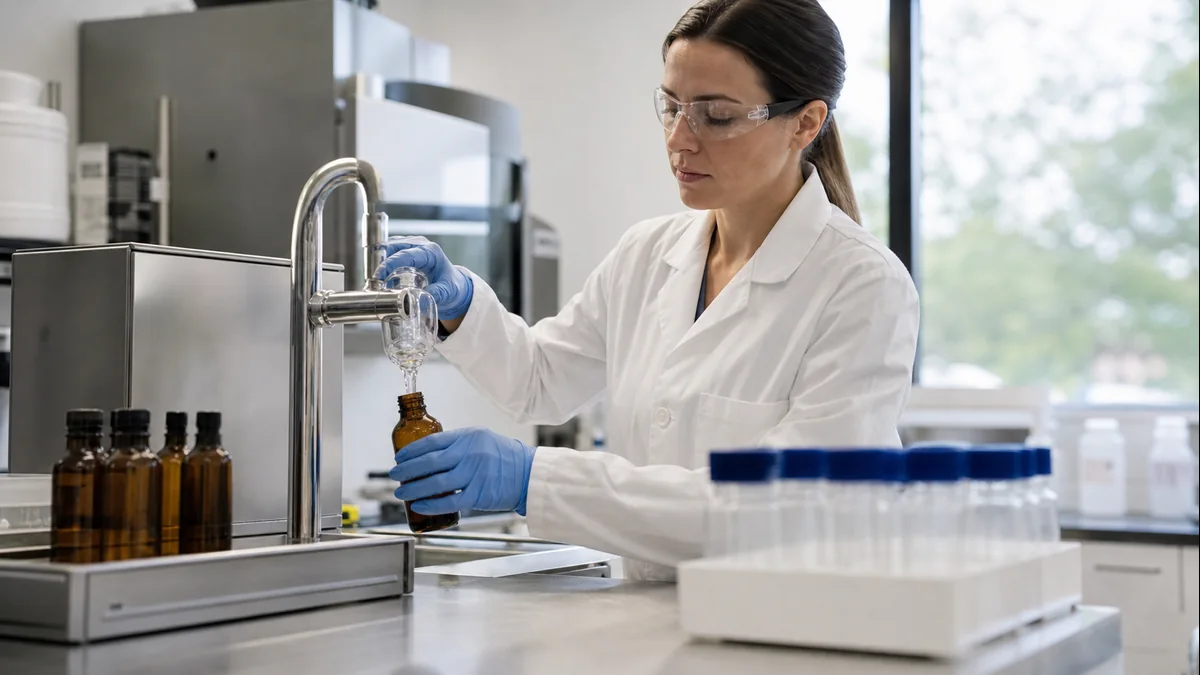
Trihalomethanes (TTHMs) are a group of disinfection byproducts formed when chlorine reacts with organic matter in source water — the same chemical family as haloacetic acids. Raleigh Water tests at 21.7 ppb TTHM; the Town of Cary tests at 38.2 ppb, about 255 times the EWG health guideline. Because TTHMs are volatile, they matter for more than just drinking water — which is why whole-home filtration, not just a pitcher at the sink, is the standard fix.
Why does tap water contain trihalomethanes?
TTHMs form the same way HAA9 does: chlorine, used to disinfect drinking water and keep it safe from bacteria, reacts with organic matter already in the source water — decaying vegetation, algae, and other natural material common in reservoir systems. Both Raleigh Water and the Town of Cary disinfect with chlorine, and both show up with TTHM readings on the EWG Tap Water Database as a result. It's a byproduct of doing the thing that makes the water safe to drink in the first place, not a sign anything is being done wrong.
How much TTHM is in Raleigh and Cary tap water?
| System | TTHM level | HAA9 level | vs. EWG guideline |
|---|---|---|---|
| Raleigh Water | 21.7 ppb | 19.9 ppb | Above EWG guideline |
| Town of Cary | 38.2 ppb | 27.5 ppb | ~255x EWG guideline (TTHM) |
Cary's TTHM result, at 38.2 ppb, is roughly 255 times the EWG health guideline — the largest gap of any contaminant EWG flags for the Cary system. Raleigh's number is meaningfully lower but still above that same benchmark. Both towns are legally compliant; both also sit well past the point EWG considers health-protective.
Why does a pitcher filter not fully solve the TTHM problem?
This is the part that's specific to TTHMs and doesn't apply the same way to, say, lead or PFAS. Trihalomethanes are volatile compounds — they can vaporize out of hot water. That means a filter on your kitchen faucet, or a pitcher you fill for drinking water, only ever addresses the water you drink directly. It does nothing for the water running through your shower, where hot water and steam create the conditions for TTHMs to become airborne in an enclosed bathroom. Whole-home filtration, installed at the point where water enters the house, treats every tap — shower included — instead of just one glass at a time.
What actually removes TTHMs from tap water?
Activated carbon filtration is the standard treatment for TTHMs, same as it is for HAA9. Because both are organic chlorination byproducts, a whole-home carbon system addresses both at once rather than requiring separate treatment for each. Boiling water does not remove TTHMs and isn't a substitute for filtration.
What this means if you're in Raleigh or Cary
If you're on the Town of Cary system, you're looking at the highest TTHM reading in the Triangle's two major utilities — 38.2 ppb, 255 times the health guideline — on top of everything else EWG flags for Cary, including PFAS tied to the Jordan Lake source. Raleigh Water customers (which includes Garner, Knightdale, Rolesville, Wake Forest, Wendell, and Zebulon, not just the city itself) see lower but still elevated numbers. Either way, the shower-inhalation angle means the fix has to cover the whole house, not just the kitchen tap.
FAQ
What's the difference between TTHMs and HAA9? Both are chlorination disinfection byproducts formed the same way, but they're chemically different compound groups and are measured and reported separately. Raleigh and Cary both test for both.
Can I smell or taste trihalomethanes in my water? TTHMs aren't reliably detectable by smell or taste at the levels found in Raleigh or Cary tap water — you'd need a water test or utility report to know your actual numbers.
Is it worse to shower in water with TTHMs than to drink it? Because TTHMs are volatile, hot showers create conditions where they can become airborne in the bathroom, which is why whole-home treatment (not just a drinking-water filter) is the standard recommendation for this specific contaminant.
Does a refrigerator water filter remove TTHMs? Most standard refrigerator filters are built for taste and odor rather than tested TTHM reduction, and none of them touch your shower or bath water regardless of certification.
Are Raleigh and Cary breaking the law by having TTHMs in the water? No. Both systems meet EPA's legal requirements. The EWG guideline referenced here is a stricter, non-regulatory health benchmark — legal compliance and the EWG comparison are two different measures.
Want to know exactly what a whole-home system would cost for your address? Take our 60-second water quiz — no obligation, just real numbers.
Related reading: Is Cary, NC water safe to drink? · Haloacetic acids in drinking water · Does activated carbon remove PFAS? · Does boiling water remove PFAS?
Answer nine practical questions, then request a written quote or well-water analysis.
Start My Water Analysis