
Under-Sink vs. Whole-House Filter — Which Do You Need?
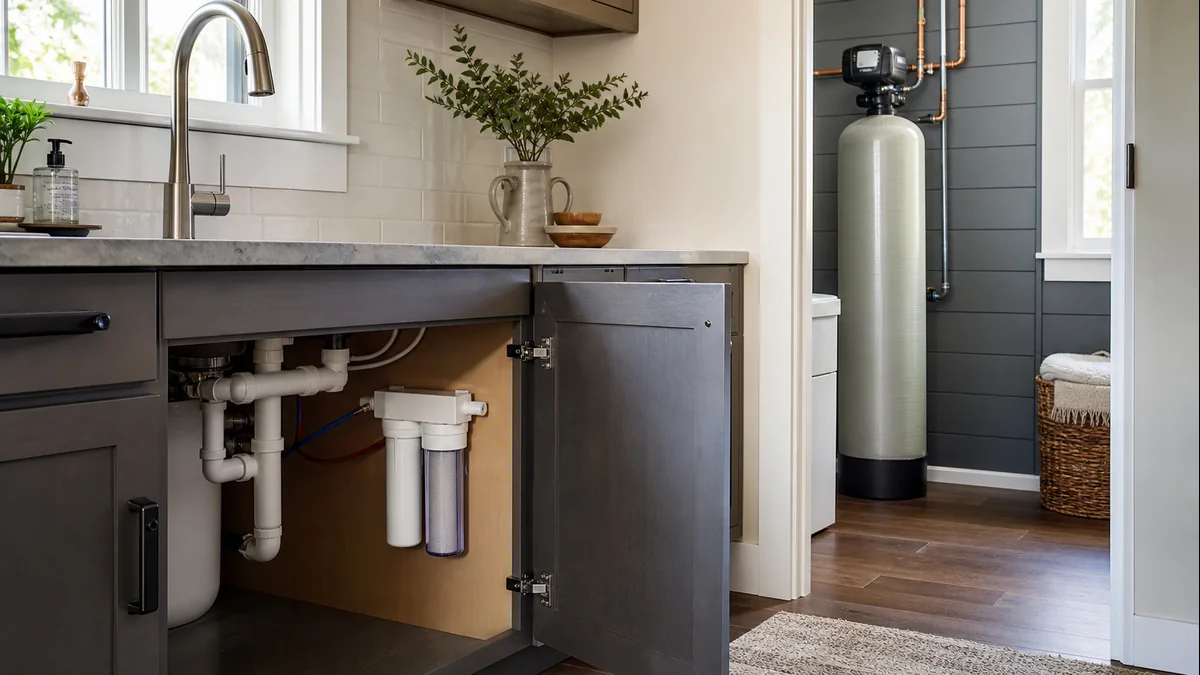
Direct answer: An under-sink filter treats water at one faucet — usually the kitchen — for drinking and cooking. A whole-house filter treats water at the point it enters your home, covering every tap including showers. If your only concern is what you drink, under-sink is cheaper and enough. If you're also concerned about disinfection byproducts (HAA9, TTHM) in shower water, only a whole-house system covers that.
The Core Difference
An under-sink system sits below one sink, plumbed into that faucet's cold-water line (or a dedicated third faucet). It typically pairs a carbon stage with reverse osmosis for the most thorough drinking-water treatment available at the point of use.
A whole-house system installs on the main water line where it enters the house — before the water splits off to the kitchen, bathrooms, laundry, and outdoor spigots. Everything downstream gets treated the same way.
Neither is "better" in the abstract. They solve different problems.
What Each One Actually Covers
| Under-sink (RO) | Whole-house (carbon) | |
|---|---|---|
| Drinking/cooking water | Yes — most thorough option | Yes |
| Shower/bath water | No | Yes |
| Laundry, dishwasher, ice maker | No | Yes |
| Outdoor spigots | No | Yes |
| Portable if you move/rent | Yes, relatively | No — plumbed into the house |
| Handles chlorine taste/smell house-wide | No | Yes |
| Typical install location | Under one sink | Main water line entry point |
Why the Shower Matters More Than People Think
Raleigh Water and Cary's system both show haloacetic acids (HAAs) and trihalomethanes (TTHMs) — disinfection byproducts formed when chlorine reacts with organic matter in the source water. Raleigh Water tests at HAA9 19.9 ppb and TTHM 21.7 ppb; Cary's system runs higher, at HAA9 27.5 ppb and TTHM 38.2 ppb. These compounds are volatile, meaning hot water — like a shower — releases them into the air where they can be inhaled, in addition to skin contact. An under-sink filter does nothing about this exposure path because it only treats water at the kitchen faucet. This is the single biggest reason people upgrade from under-sink to whole-house once they understand what's in the source water — see the full breakdown in trihalomethanes in tap water.
When Under-Sink Is the Right Call
- You're renting and can't or don't want to plumb into the main line
- You're moving within a year or two and want something you can take with you
- Budget is the deciding factor and drinking water is your only concern
- You already have a whole-house softener or basic sediment filter and just want RO added for drinking water specifically
When Whole-House Is the Right Call
- You're concerned about DBP exposure in the shower, not just drinking water
- You want chlorine taste and smell gone at every tap, not just the kitchen
- You're on Cary/Apex/Morrisville water, where contaminant levels run higher due to the Jordan Lake source
- You own the home and plan to stay
Cost Comparison
Triangle Waterworks's city whole-house systems are sized to your bathroom count and quoted after a free water analysis — and every whole-house install includes an under-sink RO unit free, so you're not actually choosing one or the other. For the full whole-house pricing picture, including what the bundled RO unit would otherwise cost and how it compares to national brands, see whole-house filter cost in Raleigh.
The Bundle Question
A lot of the "which one" debate assumes you have to pick. In practice, carbon-at-the-main plus RO-at-the-sink covers the most ground: whole-house carbon handles chlorine, DBPs, and general water quality everywhere, while RO adds a second, more thorough stage specifically for what you drink and cook with. See our full comparison of whole-house filter vs. reverse osmosis for how the two technologies differ on what they remove.
FAQ
Is an under-sink filter enough if I just care about drinking water? Yes. If shower exposure to DBPs isn't a concern for you, a good RO under-sink system covers drinking and cooking water thoroughly.
Can I install both? Yes — this is the most common setup we install. Whole-house carbon at the main line, RO under the kitchen sink, both working together.
Does an under-sink filter protect against PFAS? Reverse osmosis is one of the more effective methods for PFAS reduction. A basic carbon pitcher or faucet filter without RO is less reliable for PFAS specifically.
Is whole-house filtration overkill for a small apartment? For renters, usually yes — you can't modify the main line in most leases, and under-sink is more practical. Whole-house filtration is built for homeowners.
Do I need a plumber to install either one? Whole-house systems tie into your main water line and are licensed plumbing work under NCGS §87-21 in North Carolina — always confirm any installer's license through the NC State Board's public lookup. Under-sink units are simpler and sometimes DIY-friendly, though professional install ensures proper connections.
Not sure which setup fits your home? Take our 60-second water quiz for a recommendation based on your address and priorities.
Answer nine practical questions, then request a written quote or well-water analysis.
Start My Water Analysis