
UV Water Treatment for Well Water: Is It Worth It?
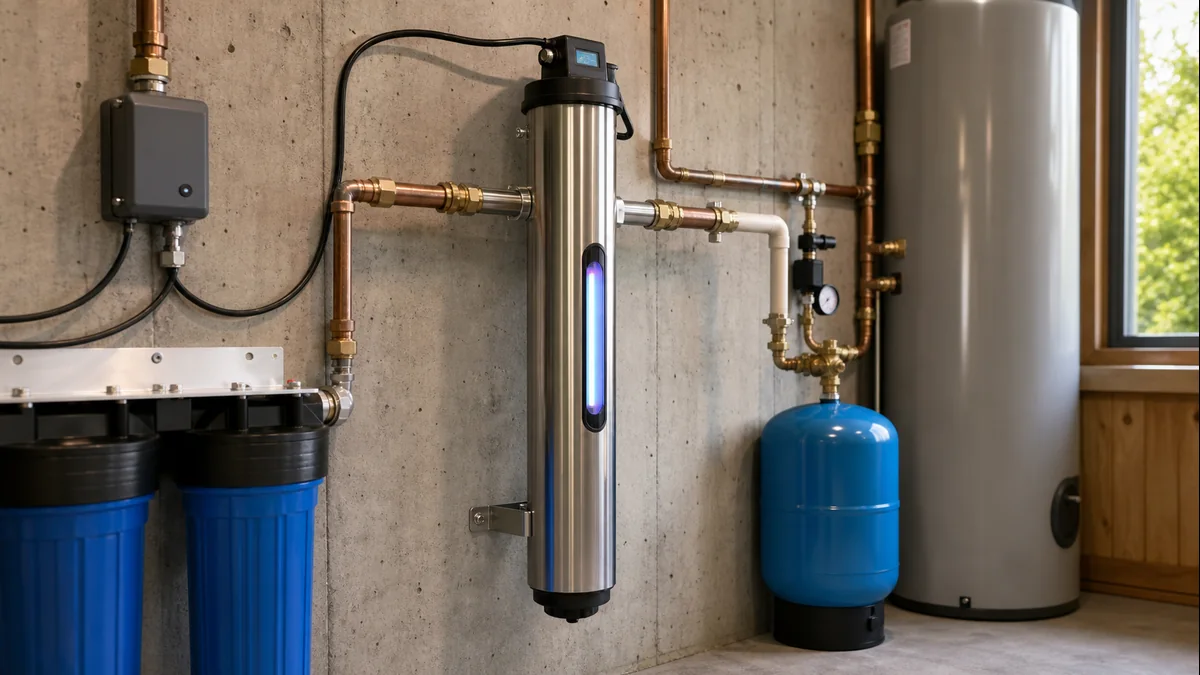
UV treatment is worth it if your well tests positive for coliform bacteria or you can't rule out contamination — it neutralizes bacteria, viruses, and cysts without adding chlorine or changing water taste. It's not a fix for iron, sulfur, hardness, or sediment; those need separate treatment first. The system only works if it's certified NSF/ANSI 55 Class A and sized correctly for your water flow.
What does a UV system actually do?
A UV system pushes water past a UV-C lamp inside a sealed chamber. The light disrupts the DNA of bacteria, viruses, and protozoa as they pass through, so they can't reproduce — it doesn't remove them physically, it deactivates them. No chlorine, no chemical residue, no taste change. It runs continuously whenever water is flowing through the house.
Is UV water treatment safe?
Yes — UV disinfection is one of the most well-established methods for treating microbially unsafe water, and it doesn't add anything to the water. The safety question that actually matters is certification, not the technology itself. UV disinfection for bacteria requires NSF/ANSI 55 Class A certification — that's the standard confirming the unit delivers a high enough UV dose to reliably inactivate bacteria and viruses, not just "reduce" them. Class B systems exist too, but they're rated for supplemental disinfection of water that's already known to be safe, not for treating a well with a confirmed positive bacteria test. If a UV system doesn't list NSF/ANSI 55 Class A on the spec sheet, don't rely on it for a contaminated well.
Why NSF 55 Class A certification matters
This is the detail most homeowners skip past, and it's the one that determines whether the system actually protects your household:
| Certification | What it's rated for | Right for |
|---|---|---|
| NSF/ANSI 55 Class A | Disinfection of water with confirmed or possible bacterial/viral contamination | Wells with a positive coliform test or unknown water source |
| NSF/ANSI 55 Class B | Supplemental treatment of water already known to be microbiologically safe | Extra protection on already-clean water |
| Uncertified UV units | No verified dose or kill rate | Not recommended for any well relying on UV as the safety barrier |
Check the certification directly — manufacturer marketing language ("kills 99.9% of bacteria") isn't the same as an NSF/ANSI 55 Class A listing. If in doubt, the installer should be able to show you the certification documentation for the exact model going into your home.
Does UV replace other well treatment?
No. UV only addresses microbial contamination — it does nothing for iron, hydrogen sulfide, hardness, sediment, or pH. If your well has iron staining or a rotten-egg smell in addition to a bacteria concern, those systems typically go in ahead of the UV unit in the treatment order, because sediment and iron can coat the UV lamp's sleeve and block the light needed to disinfect properly. A full well system is usually sequenced: sediment filter → pH correction (if needed) → iron/sulfur treatment → UV, with UV last so the water hitting the lamp is already clear.
Local angle: UV and Triangle-area wells
Roughly 15% of homes in Wake County are on private wells, with higher shares in Johnston, Franklin, Chatham, and Granville counties. NC doesn't regulate private well water quality after the well is drilled — testing and treatment decisions are entirely on the homeowner. County health departments test for bacteria and nitrates, but a positive result doesn't come with a treatment plan attached; that's where UV (paired with whatever else your water needs) comes in. Because iron and sulfur are common in this region's well water, most local UV installs are part of a multi-stage system rather than a standalone unit — which is also why a water analysis before quoting matters more here than in areas with simpler well chemistry.
FAQ
Does UV treatment change the taste of well water? No. UV disinfection doesn't add or remove minerals, so it has no effect on taste, odor, or appearance beyond killing microorganisms. If your water tastes or smells off, that's a separate issue — likely sulfur, iron, or organic matter — that UV won't touch.
Do I need a UV system if my well already tested clean? Not necessarily. If your well has a clean, consistent bacteria test history and a properly sealed wellhead, many homeowners skip UV. It becomes a priority after a positive coliform test, a new well purchase with unknown history, or a nearby contamination event (flooding, septic proximity).
How often does a UV system need maintenance? The UV lamp needs periodic replacement (lamps lose effectiveness over time even if they're still lit) and the quartz sleeve needs occasional cleaning, especially if iron or sediment is present upstream. Ask your installer for the specific schedule for the model installed.
Can I install a UV system myself? Whole-home water treatment installation in North Carolina is licensed plumbing work under NCGS §87-21. You can verify any installer's license through the NC State Board's public lookup before hiring.
What does a UV system cost as part of a well setup? Every install starts with a free water analysis, so pricing follows what your water actually needs rather than a guess. UV is typically one component of a larger system rather than priced standalone.
Not sure if UV is what your well actually needs? Start with a free water analysis — we test first, then tell you exactly what's in your water before recommending anything.
Related reading: Well Water Treatment: The Complete NC Guide · Coliform Bacteria in Well Water: What to Do · How Often to Test Well Water in NC · Air Injection Iron Filters Explained
Answer nine practical questions, then request a written quote or well-water analysis.
Start My Water Analysis