
Water Hardness by Town in the Triangle, NC
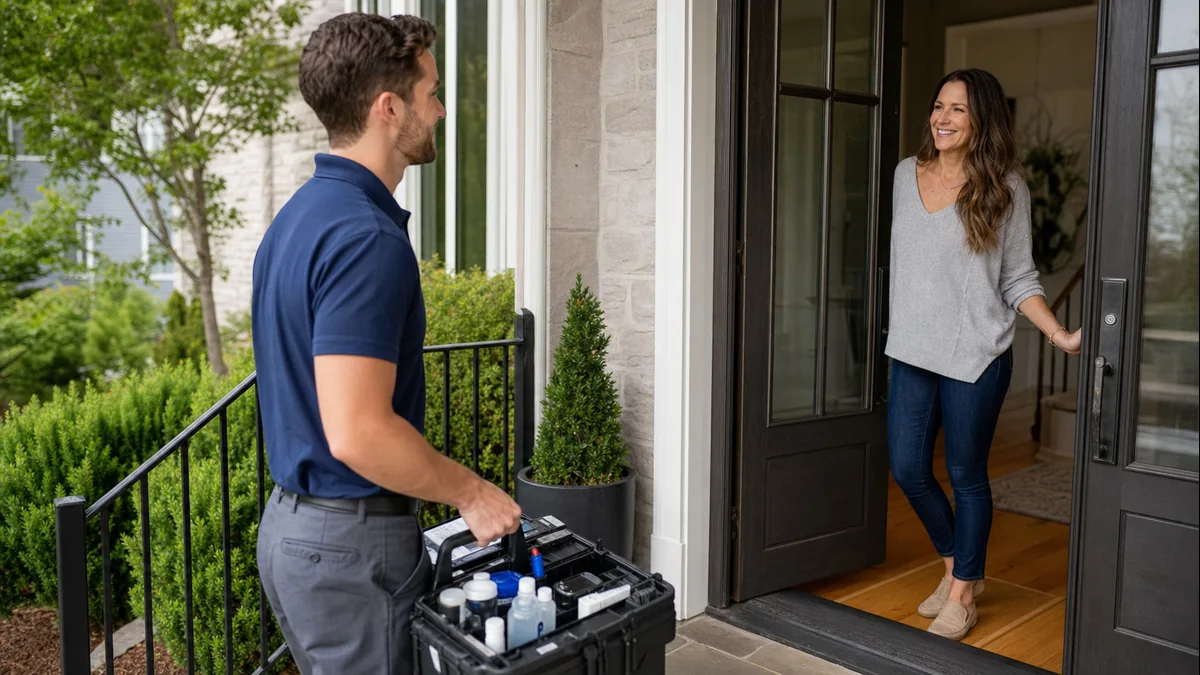
Direct answer: On the WQA scale the Hach Total Hardness Test Kit (Model 5-B) uses, Raleigh and Wake Forest measure about 1.6 gpg — slightly hard. Cary, Apex, and Morrisville share a system that measures 1.6–3.7 gpg, spanning slightly hard to moderately hard. No Triangle town in this comparison tests soft. Because mineral buildup is cumulative and chlorine/PFAS exposure has nothing to do with hardness, every home here is a good fit for one all-in-one softening-plus-carbon system.
How does water hardness compare across Raleigh, Wake Forest, Cary, Apex, and Morrisville?
Here's the side-by-side, using only verified figures — the town's own published number where one exists, plus Triangle Waterworks' measured range at the tap.
| Town | Water Supply | WQA Hardness Classification | Measured/Published Range |
|---|---|---|---|
| Raleigh | Raleigh Water | Slightly hard | ≈1.6 gpg |
| Wake Forest | Raleigh Water (no separate plant) | Slightly hard | ≈1.6 gpg |
| Cary | Cary/Apex Water Treatment Facility (Jordan Lake) | Slightly hard to moderately hard | 1.6–3.7 gpg (town's own figure: 25–30 ppm, ≈1.5–1.75 gpg) |
| Apex | Cary/Apex Water Treatment Facility (Jordan Lake) | Slightly hard to moderately hard | 1.6–3.7 gpg (town's own figure: 33.3 ppm ≈1.9 gpg, 2024 CCR) |
| Morrisville | Cary-operated utility (Cary's finished water since April 2006) | Slightly hard to moderately hard | 1.6–3.7 gpg |
The classification bands come from the Water Quality Association scale: soft is under 1.0 gpg (under 17 mg/L), slightly hard runs 1.0–3.5 gpg (17–60 mg/L), and moderately hard runs 3.5–7.0 gpg (60–120 mg/L). Every town on this list falls in one or both of the first two bands — there's no "hard" or "very hard" reading anywhere in the Triangle data we've verified.
Raleigh Water also serves Garner, Knightdale, Rolesville, Wendell, and Zebulon at the same supply, so those towns share Raleigh's ≈1.6 gpg reading. For a deeper look at Raleigh specifically, see Raleigh water hardness.
Why do Cary and Apex show a wider range than Raleigh?
Two things are happening at once, and neither means anyone's numbers are wrong.
- Scale difference. Cary calls its own 25–30 ppm reading "very soft" and Apex calls its 33.3 ppm reading "moderately soft" — but those are each town's own internal labels, not the WQA scale. Converted to WQA terms, Cary's own figure (≈1.5–1.75 gpg) and Apex's own figure (≈1.9 gpg) both land as slightly hard, consistent with the low end of our measured range.
- Plant average vs. your actual tap. A town's published figure is a plant-wide average measured where finished water leaves the facility. Our 1.6–3.7 gpg range reflects what we've measured at individual addresses across the Cary/Apex/Morrisville distribution system, which varies house to house. Neither number is inaccurate — they're answering different questions.
At the top of that range, 3.7 gpg works out to about 63 mg/L, which crosses the 60 mg/L (3.5 gpg) line into moderately hard. At the bottom, 1.6 gpg is slightly hard. A given Cary, Apex, or Morrisville home could land anywhere in between, which is exactly what is Morrisville, NC water hard walks through in more detail.
Does "slightly hard" or "moderately hard" water actually cause problems?
Yes — the effect is cumulative rather than dramatic, which is why it's easy to underestimate from a low average alone. Minerals are present at every level across this 1.6–3.7 gpg range, and every gallon through the house leaves a little behind:
- Glassware and dishes come out spotted or filmy even with rinse aid
- Faucet aerators and shower heads collect crusty white deposits that restrict flow
- Soap scum builds on shower doors and tile as soap reacts with dissolved minerals instead of lathering fully
- Laundry can feel stiffer and colors fade faster over repeated wash cycles
- The water heater accumulates scale on the tank bottom and heating elements year after year — the slow failure mode that shows up as a shorter equipment lifespan
None of that shows up in week one. All of it compounds over the 10–15 years a family owns the same water heater, dishwasher, and washing machine — which is the real timeframe a softener is protecting.
What about chlorine, PFAS, and disinfection byproducts by town?
Hardness is only half the water-quality picture, and it's a separate issue from disinfection byproducts and contaminants — a softener alone doesn't touch either.
- Raleigh: HAA9 19.9 ppb, TTHM 21.7 ppb — both legally compliant with EPA limits.
- Apex/Cary/Morrisville (shared system): TTHM measured at 41 ppb, ranging up to 53 ppb (EPA MCL is 80 ppb) — roughly double Raleigh's TTHM figure and the strongest verified disinfection-byproduct reading in this comparison. Cary's own figures also show HAA9 at 27.5 ppb, TTHM at 38.2 ppb, PFOA at 2.86 ppt, and PFOS at 3.79 ppt.
- All of the above are legally compliant with EPA drinking water standards. Some also sit above EWG's stricter, non-regulatory health guidelines — a different, more conservative benchmark than the legal limit, not a violation.
Softening (ion exchange) removes calcium and magnesium only — it does nothing for chlorine taste, chloramine, PFAS, or disinfection byproducts. Removing those requires activated carbon certified for PFAS reduction (NSF/ANSI 53 or P473) or reverse osmosis (NSF/ANSI 58), which is why hardness and taste/contaminant treatment are two different jobs that need two different technologies.
Which Triangle town has the hardest water?
Based on the verified figures above, the Cary/Apex/Morrisville shared system reaches the highest point in this comparison — up to 3.7 gpg, crossing into moderately hard — while Raleigh and Wake Forest hold steady around 1.6 gpg, slightly hard. For the full town-by-town ranking and how homes within the same system can still land in different bands, see which Triangle towns have the hardest water.
What's the right system no matter which of these towns I'm in?
The same answer applies across all five towns: an all-in-one whole-home system that combines softening resin with activated carbon filtration in a single unit — the best of both worlds. Softening protects the water heater, dishwasher, washing machine, and plumbing from scale buildup and improves lather, laundry feel, and glassware clarity. Carbon handles what softening can't touch: chlorine and chloramine taste and smell, PFAS reduction, and disinfection byproducts like HAA9 and TTHM. Because every town in this comparison measures slightly hard or higher, and because chlorine/PFAS exposure exists independent of hardness, pairing both stages in one system is the practical fit whether you're at 1.6 gpg in Raleigh or 3.7 gpg in a Cary/Apex/Morrisville home.
If you're in Wake Forest specifically, water treatment in Wake Forest, NC covers the same Raleigh Water supply in more local detail. And whatever your address, the only way to know your exact number is a reading at your own tap — see how to test water hardness at home for the at-home method using the Hach Total Hardness Test Kit, Model 5-B.
Frequently Asked Questions
I'm trying to decide between a house in Raleigh and one in Cary — which has harder water? Raleigh runs consistently around 1.6 gpg, slightly hard. Cary sits in a wider range, 1.6–3.7 gpg, so it can be similar to Raleigh at one address or moderately hard at another within the same town. If you're comparing specific homes, a test at each address is the only way to know for sure rather than relying on a town-wide average.
My Wake Forest water tastes like a pool sometimes — is that related to hardness? No, that's a separate issue. Wake Forest runs on the same Raleigh Water supply at about 1.6 gpg, slightly hard, and taste/smell comes from chlorine or chloramine disinfection, which softening doesn't address. That's what the carbon side of an all-in-one system is built to handle.
I've tested my own tap and got a different number than the town's published figure — which one is right? Both can be accurate at once. Town figures like Cary's 25–30 ppm or Apex's 33.3 ppm are plant-wide averages measured at the treatment facility; your tap reading reflects your specific address after the water has traveled through the distribution system, which is why our measured range (1.6–3.7 gpg) runs wider than any single town's published number.
Does living in the "slightly hard" towns mean I can skip softening? Slightly hard water still deposits calcium and magnesium on fixtures and inside your water heater over time — the buildup is cumulative rather than a one-time event. On top of that, chlorine taste and disinfection byproducts exist in these systems independent of the hardness reading, which is exactly what the carbon half of an all-in-one system is there to handle alongside softening.
Is Apex's water safer than Cary's since the town figures look lower? Apex and Cary draw from the same Cary/Apex Water Treatment Facility, so they share the same finished water and the same verified TTHM figures (41 ppb, up to 53). A lower town-published hardness number reflects the plant average using each town's own scale, not a difference in the underlying water quality between the two towns.
What does it cost to get this fixed across any of these towns? Pricing is set after a free water analysis since every home's system is sized differently — we don't publish a flat number because your address determines it. For comparison, national big-brand installers commonly quote $6,000–$12,000 for whole-home systems.
Take our 60-second water quiz to see which all-in-one system fits your address, whatever your town's number turns out to be.
Answer nine practical questions, then request a written quote or well-water analysis.
Start My Water Analysis