
Does a Water Softener Add Resale Value to a Fuquay-Varina Home?
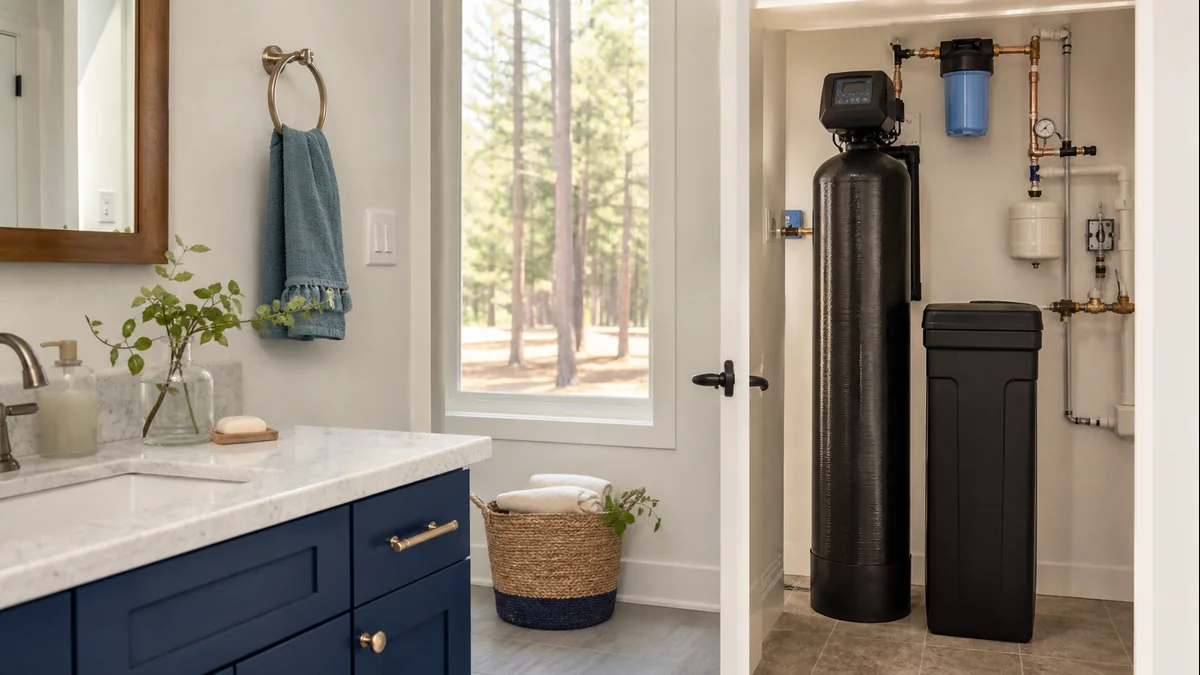
Direct answer: Yes — an owned, permanently installed whole-home system adds real value at resale, though not in a dollar figure anyone can honestly quote. It's a listed feature that conveys with the house, it protects exactly what a buyer and inspector look at (the water heater, dishwasher, washer, fixtures, and plumbing), and it answers a question relocating Fuquay-Varina buyers frequently ask instead of leaving it as a negotiating point. A free water analysis is the right first step, since the correct system depends on your specific address.
Does Installing a Water Softener Actually Help When You Sell?
It helps, and the reason is mechanical rather than cosmetic: a whole-home system is a permanent fixture that conveys with the sale, not a consumable a buyer has to think about replacing. Owned outright, it shows up the way a new roof or a replaced HVAC system shows up — as infrastructure already handled. Nobody can promise a specific dollar figure it adds, and any claim that does is guessing. What's provable is that a buyer walking through a Fuquay-Varina home with a whole-home softening and carbon system already installed has one less thing to research, budget for, and schedule after closing.
What Exactly Does a Buyer See That Makes This a Selling Point?
A buyer sees a permanently plumbed system tied into the house's main water line, not a box that leaves with the seller. A water softener isn't staged like a couch or left behind like a washer that happened to fit the laundry room — it's installed into the plumbing, typically near the main line or in the garage, with visible tanks and a control head an agent will point out during a showing. It reads the same way a tankless water heater or a whole-house surge protector reads: infrastructure, not decor. On a listing sheet, "whole-home water treatment system" is a line item a Fuquay-Varina buyer doesn't have to add to their own to-do list.
Does It Actually Protect Anything an Inspector or Buyer Cares About?
Yes — it protects the specific appliances and plumbing that scale damages over time, which is exactly what a buyer's mental list of "things I'll probably have to replace soon" includes. A water heater with years of scale insulating its heating element works harder and wears faster. A dishwasher's spray arm holes narrow with mineral deposits until spray coverage drops. A washing machine's internal lines and valves accumulate the same buildup. That's ordinary ion-exchange chemistry: calcium and magnesium deposit wherever water sits, heats, or evaporates, and buildup is cumulative over the years an appliance runs. A buyer who inherits appliances that lasted their full working life, instead of a dishwasher already struggling at three years old, inherits that protection whether or not they ever think about water hardness by name.
Why Does This Matter More in Fuquay-Varina Specifically?
Fuquay-Varina doesn't run its own treatment plant — the town purchases treated water wholesale and blends supply from three systems: the City of Raleigh (Falls Lake), Harnett County (Cape Fear River), and Johnston County (Neuse River). Because the blend varies by where in town an address sits and how supply is balanced at any given time, no single published hardness figure applies across every Fuquay-Varina address. Our own testing across the service area measures 1.6 to 3.7 gpg by address — slightly hard to moderately hard on the Water Quality Association scale the Hach Total Hardness Test Kit, Model 5-B uses. A buyer moving from Raleigh, from Cary, or from out of state can't assume their new address matches wherever they came from. A seller who's already had the home tested and treated has answered a question the buyer would otherwise raise themselves.
Do Relocating Buyers Actually Ask About Water Here?
They frequently do, because Fuquay-Varina draws a steady stream of buyers moving in from elsewhere in the Triangle or from out of state, and water is one of the first things people notice changes when they move. Someone coming from a different water source often mentions spots on glassware or a change in how soap lathers within the first few weeks in a new house, and the natural next question during a home search is whether the water here needs anything done to it. When a seller already has a whole-home system installed, that question gets answered by what the buyer can see in the garage, rather than something the buyer researches and raises at the negotiating table.
What Do Buyers Actually Notice at a Showing?
They notice the everyday, visible results — spot-free glassware, fixtures without water spots or soap film, and glass shower doors that photograph clean. Those are the exact details that show up in listing photos and that an agent points out walking a buyer through a kitchen or bathroom. Softer water also means less soap film in showers and sinks, and laundry without the stiffness hard-mineral buildup can leave behind. None of that requires the buyer to know anything about gpg or ion exchange — they just notice the house looks and feels well cared for.
Owned vs. Rented: Which One Actually Helps at Closing?
An owned system is a clean asset that conveys with the sale — no lease to explain, no separate company to notify, no monthly payment for a buyer to take over. A rented or leased softener is a complication at exactly the wrong moment: the buyer has to qualify to assume the agreement, or the seller has to arrange removal and patch the plumbing before closing. See our full breakdown on rented vs. owned water softeners. If you're weighing timing around an actual closing date, water system timing around a Raleigh-area real estate closing walks through how that typically gets handled.
| Factor | Owned whole-home system | Rented/leased softener |
|---|---|---|
| At closing | Conveys with the house, no action needed | Buyer must assume lease or seller must remove it |
| How it's perceived | Listed feature, permanent infrastructure | Ongoing obligation, not an asset |
| Monthly cost after sale | None | Continues until cancelled or transferred |
| Appearance in listing | Clean line item | Requires explanation |
National Big-Brand Cost Context
For context only, and not as any Triangle Waterworks price: national big-brand whole-home systems commonly run $6,000–$12,000 installed. Once a system is paid off and owned outright, that cost is behind the current owner — the buyer isn't asked to price it in, finance it, or take over a payment.
Whole-Home Softening vs. Carbon: Why the All-In-One Matters for Resale Too
A softener alone handles calcium and magnesium — the minerals responsible for scale on appliances, fixtures, and plumbing. It does nothing for chlorine or chloramine taste and smell, or for the disinfection byproducts that form during water treatment. That's the carbon half of an all-in-one system: a buyer wants water that feels right (no scale, good lather, clean glassware) and tastes right from the tap. An all-in-one system covers both in a single installed unit, rather than leaving a buyer wondering why the water still tastes like chlorine despite a softener being present. For long-term protection, see does soft water make appliances last longer, and for the broader case, is a water softener worth it in NC.
Get Your Fuquay-Varina Home's Actual Numbers
Because Fuquay-Varina's blended supply means hardness varies address by address, the right system for resale purposes isn't a guess — it's based on what a free water analysis actually measures at your house. For the fuller picture on the town's water supply, see water treatment in Fuquay-Varina, NC.
Take the 60-second water quiz or schedule a free water analysis to see what an owned, all-in-one whole-home system would look like for your address.
Frequently Asked Questions
I'm getting ready to list my Fuquay-Varina home — is it too late to install a water softener before selling? No. A whole-home system is a straightforward installation, and having it in place before showings begin means buyers see it as an already-solved feature. A free water analysis is the right starting point so the system is sized correctly for your address.
My realtor mentioned my water heater has scale buildup — should I worry about that during a sale? Scale buildup in a water heater is common wherever calcium and magnesium are present, and it's exactly what an inspector notes and a buyer factors into their impression of the home's condition. A whole-home softener stops new scale from forming, protecting the water heater going forward.
Do I need to disclose that I have a water softener when I sell my house? Disclosure requirements vary and are a question for your real estate agent or attorney, not something we can advise on here. What we can say is that an owned, installed system is generally viewed as a positive feature, since it conveys with the house.
I'm relocating to Fuquay-Varina and the home I'm buying already has a water softener — does that mean I don't have to test the water myself? It's still worth confirming, since even an installed system should match your household's actual water conditions and usage. A free water analysis can verify the existing system is sized correctly for the address.
Will a water softener make my house sell faster? There's no reliable way to quantify that, and we won't invent a number to answer it. What's true is that an owned whole-home system removes a question relocating buyers often ask and protects the appliances a buyer will inspect.
Is it worth upgrading a rented softener to an owned system before I sell? Generally yes, because a rental or lease is a complication at closing — the buyer has to assume it or the seller has to arrange removal — while an owned system simply conveys with the house as a clean asset.
Answer nine practical questions, then request a written quote or well-water analysis.
Start My Water Analysis