
Water Softener Installation in a Wendell, NC Home With a Crawl Space
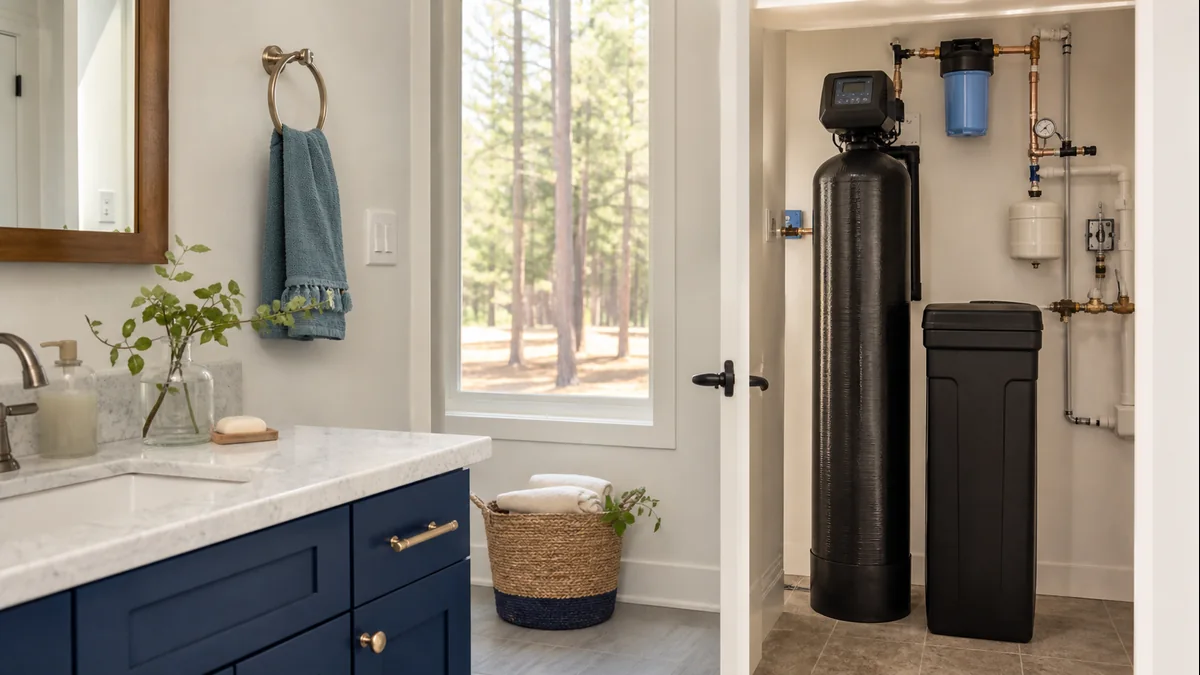
Direct answer: A crawl space foundation is not an obstacle to water softener installation in Wendell — it's the standard foundation type across most of the Triangle, and installers place all-in-one systems in crawl spaces, garages, utility rooms, conditioned closets, and exterior enclosures every day. The installer evaluates your home's specific layout during the free water analysis and picks the spot with access to the main line, a drain, and power — you don't need to figure any of that out beforehand.
If you've been putting off looking into a whole-home system because your Wendell house sits on a crawl space instead of a basement, that hesitation isn't necessary. Basements are the exception in this part of North Carolina, not the rule, and installers who work across Wake County size and place systems around crawl spaces and slab foundations as a matter of course.
Is a Crawl-Space Foundation a Problem for Water Softener Installation?
No — a crawl space is simply one of several normal locations an installer evaluates, not a complication. Most homes built in Wendell and the surrounding Triangle area sit on crawl space or slab foundations rather than full basements, so installers who work this region plan for that layout as the default. The main water line still enters the house at a single, identifiable point whether that point is in a crawl space, a garage wall, or a mechanical room, and that entry point determines where the system goes — not the presence or absence of a basement.
Where Does the Installer Actually Put the System?
The installer places the all-in-one system as close as practical to where the main water line enters the home and before that line branches off to individual fixtures, so every tap, shower, and appliance in the house runs downstream of it. In a crawl-space home, that often means a spot inside the crawl space itself, near the entry point — but it just as often means the line is accessible from a garage, a utility or laundry room, or a conditioned closet, depending on how the house was plumbed. There's no single right answer for every Wendell house; the layout of your plumbing decides it, and that's what the installer looks at during your visit.
What Factors Decide Whether It Goes in the Crawl Space, Garage, or Somewhere Else?
A handful of practical factors — not the foundation type — determine the final spot:
- Access to the main line before it branches. Wherever the line is easiest to reach before it splits toward individual fixtures is the strongest candidate location.
- A drain for regeneration discharge. The softening side of an all-in-one system needs somewhere to route water during regeneration.
- A nearby electrical outlet. The system's control valve runs on standard household power.
- Freeze protection. Any location needs to stay reliably above freezing, which is one reason installers look closely at how a given crawl space is insulated, vented, or conditioned.
- Room to service the unit later. The spot needs enough clearance for someone to check salt levels, inspect the control valve, or perform maintenance down the road.
None of these factors rule a crawl-space installation in or out ahead of time. They're simply what the installer checks, wherever the main line happens to run in your specific home.
Does the Crawl Space Need a Drain and Outlet Already in Place?
Not necessarily — the installer identifies what's usable during the visit rather than requiring you to have anything set up in advance. Some Wendell crawl spaces already have a nearby drain or outlet from prior plumbing or electrical work; others don't, and the installer accounts for that when recommending a location. If the crawl space doesn't offer easy access to both, that's often exactly why a garage, utility room, or conditioned closet ends up being the better call — not because the crawl space "failed" some test, but because a different spot had easier access to what the system needs.
How Does the Installer Handle a Crawl Space's Temperature and Moisture?
Freeze protection and a dry, stable environment are part of what the installer evaluates when walking a crawl space, along with the drain, outlet, and access questions. A vented crawl space with real temperature swings behaves differently than a sealed, conditioned one, and the installer factors that into where within the crawl space — or whether a different location entirely — makes more sense. This is routine assessment, the same kind of walk-through that happens in a garage or utility room, not a special hurdle unique to crawl-space homes.
Who Is Actually Allowed to Install a Whole-Home Water System in NC?
Under North Carolina law, installing or replacing a whole-home water treatment system is plumbing contracting work. N.C. Gen. Stat. § 87-21 defines plumbing contracting to include the installation or replacement of "whole-house water purification or treatment systems," which is why this is licensed plumbing work rather than a DIY appliance swap — regardless of whether the install happens in a crawl space, a garage, or a utility closet.
What Does Wendell's Water Supply Mean for My System?
Wendell is served by Raleigh Water, the same utility supplying Raleigh, Garner, Knightdale, Rolesville, Wake Forest, and Zebulon. On the Water Quality Association scale the Hach Total Hardness Test Kit, Model 5-B uses, Raleigh Water measures about 1.6 grains per gallon — slightly hard. Our own testing across the service area measures 1.6 to 3.7 gpg by address, so the number that matters most is the one from your own tap, and a free water analysis is how that gets confirmed.
Lower hardness works in your favor rather than against you: a correctly sized softener in this range regenerates less often and uses less salt, even as buildup continues to accumulate on fixtures, the water heater, and glassware year after year. Hardness is only half the picture, though — Raleigh Water's documented figures show HAA9 at 19.9 ppb and TTHM at 21.7 ppb, both legally compliant with EPA limits and above the stricter, non-regulatory EWG guideline, and softening resin does nothing about either one. Raleigh Water also normally disinfects with chloramine and converts to free chlorine once a year on the North Carolina Department of Environmental Quality's recommendation, flushing the distribution system during the changeover (dates shift year to year, so check the City's own announcement). That's the case for pairing softening resin with a carbon stage rather than installing a softener alone.
Crawl Space vs. Garage vs. Utility Room vs. Exterior Enclosure
| Location | Access to main line | Drain access | Outlet access | Freeze protection needed |
|---|---|---|---|---|
| Crawl space | Often direct, near entry point | Varies by home | Varies by home | Installer evaluates insulation/venting |
| Garage | Usually straightforward | Often present | Usually present | Depends on region/insulation |
| Utility or laundry room | Straightforward | Often present (laundry drain) | Usually present | Typically conditioned already |
| Conditioned closet | Depends on plumbing routing | Varies | Usually present | Already conditioned |
| Exterior enclosure | Depends on line routing | Requires planning | Requires planning | Requires dedicated protection |
Every row in this table describes a workable, routine placement — the right one for your Wendell home depends on where your plumbing actually runs, and the installer determines that on-site rather than asking you to guess from a list.
Why This Is Worth Doing in a Wendell Home
None of the placement questions above are reasons to wait. They're the checklist an installer walks through on every job, whether the home has a crawl space, a garage, or a full basement — and a crawl-space foundation is the norm here, not a complication to solve first. What you gain once the all-in-one system is in, wherever it ends up sitting, is the same either way: softening resin that stops mineral buildup at the source instead of letting it accumulate on fixtures and inside the water heater, paired with a carbon stage that handles the chlorine taste, chloramine, and disinfection byproducts softening alone never touches. The placement question has a routine answer. The benefit doesn't depend on which spot the installer picks.
Frequently Asked Questions
I just found out my Wendell house doesn't have a basement — does that rule out a whole-home system? No. Most homes in Wendell and across the Triangle sit on crawl space or slab foundations rather than basements, and installers place systems in crawl spaces, garages, utility rooms, and closets constantly. The foundation type doesn't determine whether installation is possible — where your main water line runs does.
My crawl space is pretty tight — will the installer even be able to get in there? The installer evaluates your specific crawl space during the free water analysis, including access and clearance, before recommending a location. If the crawl space itself isn't the best fit, a garage, utility room, or closet is often just as viable, since what matters is access to the main line, a drain, and power.
Do I need to add a drain or outlet to my crawl space before the installer comes out? No — the installer identifies what's already usable and works around it, or recommends a different location if the crawl space doesn't have easy access to both. You don't need to do any electrical or plumbing prep work in advance.
How do I know if my Wendell water is even hard enough to bother with this? Raleigh Water, which serves Wendell, measures about 1.6 gpg — slightly hard on the Water Quality Association scale — and our own testing across the service area runs 1.6 to 3.7 gpg by address. A free water analysis gives you the exact number for your tap, and low hardness actually keeps the system cheaper to run, not less worth having.
Is it legal for just anyone to install a system like this in my crawl space, or does it need to be a licensed plumber? North Carolina law treats installing or replacing a whole-home water treatment system as licensed plumbing contracting work — N.C. Gen. Stat. § 87-21 specifically defines plumbing contracting to include "whole-house water purification or treatment systems." That applies regardless of where in the home the system is installed.
I've never had a system like this before and I'm worried about how installers even get equipment into a crawl space — what does that involve? It's routine for installers working this region, since crawl-space access is the norm in Wendell and the surrounding Triangle. The installer plans the route and placement during the visit, so there's nothing you need to prepare ahead of time.
Ready to Find Out What Your Wendell Home Needs?
Placement, drain access, and freeze protection are all questions the installer answers for you during a free water analysis — along with the actual hardness reading from your own tap. Take the 60-second water quiz to see how an all-in-one softening-and-carbon system fits your household, or learn what installation looks like in a similar Raleigh Water home before booking your analysis. For a broader look at what the visit itself involves, see what to expect from installation in Cary, how sizing gets set to your home instead of a generic template, and what upkeep looks like once the system is in.
Answer nine practical questions, then request a written quote or well-water analysis.
Start My Water Analysis