
Water Softener Installation in Durham, NC — What Installation Day Looks Like
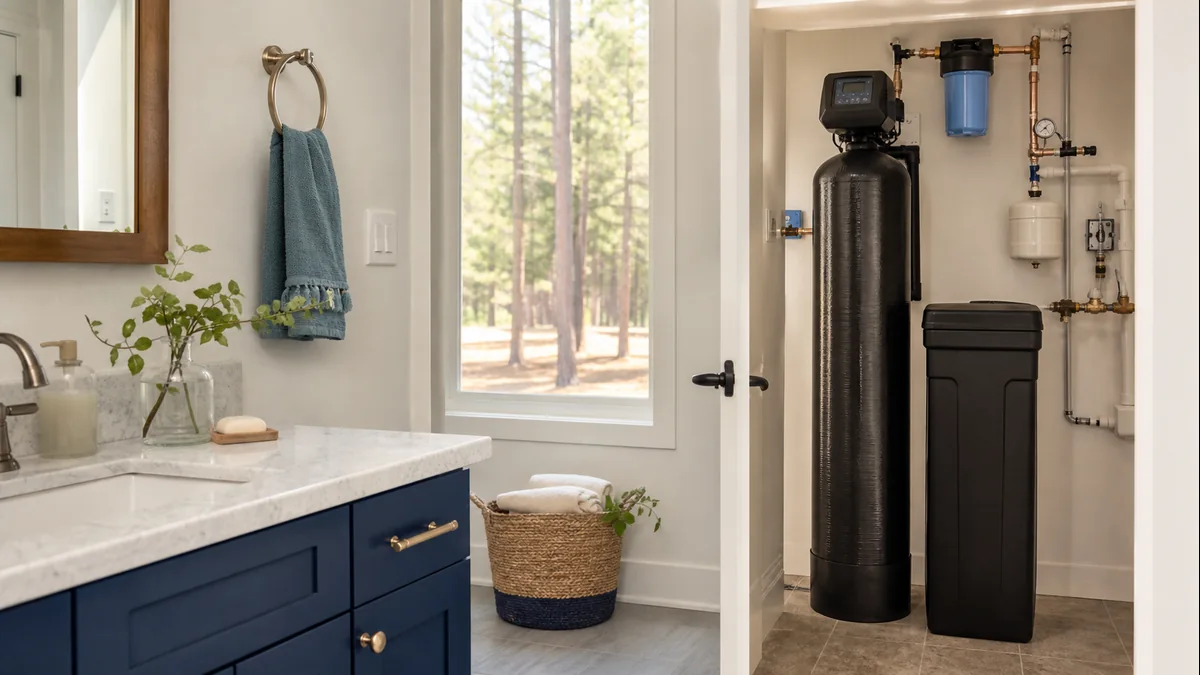
Direct answer: Installation in Durham starts with a free in-home water analysis that sets sizing and price, then a plumbing tie-in at the main line where water enters the house. A typical single-visit install runs through commissioning and a homeowner walkthrough the same day. One all-in-one unit handles softening resin and carbon filtration together — carbon does real work here, given Durham's own disinfection byproduct numbers.
What Happens Before Install Day in Durham?
A free in-home water analysis, done at your actual address, before anything is scheduled or ordered. A specialist tests your water and looks at your home's plumbing — where the main line enters, how much clearance there is to work with, and what's already tied into that section of the house.
That visit is what sets both the sizing and the price for your system. Durham addresses vary, and Durham's own water quality report publishes no citywide hardness figure at all, so there is no shortcut around testing your specific address. Nothing about your install — the equipment, the location, or the cost — gets decided before this step happens.
Why Does the Free Water Analysis Set the Price Instead of a Quoted Number?
Because every home is different, and a system sized for the wrong numbers either underperforms or costs more than it needs to. Pipe layout, existing plumbing, and your address's actual water quality all factor into what gets installed. Durham publishes no hardness figure, so a generic citywide number can't stand in for a real reading at your tap — the analysis is what turns a general question into a specific, priced answer for your house.
Where Does the System Tie Into a Durham Home's Plumbing?
At the main line, at or near the point where water enters the house — a garage corner, a crawl space, a basement mechanical area, or a utility closet, depending on your home's layout. Whichever location applies, it gets confirmed during the water analysis, not figured out on the spot when the crew arrives.
Three things need to be near wherever the unit lands: access to the main line, a nearby drain for the softening side's regeneration discharge, and a standard electrical outlet.
What Does Install Day Actually Involve?
| Step | What it involves |
|---|---|
| Free water analysis and sizing | Already completed before install day — this is where the system spec and price were set |
| Location confirmed | Garage, crawl space, basement, or main-line entry point, agreed on in advance |
| Main line tie-in | The all-in-one unit connects at the point where water enters the house |
| Bypass connection | Lets the household run water around the system if it ever needs service |
| Drain line | Run for the softening side's regeneration discharge |
| Commissioning | System brought online, checked for leaks and normal pressure |
| Homeowner walkthrough | You're shown how regeneration works and where your documentation lives |
Install visits like this typically run in a single day at Triangle Waterworks — that's what our own installs generally look like, not a guaranteed number for every Durham home, since access, plumbing layout, and any complications specific to your house can change it. Your installer tells you what to expect for your address once the water analysis and location are confirmed.
What Does a Homeowner Need to Do to Prepare?
Clear access to the area where the system will go — the garage corner, crawl space entry, basement, or utility closet identified during the water analysis — and have someone available to grant entry and walk through the confirmed location with the installer before work starts. Beyond that, there's little to prepare; the analysis already worked out the specifics of your home ahead of time.
Does Durham Require a Permit for This Kind of Install?
Installing a whole-house water treatment system is plumbing work in North Carolina, and permitting requirements vary by jurisdiction. Rather than guess at Durham County's specific rules here, see our dedicated page on water softener permits in Durham County, NC for what's actually required.
What Happens After the System Is Installed?
The crew brings the system online, checks for leaks, confirms normal pressure throughout the house, and walks you through the basics — how regeneration works and where your paperwork lives. From there, the system runs in the background. You notice it in the water itself: less scale buildup on fixtures, better lather, and a carbon stage working continuously on chlorine, chloramine, and disinfection byproducts.
Because softening and carbon filtration live in one unit, there's no second installation to schedule for the water-quality side — the same tie-in and install-day sequence covers both.
Why Does the Carbon Side of This System Matter So Much in Durham?
Because Durham's own 2025 Annual Drinking Water Quality Report shows real numbers for compounds a softener alone does nothing about. Durham reports a highest locational running annual average of 56 ppb for total trihalomethanes (TTHM), against an 80 ppb legal limit, and 49 ppb for haloacetic acids (HAA5), against a 60 ppb limit — both compliant, and both among the higher verified readings in our regional data. Durham disinfects with chloramines, carrying a chloramine residual of 1.5 ppm.
EPA's National Primary Drinking Water Regulations table lists TTHM's potential long-term health effect above the legal limit as "Liver, kidney or central nervous system problems; increased risk of cancer," and HAA5's as "Increased risk of cancer." Those effects describe exposure above the limit over the long term — not a claim that Durham's current, compliant water is causing them. But "legally compliant" is a ceiling set by EPA's own risk tolerance, not a guarantee of zero risk, and a carbon filtration stage removes these compounds from the water rather than relying on staying under a legal limit.
A water softener's ion-exchange resin has no mechanism for any of this — it only addresses calcium and magnesium. That's exactly why the system installed in Durham pairs softening resin with a carbon stage in one unit, so the same install-day sequence covers both the hardness side and the disinfection-byproduct side.
FAQ
I just booked my free water analysis in Durham — what should I expect from that visit? A specialist tests your water at your own address and looks at your plumbing layout — where the main line enters, how much room there is, and what's already tied into that section of the house. That visit sets both the sizing and the price for your system before anything is scheduled or ordered.
How long does the actual install take once it's scheduled? Installs like this typically run in a single visit at Triangle Waterworks, but that's a description of what our jobs generally look like, not a guaranteed number — your installer confirms the specifics for your home once the water analysis and location are set.
Do I need to be home for the whole installation? You need to grant access to the confirmed install location and be available for the walkthrough once the system is commissioned. Confirm the exact arrival window and access needed directly with your installer when you schedule.
Does Durham require a permit for a whole-house water treatment install? Requirements vary by jurisdiction, and rather than state Durham County's specifics without a verified source, see our dedicated page on water softener permits in Durham County, NC for what's actually required.
My glasses come out spotty and my water smells faintly like a pool — will this install fix both? Both point to different sides of the same all-in-one system. Mineral spotting on glassware is a hardness issue the softening resin addresses, while a chlorine or chloramine smell is exactly what the carbon stage is built to remove — one install covers both without a separate unit for each.
Does the system need much attention after it's installed? The homeowner walkthrough at the end of install day covers what to expect — mainly how the softening side's regeneration cycle works and where your documentation lives. See our water softener maintenance plan for Durham, NC for what ongoing care looks like.
See What Installation Looks Like for Your Durham Home
Durham's own water quality report shows real, compliant-but-present disinfection byproducts that a softener alone can't touch — the carbon half of an all-in-one system is what handles that. Take the 60-second water quiz to see how the system fits your household, or book a free water analysis to find out exactly what installation day will look like at your Durham address.
Sources
- City of Durham — 2025 Annual Drinking Water Quality Report
- EPA — National Primary Drinking Water Regulations
Related reading: Water Softener Durham, NC | Water Softener Cost in Durham, NC | Who Installs Water Softeners in Durham, NC | Water Softener Permit in Durham County, NC | Get a Water Softener Quote in Durham, NC
Answer nine practical questions, then request a written quote or well-water analysis.
Start My Water Analysis