
How Do You Choose a Water Softener Installer Company in Cary, NC?
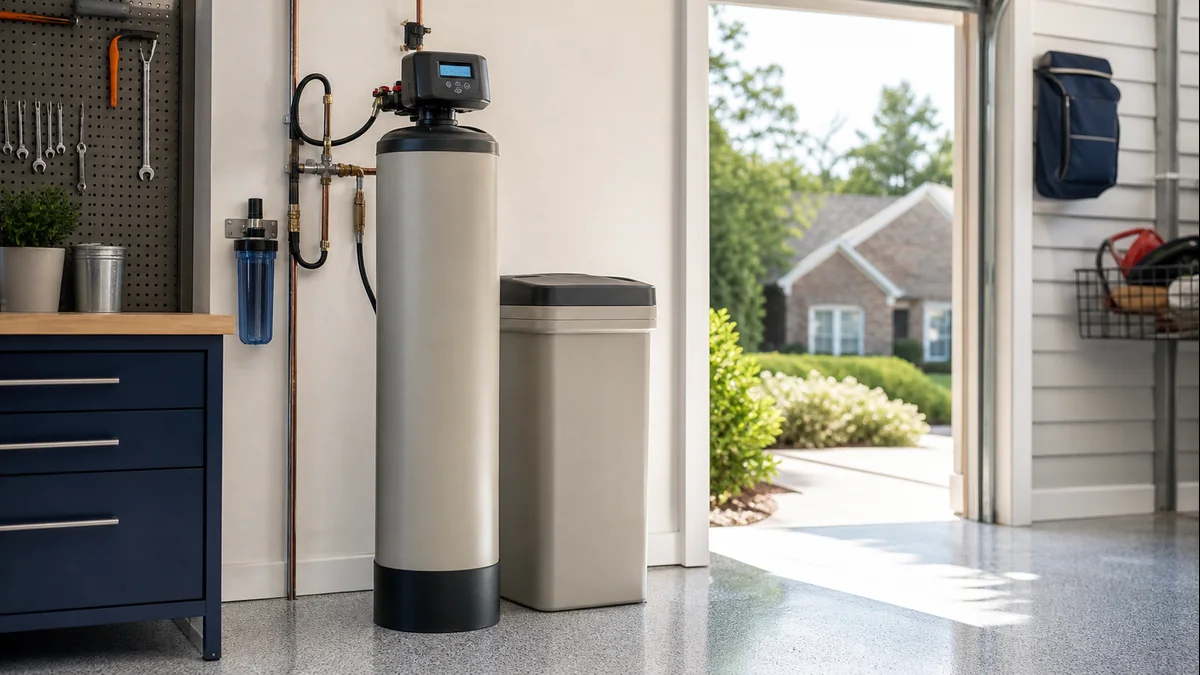
Direct answer: Start with a free in-home water analysis so any system recommendation is based on what's actually coming out of your tap, not a guess. Triangle Waterworks measures your water on-site, matches an all-in-one softening-and-carbon system to that result, and installs it as one professional appointment. Cary's own hardness figure sets expectations before the test, but the analysis at your address is what determines the right system for your home.
What Does the Process Look Like From First Call to Installed System?
A water softener install ties directly into your home's plumbing, so Triangle Waterworks works through it in a fixed order — measure first, then match, then install. Here is what each step covers:
- A free in-home water analysis measures the hardness at your address, in grains per gallon
- The all-in-one system is matched to that measured result and to your household's water use
- Installation is a single professional appointment that ties the system into your main line
- Pricing follows the analysis, so the number reflects the system your home actually needs
You know what you're getting before any equipment arrives at your house.
Is Cary's Water Actually Hard Enough to Need a Whole-Home System?
Cary's Public Works FAQ states finished-water hardness at 25 to 30 ppm — about 1.5 to 1.75 grains per gallon (gpg) — which the Town describes as very soft. That figure is accurate for water measured as it leaves the treatment facility.
Triangle Waterworks' own in-home testing across the service area tells a more address-specific story: 1.6 to 3.7 gpg depending on ZIP code. On the Water Quality Association (WQA) scale the Hach Total Hardness Test Kit, Model 5-B uses, that range runs slightly hard to moderately hard, with parts of Cary reaching the top of it.
Neither number is wrong — Cary's is a plant-wide average, ours is measured house by house. See the full breakdown of Cary's own numbers against the WQA scale. That gap is exactly why the water analysis happens at your address instead of relying on a townwide figure.
What Happens During a Free In-Home Water Analysis?
The analysis measures the water actually reaching your home, at your address, rather than relying on Cary's plant-average figure alone. That measurement is what determines whether your household sits toward the slightly hard end of the range or the moderately hard end, and it shapes what gets recommended.
From there, the recommendation is matched to what the test found — a whole-home system pairing softening resin with a carbon filtration stage, sized to your home rather than assumed from a general average. Pricing follows the same order: the system and its cost are set after the water has been measured, not before.
What Does Professional Installation Include?
Installation ties the new system into your existing plumbing at the point where water enters the house, so the softening-and-carbon system treats water headed to every fixture it's connected to. The appointment is scheduled around your home, and the system is set up to run on its own from that point forward.
That single install covers both halves of what a Cary tap carries — the calcium and magnesium responsible for hardness, and the chlorine or chloramine taste that comes from the Town's disinfection process. Compare what a standalone softener covers against a full all-in-one system if you want the fuller picture of what's included.
From Water Test to Installed System: What Each Step Covers
| Step | What Happens | What It Determines |
|---|---|---|
| Free in-home water analysis | Your water is measured directly at your address | Where your home falls on the hardness range, and what the disinfection profile looks like |
| System matched to your results | The analysis result is used to configure a whole-home system | An all-in-one system sized to your actual water, not a townwide average |
| Professional installation | The system ties into your home's plumbing at the main water line | Every connected fixture receives treated water going forward |
Why Does an All-in-One System Cover More Than a Softener Alone?
A softener is ion exchange for calcium and magnesium — that's the complete job it's built to do. It has no effect on chlorine or chloramine taste, and Cary's finished water, like most municipal supplies, is disinfected with chloramine day to day with an annual switch to free chlorine that the Town schedules and announces on its own.
That disinfection process is also how disinfection byproducts such as TTHM and HAA5 form, which EPA regulates under enforceable limits. EPA's National Primary Drinking Water Regulations table lists TTHM's potential long-term health effect above the legal limit as "Liver, kidney or central nervous system problems; increased risk of cancer," and HAA5's as "Increased risk of cancer." Cary's water stays compliant with both — real compliance, but a ceiling set at the edge of EPA's own acceptable risk rather than a guarantee everything under it is worth ignoring.
An all-in-one system installed as a single unit addresses both sides at once: softening resin for hardness, and a carbon stage for chlorine, chloramine taste, and the byproducts a softener alone was never built to touch.
FAQ
I'm in a new-construction home in west Cary and have no idea where to even start looking for a softener install — what's the first step? Book a free in-home water analysis before anything else. It measures what's actually coming out of your tap at your specific address, so the system you end up with is matched to real numbers instead of a guess based on the neighborhood or the town's average.
Does Cary's "very soft" FAQ mean I can skip testing and just pick a generic system? Testing still matters because Cary's figure is a plant-wide average, not a reading from your specific address. Triangle Waterworks' own testing across the service area measures 1.6 to 3.7 gpg depending on ZIP code — enough variation that an address-level test is what actually determines the right system for your house.
What actually happens during the free water analysis — is it quick, or does someone need to be there the whole time? It's an in-home visit where your water is measured directly at your address rather than estimated. That measurement is what shapes the system recommendation and the pricing that follows, so it happens before either one is finalized.
We just moved into a Cary neighborhood built in the last few years — is there any chance our house already has treatment installed, or do we need to arrange this ourselves? That depends on the specific home and builder, so it's worth checking your own plumbing and any paperwork from closing. If nothing's installed, or you're not sure what's already there, a free water analysis is the fastest way to find out what your water actually needs.
How do I know the system I end up with is actually right for my house? It's sized from the water analysis performed at your address, not from a townwide average or an assumption. That's the difference between a system matched to your specific hardness and disinfection profile and one sized to a general estimate.
Does the installer handle both the hardness side and the chlorine taste, or is that a separate system? An all-in-one system covers both in a single install — softening resin for calcium and magnesium, and a carbon stage for chlorine and chloramine taste and disinfection byproducts. It's installed and sized as one system rather than as two separate pieces of equipment.
Get Your Free Water Analysis in Cary
The right installer starts with a real measurement of your water, not a guess based on the town average. Take the 60-second water quiz to see how an all-in-one system fits your Cary home, or book a free in-home water analysis with Triangle Waterworks.
Sources
- Town of Cary — Public Works FAQ
- Town of Cary — Annual Water Quality Report
- EPA — National Primary Drinking Water Regulations
Related reading: Water Softener Guide for Cary, NC | Is Cary, NC Water Actually Soft? | What to Expect From Water Softener Installation in Cary, NC | Water Softener vs. All-in-One System
Answer nine practical questions, then request a written quote or well-water analysis.
Start My Water Analysis