
What Does Working With a Water Softener Installer Company in Raleigh, NC Look Like?
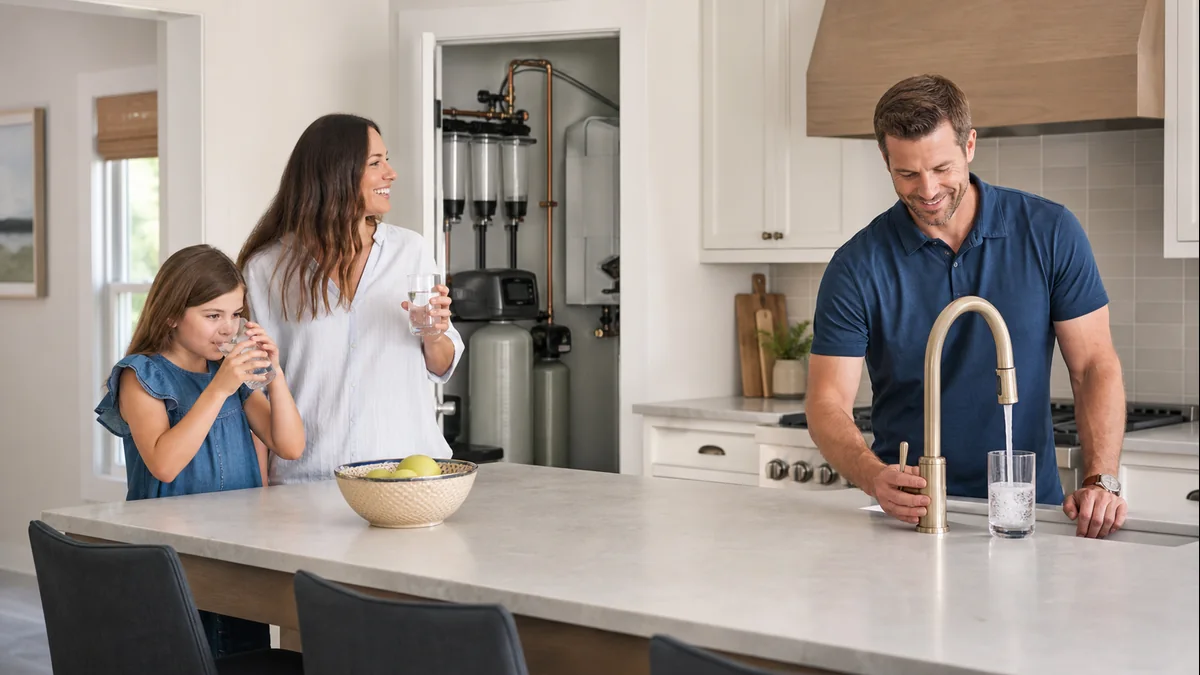
Direct answer: Working with a water softener installer company in Raleigh starts with a free in-home water analysis, since Raleigh Water's citywide average (about 1.6 gpg, slightly hard) doesn't reflect what's coming out of your tap — our testing measures 1.6 to 3.7 gpg depending on ZIP. That result determines the system, professional installation ties it into your plumbing, and you're left with an all-in-one softening-and-carbon system built for your address.
What Happens During a Free In-Home Water Analysis in Raleigh?
Before anything gets installed, a technician tests your water directly at your address. That reading — not a citywide number — is what everything downstream is based on.
The analysis measures what's actually coming out of your tap: hardness in grains per gallon, along with other factors that affect taste and how the water behaves throughout your home. It's the starting point of the process, because a system configured to the wrong number doesn't do its job the way it should.
Why Doesn't Raleigh Water's Published Average Tell You What's at Your Tap?
Raleigh Water reports hardness citywide at about 1.6 grains per gallon, which is slightly hard on the Water Quality Association scale — not hard, and an accurate number for the system as a whole. See the fuller local hardness picture for Raleigh for how that citywide figure breaks down.
What comes out of an individual tap varies by ZIP code across the distribution system. Our own in-home testing across the Raleigh area measures a range of 1.6 to 3.7 gpg depending on where you are, which is why the free analysis at your specific address is what the system actually gets built around.
What Should Matter Most Before You Book an Installation?
At Triangle Waterworks, an installation comes down to two things: a licensed technician doing the physical work, and a system sized to what your water actually measures at your address. Both matter because installation ties permanently into your home's plumbing, and hardness varies enough by ZIP code across Raleigh that a citywide number alone isn't a reliable basis for configuring a system.
At Triangle Waterworks, that looks like a free in-home analysis first, a system configured to that specific reading second, and a licensed, on-site installation third — in that order, every time. Nothing about the equipment or the setup gets decided ahead of the test.
How Does a System Get Matched to Your Measured Result?
The hardness reading from your analysis determines how the softening stage is configured for your household's water. The same visit also confirms what the carbon stage needs to address for taste and odor at your address.
Nothing about the system is decided before that test happens. The result from your home is the input; the system that gets installed is the output. See how a softening-only system compares to an all-in-one softening-and-carbon system for what "matched to your result" actually means in practice.
What Does Professional Installation Actually Involve?
Installation ties the system into your home's existing plumbing, typically near where the main water line enters the house. It's completed on-site by a licensed technician.
The system is configured to the reading from your water analysis before installation begins, so what goes into your home is already matched to your address rather than adjusted afterward. See what a Raleigh installation involves in more detail if you want the fuller walkthrough.
Raleigh Installer Process at a Glance
| Step | What Happens | What It's Based On |
|---|---|---|
| Free in-home water analysis | Your water is tested directly at your address | Your actual tap, not a citywide average |
| System matching | The softening and carbon stages are configured to the reading | The analysis result from your home |
| Professional installation | The system is installed and tied into existing plumbing | Licensed, on-site installation |
| Walkthrough and handoff | You're shown how the system operates and what to expect | The completed install at your address |
What Do You Receive Once Installation Is Complete?
Once the system is in place, you're walked through how it operates day to day — what the softening stage is doing, what the carbon stage is doing, and what to expect from your water going forward.
By the end of the process, you have:
- A whole-home system configured to the hardness measured at your specific address
- Softened water reaching every fixture in the house, not a single faucet
- A carbon stage addressing chlorine or chloramine taste alongside hardness
- A completed installation and walkthrough, so you know what the system is doing and why
See the full case for whether a softener is worth it in Raleigh if you're still weighing the decision before booking an analysis.
Who Handles Upkeep After Installation?
Ongoing upkeep for an all-in-one system comes down to a short, simple list: keeping the salt tank filled and knowing what to watch for as normal use continues. Both are covered during the install walkthrough, based on your specific system configuration and household water use.
That means you leave the walkthrough knowing exactly what's yours to check and what the system handles on its own — the schedule for it is set for your home at install.
FAQ
I just moved into a home in Raleigh and don't know if my water is actually hard — where does that get answered? A free in-home water analysis answers it directly. Raleigh Water's citywide figure is about 1.6 gpg, but our own testing across the area finds a range up to 3.7 gpg by ZIP, so your address gets tested rather than assumed.
How long does the whole process take from first contact to a working system? The analysis happens first, at your home, and the reading from that visit determines what gets configured. Once the system is matched to your results, installation is completed on-site by a licensed technician.
My neighbor's water tastes different from mine even though we're both in Raleigh — why would that be? Hardness and taste both vary by ZIP code across Raleigh's distribution system, even under one citywide average. That's exactly the gap a free in-home analysis at your own address is built to close.
What happens if my analysis comes back at the low end of the range — do I still get a full system? Yes. Even a reading at the low end of that range is still slightly hard on the WQA scale, and it's paired with a carbon stage that addresses chlorine taste and disinfection byproducts on its own. The analysis result determines how the system is configured for your home.
Do I need to be home for the water analysis and the installation? Both are scheduled at your home, since a technician needs to test your actual tap and access your plumbing directly to install the system. Someone should be available for each visit.
I saw Raleigh Water's own hardness number online — will my in-home analysis basically say the same thing? Maybe, maybe not. Raleigh Water's 1.6 gpg is a citywide average, while our own testing across the Raleigh area finds a range of 1.6 to 3.7 gpg depending on ZIP code, so your address could land anywhere in that range. That's exactly why the analysis happens at your home instead of relying on the published number.
Start With a Free Water Analysis for Your Raleigh Home
The number that matters is the one from your own address, not a citywide average. Take the 60-second water quiz to get started, or book a free in-home water analysis with Triangle Waterworks and see exactly what a matched all-in-one system looks like for your home.
Sources
Answer nine practical questions, then request a written quote or well-water analysis.
Start My Water Analysis