
Does Durham County Require a Permit for Water Softener Installation?
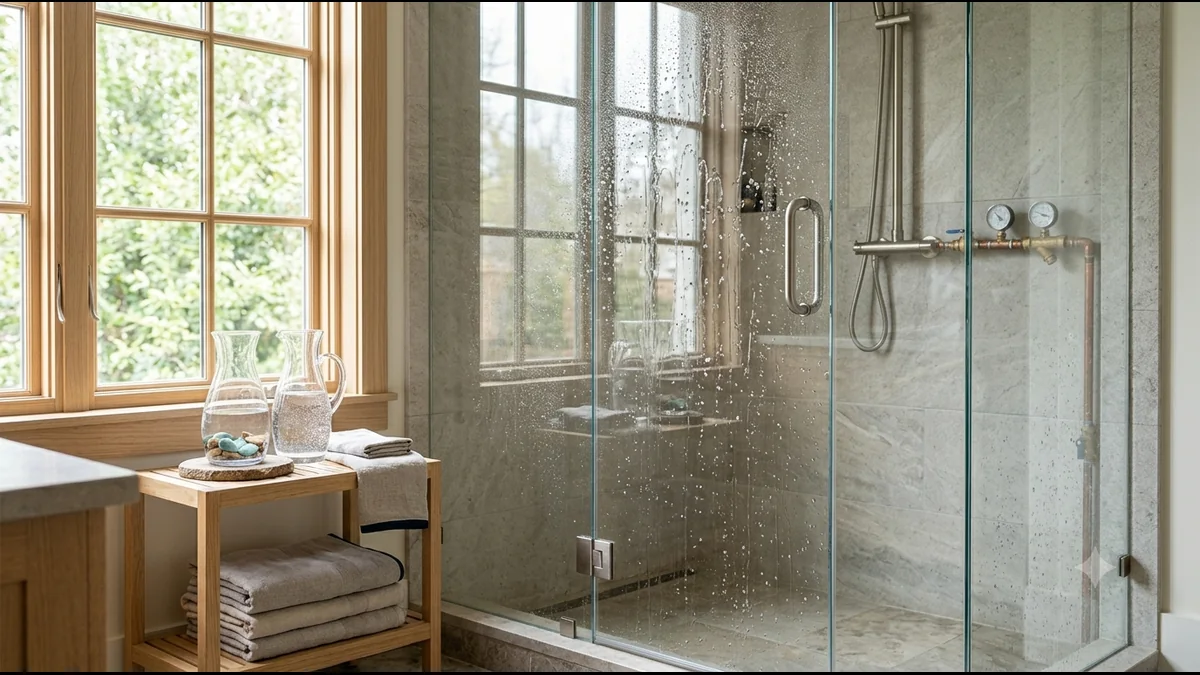
Direct answer: Yes — Durham County requires a permit for a whole-home softening-and-carbon system, because North Carolina law treats it as plumbing work. Durham's City-County Building & Safety Department issues that permit for both City of Durham and unincorporated County addresses, through the same office. A licensed installer pulls the permit and schedules the inspection, so it's handled for you, not left on your plate.
If you're weighing quotes for an all-in-one softening-and-carbon system in Durham, the permit question deserves a straight answer: yes, it's required, and no, it isn't something you have to chase down yourself. Durham's setup is actually simpler than a lot of Triangle counties, because one office covers the entire jurisdiction rather than splitting the work between the county and a handful of towns.
Does Durham County Require a Permit for a Water Softener Installation?
Yes. Durham's own posted permit list is explicit: a Plumbing Permit is "required for new construction, additions, alterations, replacements, all private utilities (Sewer & Water Services), new backflow installs for buildings and irrigation systems." A whole-home softening-and-carbon system ties directly into the water supply line entering the house — an alteration to the plumbing system by definition, not a swap of one fixture. That's exactly the category the permit list covers.
Why Is Installing a Whole-Home System Considered Plumbing Work Under North Carolina Law?
Because state law defines it that way, statewide, not just in Durham. N.C. Gen. Stat. § 87-21(c) defines plumbing contracting to include "the installation or replacement of condensing units, air handlers, gas furnaces, package units, boilers, water heaters, heat exchangers, or whole-house water purification or treatment systems, as well as the connection, repair, or alteration to the plumbing drainage, waste, or venting system or the potable water system."
A whole-home softener-and-carbon system falls squarely inside that language, which is why licensing and permitting go hand in hand here.
What Makes the Permit Mandatory Even for a Simple Swap?
State law backs the permit requirement directly, and it doesn't carve out plumbing changes. N.C. Gen. Stat. § 160D-1110(a) requires a permit before "the installation, extension, or general repair of any plumbing system," and that statute applies to every local government in North Carolina, Durham included.
Subsection (c) exempts some lower-cost work from the general permit rule but explicitly pulls plumbing back in: "(2) The addition or change in the design of plumbing. However, no permit is required for replacements otherwise meeting the requirements of this subsection that do not change size or capacity."
A whole-home tie-in changes what the plumbing system does at the point water enters your house, so it isn't the kind of like-for-like replacement that statute exempts.
Does It Matter Whether My Address Is in the City of Durham or Unincorporated Durham County?
No — and this is the detail that trips people up who are used to how Wake County works. Durham's City-County Building & Safety Department "provides permit, plan review, and inspection services for the City and County of Durham," and it enforces the North Carolina State Building Code "for both the City and County." One office, one process, one set of forms, whether your address sits inside Durham's city limits or out in the unincorporated county.
That's a genuinely different setup than a lot of the Triangle. In several neighboring counties, whether the county or a separate town handles your permit depends on exactly where your house sits. In Durham, that question doesn't come up — everyone routes through the same department.
Which Office Actually Handles the Permit in Durham?
The City-County Building & Safety Department. It's the single point of contact for plan review, permitting, and inspections across the whole jurisdiction, and it's the office your installer files with regardless of which side of a former city-limit line your street falls on.
If your address happens to sit near where Durham County borders Chapel Hill or Morrisville, that's worth confirming directly with the department for your specific street — but for the overwhelming majority of Durham County addresses, this is the office, full stop.
Is There a Separate Permit If My System Includes a Backflow Preventer?
Yes, in addition to the plumbing permit. If a backflow preventer is part of the installation, Durham requires a separate $100 Backflow Permit through the Cross Connection Control Department. This isn't a substitute for the plumbing permit above — it's an additional step for that specific piece of equipment, and like the plumbing permit itself, it's something your installer handles as part of the job rather than something you file yourself.
Who Actually Pulls the Permit — Me or My Installer?
Your installer. Because this is licensed plumbing contracting work under state law, the permit gets filed and the inspection gets scheduled by the contractor doing the installation, not by the homeowner. You aren't expected to know which Durham department to contact, fill out a permit application, or track an inspection date — that step belongs to whoever is doing the physical work, and a licensed installer already has that process down cold.
How Is Durham's Permit Setup Different from Wake County's?
Wake County splits the work: Wake County Permits & Inspections covers unincorporated Wake County plus four towns — Rolesville, Wendell, Knightdale, and Zebulon — while Raleigh, Cary, Apex, Morrisville, Garner, Wake Forest, Holly Springs, and Fuquay-Varina each run their own separate permitting office.
Durham doesn't work that way. One department, the City-County Building & Safety Department, issues plumbing permits for the entire county, city and unincorporated areas alike. Fewer jurisdictions to sort out means one less variable for your installer to track down before filing.
Durham's Permit Picture at a Glance
| Question | Answer |
|---|---|
| Is a permit required for a whole-home softener/carbon system? | Yes — it's a plumbing permit |
| Which office issues it in Durham? | City-County Building & Safety Department |
| Does the office change between City of Durham and unincorporated County addresses? | No — same office either way |
| Is a separate permit needed if the system includes a backflow preventer? | Yes — $100 Backflow Permit, Cross Connection Control Department |
| Who is legally required to do this kind of installation? | A licensed plumbing contractor, per N.C. Gen. Stat. § 87-21 |
| Who actually files the paperwork and books the inspection? | Your installer, as a standard part of the job |
Why the Permit Step Is a Reason to Hire a Licensed Installer, Not a Reason to Wait
None of this is a reason to put off an all-in-one system — it's the opposite case. The permit and inspection requirement is exactly why working with a licensed installer matters: they already know Durham routes everything through one department, they file the plumbing permit and the backflow permit if one applies, and they coordinate the inspection the same way they would on any other plumbing job.
What you're left to focus on is the system itself — softening resin protecting your plumbing and fixtures from scale, paired with a carbon stage handling what softening alone doesn't touch.
This is general information, not a permit determination for your specific address — confirm current requirements with the City-County Building & Safety Department, and your installer will do exactly that before work starts.
FAQ
I live in unincorporated Durham County, not inside the City of Durham — does that change which office issues my permit? No. Durham's City-County Building & Safety Department covers both the City of Durham and unincorporated Durham County through the same permitting process, so your address doesn't change which office your installer files with.
I'm just replacing an old softener with a new all-in-one system — do I still need a permit? Yes. State law pulls plumbing changes back into the permit requirement even where some lower-cost work is exempted, and a tie-in at your main water supply is a change to the plumbing system, not a like-for-like fixture swap. Your installer files the plumbing permit for a replacement the same way they would for a first-time install.
My new system includes a backflow preventer — is that covered by the same permit as the softener, or something else? Something else. Durham requires a separate $100 Backflow Permit through its Cross Connection Control Department when a backflow preventer is part of the job, on top of the plumbing permit for the system itself. Your installer handles both as part of the installation.
I've heard Chapel Hill and Morrisville also touch parts of Durham County — how do I know which office covers my address if I'm near that line? For the large majority of Durham County, it's the City-County Building & Safety Department either way, since it covers both city and county addresses. If your street sits right at a boundary with a neighboring municipality, that's worth confirming directly for your specific address — your installer can check this before filing.
Does pulling a permit slow down my installation? Permitting is a routine, built-in part of how a licensed installer schedules a whole-home job — it isn't an extra step tacked on after the fact. Because your installer files and coordinates it directly, it's not something you have to research or wait on separately.
What happens if a whole-home system gets installed without a permit? That's not something a licensed installer would do. N.C. Gen. Stat. § 87-21 makes this licensed plumbing work, and a licensed contractor pulls the required permit as a normal part of the job — which is exactly why hiring one keeps the compliance side off your plate entirely.
See What a Fully Permitted Installation Looks Like in Durham
Permitting and inspection are steps your installer owns from start to finish — what you get to focus on is the system and what it does for your water every day. Take the 60-second water quiz to see how an all-in-one softening-and-carbon system fits your Durham household, or book a free water analysis to get your address-specific plan.
For more on what installation and ownership look like locally, see the Durham water softener hub, who installs water softeners in Durham, what a Durham system costs, and how new-construction homes in Durham handle water treatment.
Sources
- Durham City-County Building & Safety Department — permits, plan review, and inspection services
- Durham City-County Building & Safety Department — Backflow Permit, Cross Connection Control Department
- N.C. General Assembly — N.C. Gen. Stat. § 160D-1110, Permits Required
- N.C. General Assembly — N.C. Gen. Stat. § 87-21, Definitions (plumbing contracting)
Answer nine practical questions, then request a written quote or well-water analysis.
Start My Water Analysis