
Does Wake County Require a Permit for Water Softener Installation?
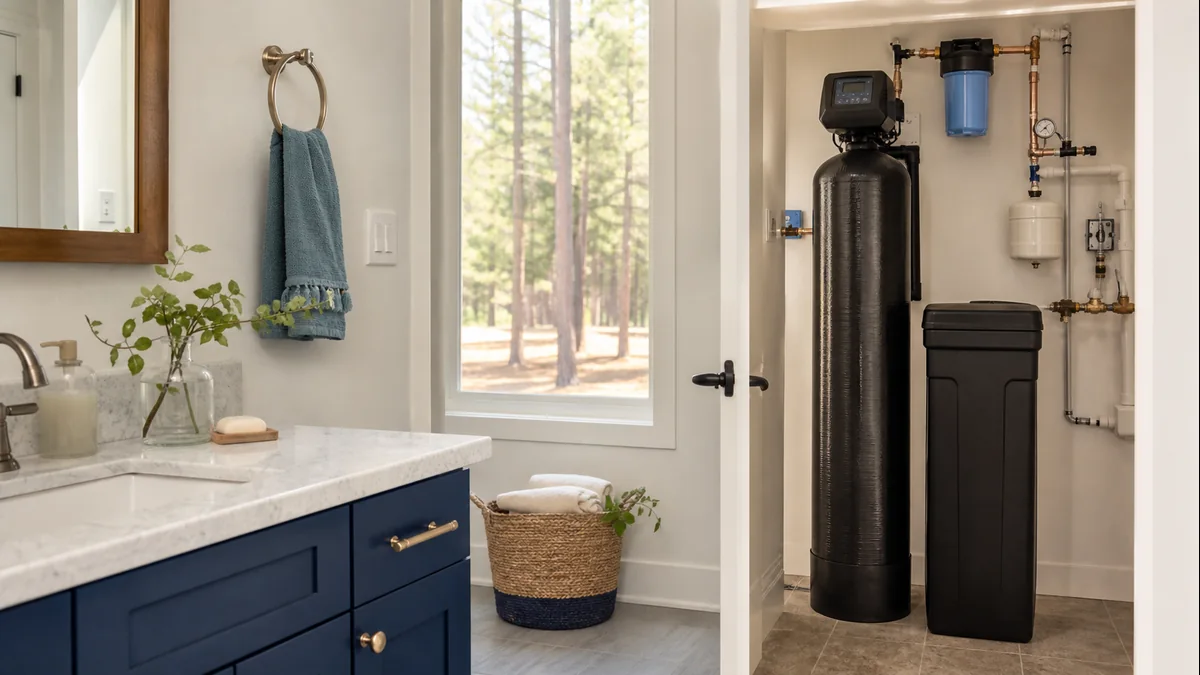
Direct answer: Yes — installing a whole-home water treatment system ties into your main water supply, which makes it plumbing work under North Carolina law, and Wake County Permits & Inspections (or your own municipality, depending on where you live) requires a permit for that kind of installation. This isn't something you have to sort out yourself: a licensed installer pulls the permit, schedules the inspection, and handles the paperwork as part of the job, so the permit step is one less thing on your plate, not one more.
If you're comparing quotes or just trying to understand what installing an all-in-one softening-and-carbon system actually involves, the permit question is a fair one to ask — and the honest answer is that it's required, not optional, and it's also completely routine. Licensed plumbing contractors handle this on every whole-home installation they do.
Does Wake County Require a Permit for a Water Softener Installation?
Yes, for a whole-home system tied into your water supply. Wake County Permits & Inspections states plainly: "A plumbing permit is required for the installation, extension, relocation, replacement or general repair of any plumbing system." A whole-home softening-and-carbon system connects at the point where the main line enters the house, which is exactly the kind of installation that language covers. The permit exists to confirm the work meets code — the same reason any plumbing installation in a home gets inspected, not something specific to water treatment equipment.
Why Doesn't a Water Softener Installation Count as a "Minor Repair"?
Because it changes how the water supply is set up, not just a fixture on it. Wake County's own exemption is narrow: "Plumbing permits shall not be required for minor repairs or replacements of plumbing fixtures provided such repairs or replacements do not disrupt the original water supply, the waste or ventilation system." A whole-home system is a tie-in at the water supply itself — every gallon that reaches every fixture in the house runs through it — so it's an installation in the plumbing system, not a minor fixture swap. The exemption simply doesn't describe this kind of work, and a licensed installer knows that going in, which is exactly why permitting and inspection are built into the job rather than left for you to figure out.
Which Cities Does Wake County Actually Handle Permits For?
Wake County Permits & Inspections covers unincorporated Wake County plus four specific towns: Rolesville, Wendell, Knightdale, and Zebulon. If your home sits in one of those areas, the county's permitting office is the one your installer works with — one point of contact, one set of requirements, and a process your installer already knows.
What About Raleigh, Cary, Apex, and the Rest of Wake County?
Everywhere else in Wake County, the city or town runs its own permitting and inspections instead of the county. Raleigh, Cary, Apex, Morrisville, Garner, Wake Forest, Holly Springs, and Fuquay-Varina each administer their own plumbing permits rather than routing through Wake County Permits & Inspections. The requirement itself doesn't change — a whole-home installation still needs a permit — only which office issues it does. If you're not sure which jurisdiction covers your address, that's worth confirming with your own municipality, and it's exactly the kind of detail a licensed installer working in your area already has sorted out.
Wake County vs. Municipal Permitting — Who Covers Your Address
| Area | Who Issues the Permit |
|---|---|
| Unincorporated Wake County | Wake County Permits & Inspections |
| Rolesville | Wake County Permits & Inspections |
| Wendell | Wake County Permits & Inspections |
| Knightdale | Wake County Permits & Inspections |
| Zebulon | Wake County Permits & Inspections |
| Raleigh | City of Raleigh (confirm with the city) |
| Cary | Town of Cary (confirm with the town) |
| Apex | Town of Apex (confirm with the town) |
| Morrisville | Town of Morrisville (confirm with the town) |
| Garner | Town of Garner (confirm with the town) |
| Wake Forest | Town of Wake Forest (confirm with the town) |
| Holly Springs | Town of Holly Springs (confirm with the town) |
| Fuquay-Varina | Town of Fuquay-Varina (confirm with the town) |
Whichever row matches your address, the same rule applies: it's plumbing work, it needs a permit, and a licensed installer knows which office to file with.
Who Actually Pulls the Permit — Me or the Installer?
Your installer pulls it, not you. Because this is licensed plumbing work, the permit is filed and the inspection is scheduled by the contractor doing the installation, whether that's Wake County Permits & Inspections or your municipality's own office. You're not expected to research jurisdictions, fill out permit applications, or track down an inspection date — that entire step lives with the person doing the work, which is one of the real reasons to use a licensed installer instead of trying to handle a whole-home system as a DIY project.
Does the Installer Need to Be Licensed for This Kind of Work?
Yes. Under North Carolina law, installing or replacing a whole-home water treatment system is plumbing contracting work. N.C. Gen. Stat. § 87-21 defines plumbing contracting to include the installation or replacement of "whole-house water purification or treatment systems," which is exactly why permitting applies and exactly why the job goes to a licensed plumbing contractor rather than being a DIY appliance swap. Licensing and permitting go hand in hand — the same law that makes this licensed work is the reason the permit step exists in the first place, and it's also why a licensed installer already has both handled before you ever have to think about it.
Why the Permit Step Is a Reason to Use a Licensed Installer, Not a Hurdle
None of this is a reason to hesitate on a whole-home system — it's the opposite. The permit and inspection requirement is exactly why hiring a licensed installer matters: they already know which office covers your address, they file the paperwork, and they coordinate the inspection as a normal part of the installation, the same way they would for any plumbing job. You get a system that's installed correctly, documented correctly, and signed off by the jurisdiction that covers your home — without spending any of your own time on permit offices or code questions. That's the entire benefit of working with someone who does this for a living: the compliance side is handled, and what you're left with is a properly installed all-in-one system protecting your plumbing and improving what comes out of every tap.
Frequently Asked Questions
I'm getting quotes for a whole-home system in Wendell — do I need to ask the installer about permits myself, or is that just assumed? It's built into the job. Wendell falls under Wake County Permits & Inspections, and a licensed installer working there files the permit and schedules the inspection as a standard part of the installation — you don't need to raise it as a separate request.
My house is in unincorporated Wake County near Zebulon — does that change anything about the permit process? Not in terms of whether a permit is required, only in terms of which office issues it. Unincorporated Wake County is one of the areas Wake County Permits & Inspections directly covers, so your installer works with the county office rather than a town, but the requirement and the process your installer follows are the same either way.
Can I skip the permit if I'm just replacing an old softener with a new all-in-one system? No — a whole-home system ties into the main water supply, which is the kind of work Wake County's permit requirement covers, not the narrow "minor repair or replacement of a plumbing fixture" exemption. A licensed installer handles the permit and inspection for a replacement the same way they would for a first-time installation.
Is the permit requirement different for Raleigh or Cary compared to Wake County? The requirement itself is the same — it's still licensed plumbing work that needs a permit — but the office you go through is different. Raleigh, Cary, Apex, Morrisville, Garner, Wake Forest, Holly Springs, and Fuquay-Varina each run their own permitting and inspections rather than going through Wake County, so a licensed installer working in your city confirms the right office for your address.
Does pulling a permit mean the installation will take longer? Permitting is a standard part of how a licensed installer schedules and completes a whole-home installation, and it's built into the process rather than treated as an extra step tacked on afterward. Because your installer handles filing and inspection coordination directly, it's not something you have to manage or wait on yourself.
What happens if a system gets installed without a permit? That's not something a licensed installer would do — permitting is a legal requirement for this kind of plumbing work under N.C. Gen. Stat. § 87-21, and a licensed contractor pulls the permit as a matter of course. Working with a licensed installer is exactly what keeps this from ever becoming your problem to solve.
See What a Fully Permitted Installation Looks Like in Your Home
Permitting, licensing, and inspection are all things your installer handles — what you get to focus on is the system itself and what it does for your water. Take the 60-second water quiz to see how an all-in-one softening-and-carbon system fits your household, or book a free water analysis to get your hardness reading and a plan for your address. For a closer look at what installation involves elsewhere in the service area, see what installation looks like in a Raleigh home, how Cary installations are handled, who installs systems in Apex, and how new-construction homes across Wake County are treated.
Answer nine practical questions, then request a written quote or well-water analysis.
Start My Water Analysis