
Water Softener Quote for Your Wake Forest, NC Home — What Goes Into It
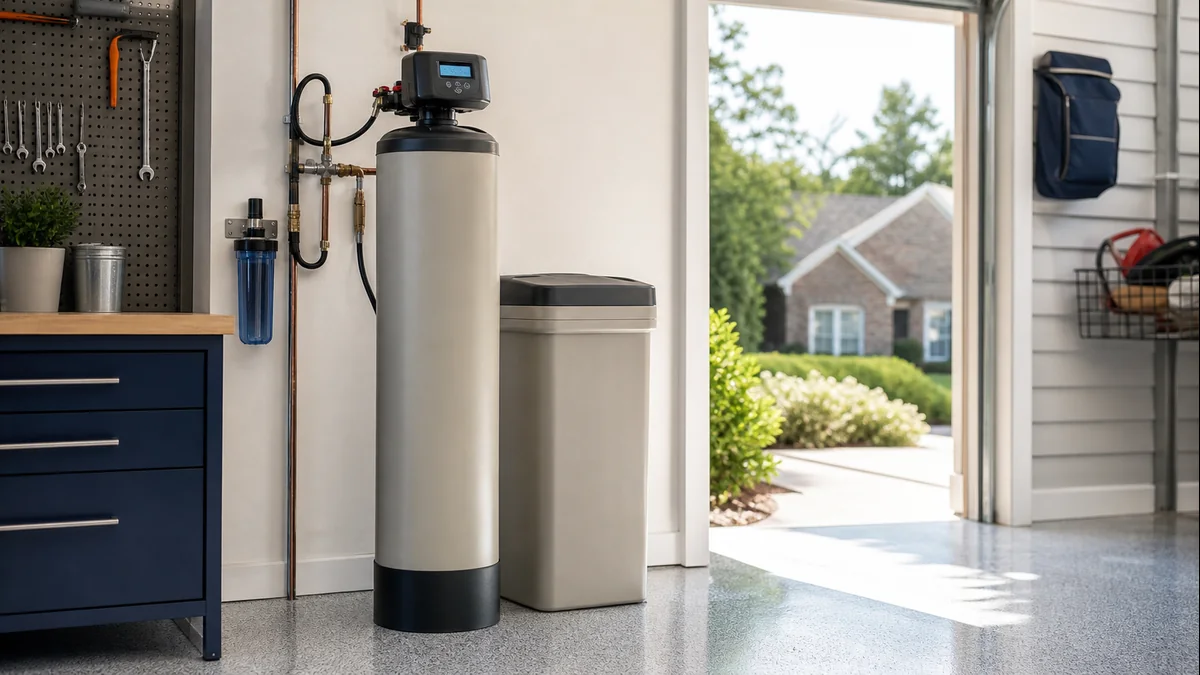
Direct answer: A water softener quote for a Wake Forest home starts with a free in-home water analysis — the hardness reading at your own tap and your household's usage are what set the size and price. Wake Forest is on Raleigh Water, averaging 1.6 gpg system-wide (slightly hard), but your quote is built from your own address, not a citywide average.
How Do I Get a Water Softener Quote for My Wake Forest Home?
Start with a free in-home water analysis. Take the 60-second water quiz or request the visit directly, and a technician schedules a time that works for your household. At the visit, the technician tests your water's hardness at your own tap and asks about your household's usage — occupants, bathrooms, laundry frequency — before anything gets priced.
There's no obligation attached to the visit. It's the step that turns a general Wake Forest water picture into the specific numbers your quote is built from.
What Does Triangle Waterworks Measure Before Quoting?
Two things set the size and price of a system: the hardness reading at your specific address, and how much water your household actually uses. Wake Forest is served by Raleigh Water, and Raleigh's 2025 Consumer Confidence Report puts average hardness at 25.2 ppm, ranging 21.9 to 35.3 ppm across the whole system — roughly 1.3 to 2.1 grains per gallon (gpg).
That's a system-wide figure measured where water leaves the plant, not where it reaches a specific Wake Forest house. Triangle Waterworks' own address-level testing across the service area measures 1.6 to 3.7 gpg by ZIP code — a real spread, which is exactly why the free analysis tests your own tap rather than applying an average to your quote.
Is Wake Forest, NC Water Hard?
On the WQA/Hach scale, Raleigh Water's system-wide average of roughly 1.6 gpg is slightly hard — never plain "hard," which doesn't start until 7 gpg. At the top of Triangle Waterworks' measured range, 3.7 gpg (about 63 mg/L) crosses into moderately hard.
| Parameter | Raleigh 2025 value | Range | EPA limit |
|---|---|---|---|
| Hardness | 25.2 ppm ≈ 1.6 gpg | 21.9–35.3 ppm | — |
| TTHM | 34.2 ppb | up to 42.8 ppb | 80 ppb |
| HAA5 | 22.0 ppb | up to 33.6 ppb | 60 ppb |
Either way, this is a genuine hardness case, not marketing language dressed up as urgency — minerals accumulate on fixtures, glassware, and inside a water heater gradually, at any reading in that range. Where your Wake Forest address actually falls in that band is what the free analysis measures directly, and what your quote is built from.
What Does Raleigh Water's 2025 Report Show About Chlorine and Disinfection Byproducts?
Hardness is only part of what a Wake Forest quote accounts for. Raleigh Water's 2025 report shows TTHM averaging 34.2 ppb (up to 42.8) and HAA5 averaging 22.0 ppb (up to 33.6), both under their respective legal limits of 80 and 60 ppb. EPA's National Primary Drinking Water Regulations table lists TTHM's potential health effect from long-term exposure above the legal limit as "Liver, kidney or central nervous system problems; increased risk of cancer," and HAA5's as "Increased risk of cancer."
Raleigh Water is fully compliant on both — no violation. But "legally compliant" is a ceiling set at the edge of EPA's own risk tolerance, not a guarantee those compounds are absent below it. A carbon stage removes them directly, which is why a Wake Forest quote is typically scoped around an all-in-one system — softening resin plus carbon filtration — addressing both hardness and disinfection byproducts in the same unit.
Why Does a Wake Forest Quote Usually Include Both Softening and Carbon Filtration?
The all-in-one system addresses two separate things in your water, which is why most Wake Forest quotes are scoped around it rather than softening alone. The softening side protects your water heater, dishwasher, washer, and plumbing from gradual mineral buildup, and makes for cleaner dishes, a better lather, and softer skin, hair, and laundry. The carbon side handles what softening resin doesn't touch — chlorine and chloramine taste and odor, along with the TTHM and HAA5 levels covered above.
Because those are two different jobs, your quote reflects how each side needs to be sized for your specific water — which is exactly what the free analysis measures.
What Will Be on the Quote I Receive?
Every Triangle Waterworks quote for a Wake Forest home includes:
- The hardness reading taken at your address during the in-home analysis.
- Sizing based on your household's usage — occupants, bathrooms, laundry frequency — not just square footage.
- Whether carbon filtration is included for taste and disinfection byproducts, alongside softening.
- Installation scope — plumbing changes, drain routing, and any electrical needs for the control valve.
- What's included going forward — salt or media replacement guidance and any maintenance visits.
Every line traces back to the visit, so the number you receive reflects your own water and your own household.
What Happens After I Book a Water Analysis in Wake Forest?
Booking takes about as long as a short form. Take the 60-second water quiz, or request the analysis directly — someone follows up to schedule the visit on your timeline. At the visit, expect the water test described above, a plain-language walkthrough of your reading, and a scoped, address-specific quote for an all-in-one system set from that reading.
FAQ
How much does a water softener cost in Wake Forest, NC? Triangle Waterworks doesn't publish a fixed price because every system is sized per home. What sets the number is your address-level hardness reading, household usage, plumbing scope, and whether carbon filtration is included — a free water analysis turns that into an exact, address-specific quote.
I want a quote for my Wake Forest home — do I need to be there for the visit? Yes — having someone home means the technician can test an active tap and ask about your household's usage directly, both of which the quote is built from. The visit takes about as long as any other home service appointment, and there's no obligation afterward.
I just moved into a new-construction home in Wake Forest — does the builder's water info count as my quote basis? No. Builder documentation doesn't include a hardness reading at your tap, and Wake Forest itself publishes no water quality figures of its own — it's on Raleigh Water. A free in-home analysis is still the step that determines your actual number.
What if my Wake Forest home already has a water softener — can I still get a quote? Yes. The in-home analysis tests your current water regardless of what's already installed, and your quote is based on that reading and your household's usage — the same process as for a home with no existing system.
My water tests on the lower end of the hardness range — does that mean a lower quote? Lower hardness generally means the system regenerates less often and uses less salt, which is a real advantage at the low end of the 1.6–3.7 gpg range. But sizing also depends on household usage, so a lower reading alone doesn't automatically mean a smaller system.
What information should I have ready before requesting a quote? Have your household size and typical water usage habits ready — number of occupants, bathrooms, laundry frequency. From there, a free water analysis fills in the piece that actually sets the price: your address-level hardness reading.
Get Your Wake Forest Water Softener Quote
Book your free water analysis and get a quote scoped to your Wake Forest home's actual hardness, usage, and plumbing — measured at your own address.
Sources
- City of Raleigh — Water Consumer Confidence Report 2025
- US EPA — National Primary Drinking Water Regulations
Related reading: Water Treatment in Wake Forest, NC | Water Softener Cost in Wake Forest, NC | Who Installs Water Treatment in Wake Forest, NC | Is Wake Forest, NC Water Hard? | How to Choose a Water Softener
Answer nine practical questions, then request a written quote or well-water analysis.
Start My Water Analysis