
Water Softener Not Using Salt? How to Fix a Salt Bridge in Garner, NC
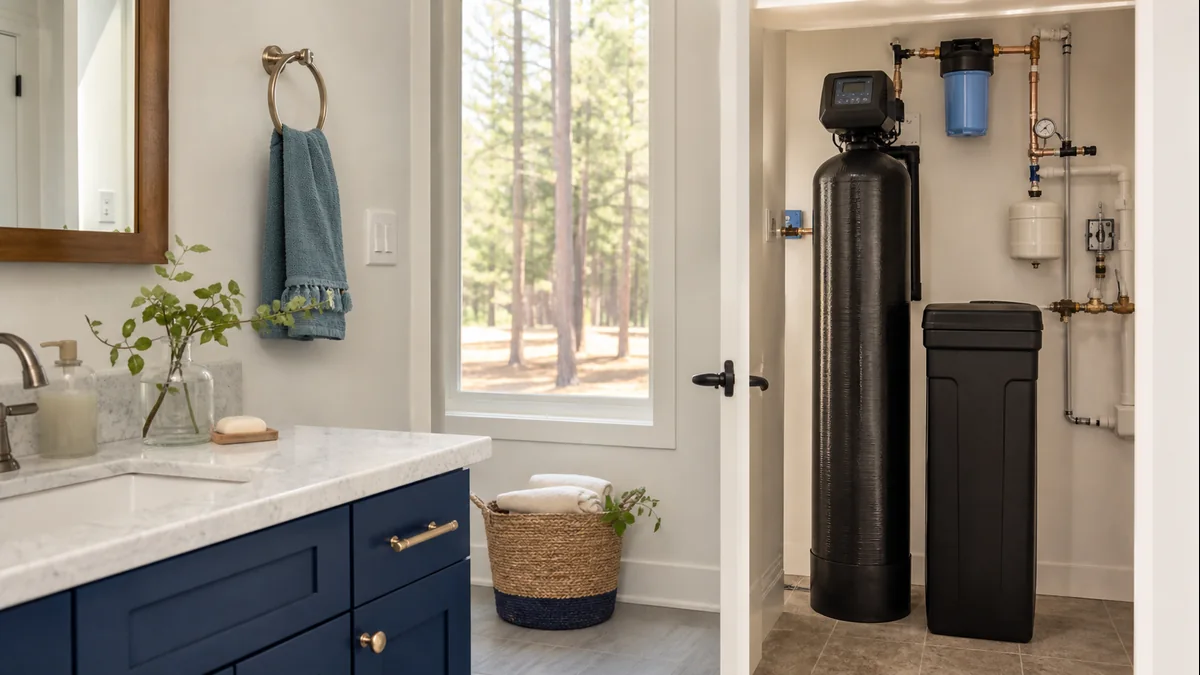
Direct answer: If your Garner softener's brine tank still looks full but your water feels hard again, a salt bridge — a hardened crust sealing the salt off from the water below — is the likely cause. Break it up with a blunt tool and run a manual regeneration to restore softening. A unit that keeps re-bridging is often past its useful life and worth replacing with an all-in-one softening-and-carbon system.
Why Isn't My Water Softener Using Salt Even Though the Tank Looks Full?
The salt tank looking full is exactly what makes a salt bridge easy to miss. Salt normally dissolves from the bottom of the tank as the softener draws brine, but when a hard crust forms above the waterline, the salt above that crust never touches the water — so the level barely drops week to week while the softener quietly runs low on usable brine underneath.
The giveaway is usually a return of hard-water symptoms: spotting on glasses, stiffer lather, a filmy feel on skin and dishes, even while the tank still looks stocked.
What Exactly Is a Salt Bridge, and How Do I Check for One?
A salt bridge is a hardened, crusted layer that forms partway down the brine tank, usually just above the waterline, leaving a hollow air gap between the crust and the water and salt below. From the outside the tank still looks full, because the crust is holding the rest of the salt up.
To check, turn off the softener's water supply or put it in bypass, then gently press down into the salt with a blunt, non-metal tool — a broom handle or wooden dowel works well. Solid resistance a few inches down, followed by a hollow space, confirms the bridge.
| Sign | Salt bridge | Salt mushing | Tank genuinely low on salt |
|---|---|---|---|
| Salt tank looks full | Yes — crust holds salt up | No — looks like wet sludge at the bottom | No — visibly low or empty |
| Salt level barely drops over time | Yes, this is the main tell | Drops slowly and unevenly | Drops as expected; simply needs refilling |
| Hard-water symptoms return | Yes | Yes | Yes |
| What fixes it | Break the crust with a blunt tool, then regenerate | Usually needs the tank emptied and cleaned out | Add more of the correct salt type |
How Do I Safely Break Up a Salt Bridge?
Once you've confirmed the crust, break it up carefully rather than forcefully. Use the same blunt tool to tap and press along the crust in several spots until it cracks and falls into the water below, avoiding a hard, direct downward stab that could damage the tank's bottom or internal components. Pouring warm water over the crust first can help loosen it before you break it apart.
Once the crust is broken and the salt has settled back into the water, run the softener through a manual regeneration cycle so it draws a fresh batch of brine and resumes normal softening.
What Causes a Salt Bridge to Form in a Garner Home?
Salt bridges form when humidity, temperature swings, or the wrong type of salt cause salt in the tank to partially dissolve and re-harden into a solid mass instead of staying loose. Where the tank sits matters more than anything else — a garage or crawl space that swings between damp and dry gives a bridge more chance to set than a conditioned utility room does.
Using rock salt or block salt instead of pellet or solar salt made for softeners is a common contributor, since those forms carry more insoluble material that can cement together. An overfilled tank, or one topped off unevenly, simply gives the crust more surface area to form across.
How Do I Keep a Salt Bridge From Coming Back?
Use pellet or solar salt formulated for water softeners rather than rock salt or block salt, and keep the brine tank in a dry, temperature-stable spot if it isn't already. Add salt in smaller, more frequent amounts rather than filling the tank to the top and walking away for a long stretch, since one large addition gives more surface area for a crust to form across.
Whenever you're near the tank, press gently on the salt to feel for a bridge starting before it fully seals — catching it early makes it far easier to break up.
My Softener Keeps Bridging Every Few Months — Is That a Sign I Need a New System?
One salt bridge is routine maintenance. A softener that keeps re-bridging every few months, even after you've switched salt types and changed how you fill the tank, is telling you something about the unit itself rather than about the salt.
At that point, the honest move isn't to keep nursing an old unit through the same fix on repeat. It's to look at replacing it with a new all-in-one system that handles softening and carbon filtration together, rather than troubleshooting hardware that's already at the end of its service life.
Is Garner's Water Even Hard Enough to Need a Softener in the First Place?
Yes, genuinely — just not in the most extreme sense of the word. Garner is served by Raleigh Water, which measures around 1.6 grains per gallon (gpg), classified as slightly hard on the Water Quality Association scale the Hach Total Hardness Test Kit (Model 5-B) uses. Our own in-home testing across the service area measures higher, 1.6 to 3.7 gpg depending on ZIP code, reaching moderately hard at the top of that range.
Calcium and magnesium are genuinely present either way, and they accumulate on fixtures, glassware, and inside the water heater over time — exactly why a softener earns its keep here, salt bridges and all.
FAQ
My softener's brine tank looks completely full, so why does my water feel hard again? A full-looking tank is the classic sign of a salt bridge — a crust has formed above the waterline and is holding the rest of the salt up, so it never dissolves into the water. Break up the crust and run a manual regeneration to get the softener working again.
I just moved into a home in Garner and the softener already has a solid layer of salt near the top — is that normal? It's common enough to have a name — a salt bridge — and it's usually fixable in a few minutes with a blunt tool and a manual regeneration. If the unit turns out to be old and keeps re-bridging, a free water analysis will tell you what your address actually needs before you rely on it long-term.
Is it safe to just add more salt on top of a bridge? No — adding more salt on top of an existing bridge just adds weight without fixing the problem, since the crust is what's blocking water from reaching the salt underneath. Break up the bridge first, then add fresh salt once the tank is clear.
Why does this keep happening to my softener every couple of months no matter what I do? Occasional bridging is normal maintenance. Frequent, repeat bridging even after you've switched to the right salt type and changed how you fill the tank points at the unit rather than the salt. That pattern is worth treating as a sign to consider replacing the system rather than a routine to keep repeating.
Does Garner's water actually need a softener, or is this overkill? Garner's Raleigh Water supply measures around 1.6 gpg, slightly hard on the WQA scale, and our own testing measures up to 3.7 gpg by ZIP — genuine, present hardness, not an extreme case. It's enough to build up on fixtures and inside a water heater over time, which is exactly what a softener is built to prevent.
What kind of salt should I use to avoid this in the future? Pellet or solar salt made specifically for water softeners, rather than rock salt or block salt, which carry more insoluble material that contributes to crusting.
Ready to Stop Nursing an Aging Softener?
A salt bridge is a fixable inconvenience the first few times it happens. A softener that keeps bridging is telling you it's near the end of its useful life. Take the 60-second water quiz or request a free water analysis to see what an all-in-one softening-and-carbon system looks like for your Garner home.
Related reading: Water Treatment in Garner, NC | How to Tell If Your Water Softener Is Broken | Water Softener Cost in Garner, NC | Water Softener Installation in Garner, NC | Raleigh Water Hardness
Answer nine practical questions, then request a written quote or well-water analysis.
Start My Water Analysis