
Should I Install a Water System Before Moving In? (Raleigh)
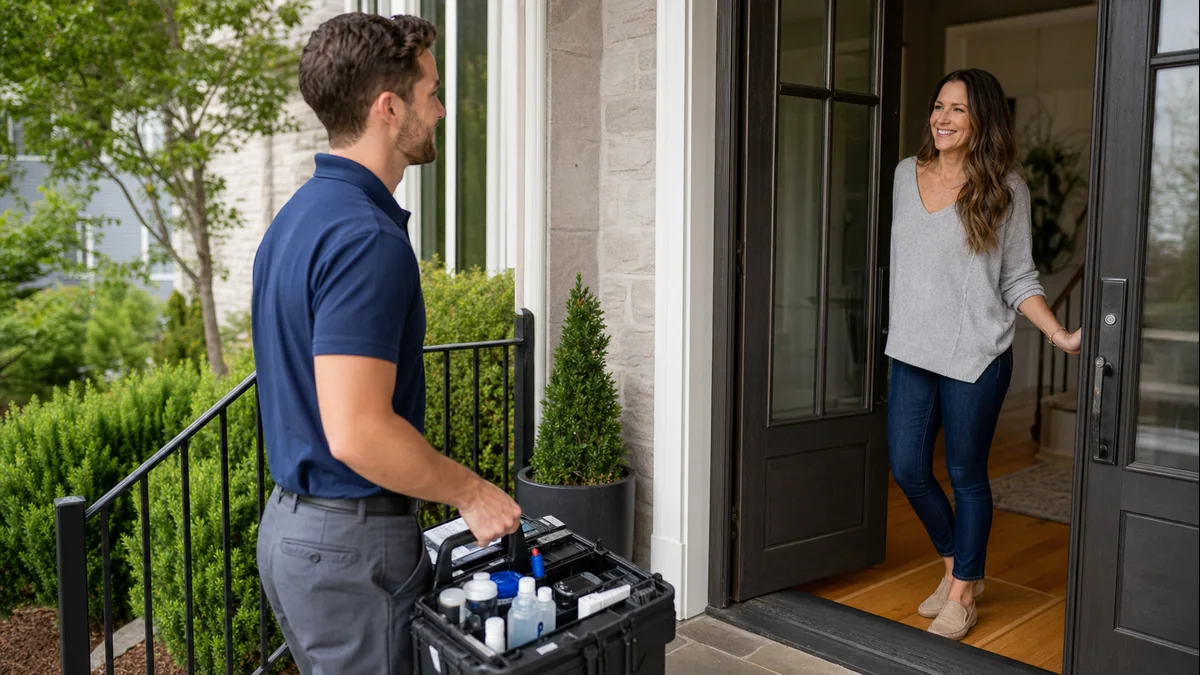
Direct answer: Yes. The window between closing and moving your belongings in is the easiest time a Raleigh-area house will ever be to work on — no furniture to move, no living household to schedule around, no interrupting anyone's shower. An all-in-one whole-home system (softening plus carbon filtration) installs at the main water line while the house is empty, so every glass of water, every load of laundry, and every shower is protected starting the day you actually move in, not weeks or months later.
If you've got keys to an empty house and a moving truck scheduled for later, you're standing in a rare window. Once boxes, furniture, and daily routines fill the place, every project gets harder to schedule and more disruptive to live through. Water treatment is one of the few upgrades that's dramatically easier to do now than after move-in — here's why, and what it actually involves.
Why is an empty house the easiest time to install a whole-home water system?
Because the installer has full, unobstructed access to the one thing that matters: the main water line, usually in a garage, basement, or utility closet. With no furniture pushed against walls, no boxes stacked in the way, and no family members needing the water on for meals, showers, or laundry mid-install, the whole job moves faster and cleaner. A typical whole-home installation takes a matter of hours, but that stretch is far more disruptive in a lived-in house — someone has to plan around a water shutoff, keep pets and kids clear of the work area, and coordinate the day around a technician being in and out of a utility space that's now also someone's home office or mudroom. An empty house has none of that friction.
Does Raleigh's water actually need treatment if it's already slightly hard?
Yes, for reasons that have nothing to do with hardness. Raleigh Water measures around 1.6 grains per gallon (gpg), which is slightly hard on the Water Quality Association (WQA) five-tier hardness scale — the same one the Hach Total Hardness Test Kit uses. But that low a hardness level only describes calcium and magnesium — it says nothing about chlorine, chloramine taste, or disinfection byproducts, all of which are documented in Raleigh's own water quality reporting. Raleigh Water's normal year-round disinfectant is chloramine, which the utility describes as having no taste or odor of its own. Once a year, on the state's recommendation, the utility temporarily converts to free chlorine and flushes the system — a period when a lot of people notice a chlorine taste or smell for the first time and assume something's wrong. Nothing is; it's a normal, publicly announced maintenance step, and it's exactly the kind of thing new residents want handled before they've unpacked a single box, not after they've already lived through an unfiltered version of it.
What does the carbon side of the system actually remove?
Raleigh reports haloacetic acids (HAA9) at 19.9 parts per billion and total trihalomethanes (TTHM) at 21.7 ppb — both disinfection byproducts that form as a normal result of treating water, and both compliant with EPA's legal limit. They also sit above the Environmental Working Group's stricter, non-regulatory health guideline, which is a separate and much lower bar than the legal one. Activated carbon is effective at reducing both HAA9 and TTHM, and the same carbon stage also handles the chlorine and chloramine taste question above — one filter, installed once, covers both concerns for the life of the system.
What does the softening side actually do if the water's already slightly hard?
It stops calcium and magnesium from accumulating in the first place, which matters even at 1.6 gpg because buildup is cumulative, not proportional to how hard the water feels on day one. A house at this hardness level still collects mineral scale inside the water heater, on faucet aerators, and along shower doors and glassware over years of daily use — it just takes longer to show up than it would in a harder-water region. Installing the softening resin before you move in means that clock never starts running unfiltered. Every dish, every glass, and every gallon that ever passes through your water heater has been treated from the very first use, instead of playing catch-up after months or years of buildup have already begun.
Will installing before I move in cause any disruption once I'm living there?
No — that's the entire advantage of doing it now. The main water supply is briefly shut off during the install, which is a non-event in an empty house and a genuine inconvenience in an occupied one. Do it before move-in and there's no water interruption to a family cooking dinner, no rescheduling around someone's work-from-home calls, and no explaining to kids why the shower's off. By the time you're carrying in the first box, the system is already running, already regenerating on its normal cycle, and already invisible — which is exactly how a whole-home system is supposed to feel day to day.
How does installing before move-in compare to installing after?
Both get the house protected, but they get there very differently:
| Factor | Install before move-in (empty house) | Install after move-in (occupied house) |
|---|---|---|
| Access to the water line | Fully clear, no furniture or storage in the way | May require moving belongings out of a utility space |
| Water interruption | No one affected — house is vacant | Briefly shuts off water for a living household |
| Scheduling | Flexible, no routines to work around | Must fit around meals, showers, work-from-home calls |
| First-day protection | Every tap protected from move-in day one | Some period of unfiltered water before install happens |
| Household disruption | None | Technician working in an occupied home |
Neither timing changes what the system does once it's running — the difference is entirely about how easy the day of installation is, and how soon protection actually starts.
How much does this cost, and how long does it take?
An all-in-one whole-home system in the Raleigh area is sized to your home and priced after a free water analysis, well below the $6,000–$12,000 a lot of national big-brand companies quote for comparable whole-home coverage. The installation itself is typically a same-day job. Scheduling it for the empty-house window doesn't add cost or time; it just removes the friction that a lived-in house would otherwise add to that same appointment.
A few things the all-in-one system covers from day one when installed before move-in:
- Chloramine and chlorine taste, including the annual free-chlorine conversion period
- Disinfection byproducts (HAA9, TTHM) via the carbon stage
- Calcium and magnesium buildup on fixtures, glassware, and inside the water heater via the softening resin
- One maintenance schedule instead of separate systems for softening and filtration
Frequently Asked Questions
I close on my house in two weeks and move in a month after that — is that too early to schedule the install? Not at all — that's actually the ideal window. Scheduling the install for right after closing, while the house is still empty, means it's done and running well before your move-in date, and the technician has full access without anything in the way. There's no benefit to waiting until you're already living there.
My new house is a rental I'm moving out of in a year — is it still worth installing before I move in? That depends on whether you own the property outright — for a rental you don't own, that's a conversation with your landlord first. But if you're a homeowner moving into a property you intend to keep, the empty-house window is worth using regardless of how long you plan to stay, since it's the easiest and least disruptive time the house will ever be to work on.
Can the installer even get into the house if I haven't moved in yet? Yes — you just need to coordinate access, whether that's meeting the technician there yourself, using a lockbox, or having your realtor let them in. Most installs happen at the main water line in a garage, basement, or utility area, so the crew doesn't need the rest of the house set up at all.
Does it matter if the power or water isn't fully turned on yet in a brand-new empty house? Water service does need to be active for the installation, since the system ties into the main line, but the house otherwise doesn't need furniture, appliances, or anything else in place. Confirm water is on with the utility before your scheduled install date.
What if I've already moved in — did I miss the window? No — you haven't missed anything permanent. An occupied house can absolutely still get a whole-home system installed; it just means coordinating around your household's schedule and a brief water shutoff instead of having the place to yourself. The system performs identically either way once it's installed.
Is there a difference between doing this right after closing versus waiting until I've settled in? The system itself works the same regardless of when it's installed. The difference is entirely about convenience and how soon protection starts — installing during the empty-house window means every tap is covered from your very first day living there, with none of the scheduling friction of working around a full household.
Ready to lock in the timing?
Take our 60-second water quiz to see which all-in-one system fits your new home, and get it scheduled for the window before the moving truck arrives.
Related reading: When to Install a Water System After Closing | New Homeowner Water Softener Checklist | Water Softener Installation in Raleigh | Just Moved to Raleigh? Is the Water Okay? | How to Get Rid of Chlorine Taste in Tap Water
Answer nine practical questions, then request a written quote or well-water analysis.
Start My Water Analysis