
Well Water Smells Like Rotten Eggs? Here's Why (and the Fix)
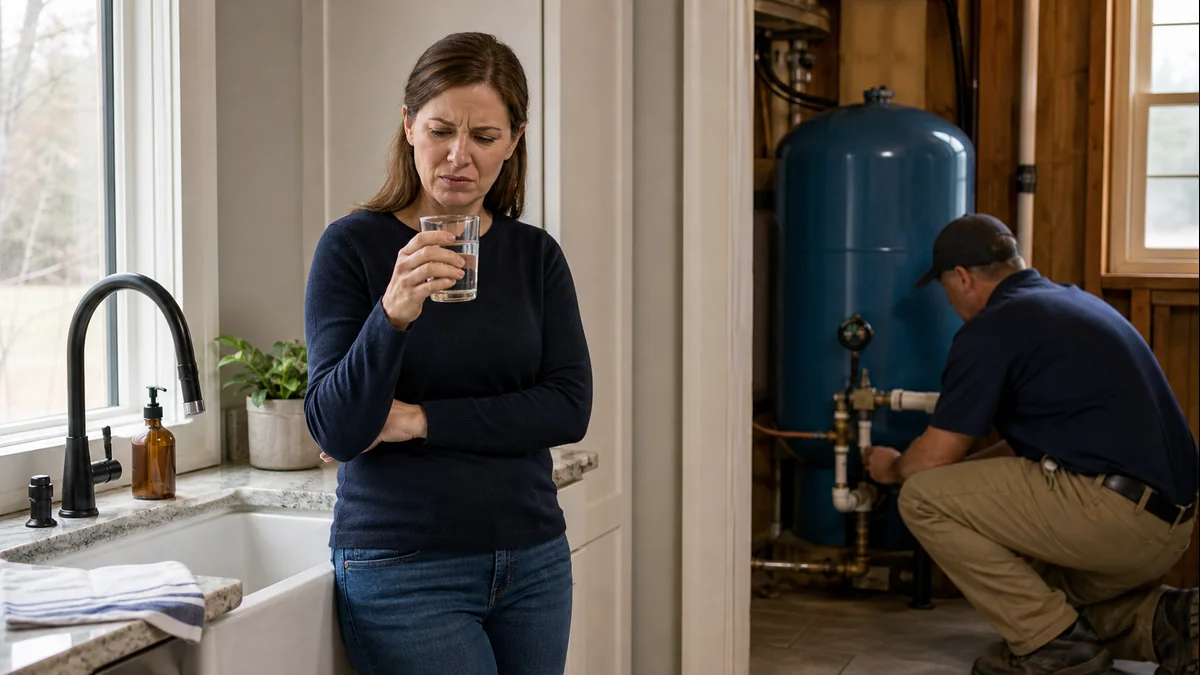
That rotten-egg smell is hydrogen sulfide gas, produced by sulfur-reducing bacteria that live in well water or inside a water heater. It's the single most common well-water complaint. It's generally an aesthetic and nuisance problem rather than a direct health hazard at the concentrations that cause a noticeable odor — but it's worth diagnosing properly, since the fix (and whether it's temporary) depends on the source.
What Causes the Rotten-Egg Smell?
Hydrogen sulfide (H2S) forms when sulfur-reducing bacteria interact with naturally occurring sulfate in groundwater or well components. It doesn't mean your water is contaminated with sewage — it's a naturally occurring bacterial process, and it's extremely common in well water across North Carolina because of local geology.
There are two distinct sources, and figuring out which one you have changes the fix:
- Well-sourced smell — the odor is present in both hot and cold water at every tap
- Water-heater-sourced smell — the odor only shows up in hot water; this typically happens when the water heater's magnesium anode rod reacts with sulfate in the water, producing H2S inside the tank itself
Run both a hot and a cold tap and compare. If only hot water smells, the fix is often as simple as replacing the anode rod (or, in some cases, removing it) — not a whole-house treatment system.
Is Hydrogen Sulfide in Well Water Dangerous?
At the concentrations that cause a noticeable "rotten egg" odor, hydrogen sulfide is generally treated as a secondary, aesthetic water quality issue rather than a regulated, health-based drinking water contaminant. That said, don't ignore it — a positive smell test is a signal to get a full water test done, not just a treatment for the odor. Sulfur bacteria can coexist with other well issues (iron, bacteria contamination) that a smell alone won't tell you about. In enclosed spaces like well pits or basements, hydrogen sulfide gas can also be a safety concern at higher concentrations, so persistent strong odors around wellhead equipment are worth having a professional look at directly.
Why Does Shock Chlorination Only Work Temporarily?
Shock chlorination — a strong dose of chlorine flushed through the well and plumbing — kills the sulfur bacteria present at the time of treatment. It's a legitimate short-term fix, and it's often the right first move. But it doesn't change the underlying water chemistry that let sulfur bacteria establish themselves in the first place. Bacteria typically recolonize over weeks to months, and the smell comes back. That's why shock chlorination alone is a stopgap, not a permanent solution.
What Actually Fixes It for Good
| Severity | Typical Approach |
|---|---|
| Mild, intermittent smell | Shock chlorination as an immediate fix; monitor for recurrence |
| Hot-water-only smell | Replace or remove the water heater's magnesium anode rod |
| Persistent, whole-house smell | Aeration/oxidation system, often paired with carbon filtration to address odor at the source rather than repeatedly treating symptoms |
| Smell plus a positive bacteria test | Combination of disinfection (UV or continuous chlorination) and treatment for the underlying sulfur issue |
Aeration and oxidation-based systems are the standard permanent fix because they treat the whole water supply continuously, rather than requiring repeated shock treatments. For the full order of operations on well treatment generally, see our well water treatment guide for NC.
Don't Confuse This With a Different Well Problem
A rotten-egg smell is specifically hydrogen sulfide — not the same issue as iron staining (orange/rust color, metallic taste) or acidic water (blue-green staining on fixtures). Treating the wrong problem wastes money. If your symptoms don't match a sulfur smell, check iron in well water and orange stains or acidic well water and blue-green stains instead.
Get It Tested Before You Guess
Because sulfur bacteria can mask or coexist with other issues, and because North Carolina doesn't regulate private well water quality after construction, testing is the only way to know what you're actually dealing with. See how often to test well water in NC for testing guidance, and check whether a positive bacteria result is part of your situation at coliform bacteria in well water.
Frequently Asked Questions
Why does my well water smell like rotten eggs? The smell is hydrogen sulfide gas, produced by sulfur-reducing bacteria interacting with sulfate in groundwater or inside a water heater. It's extremely common in well water and is a natural bacterial process, not evidence of sewage contamination.
Is it safe to drink well water that smells like rotten eggs? Hydrogen sulfide at odor-detectable levels is generally treated as an aesthetic issue rather than a regulated health-based contaminant. Still, get a full water test rather than assuming — the smell can coexist with unrelated issues a nose alone won't catch.
Why does only my hot water smell, not my cold water? That points to your water heater, not your well. The magnesium anode rod inside many water heater tanks can react with sulfate in the water and produce hydrogen sulfide locally — a much simpler fix than a whole-house treatment system.
Will shock chlorination get rid of the smell permanently? Usually not by itself. Shock chlorination kills the sulfur bacteria present at treatment time, but bacteria typically recolonize over time and the smell returns. A permanent fix generally requires an aeration/oxidation system.
How do I know if it's sulfur bacteria or something else causing the smell? A comprehensive well water test will confirm hydrogen sulfide and rule out other causes. Testing both hot and cold water separately also helps narrow down whether the source is the well itself or the water heater.
Get a Free Water Analysis
Stop guessing at the fix. Our free water analysis identifies exactly what's causing the smell in your well water and which treatment actually solves it — not just masks it.
Answer nine practical questions, then request a written quote or well-water analysis.
Start My Water Analysis