
Well Water Treatment in NC: The Complete Guide
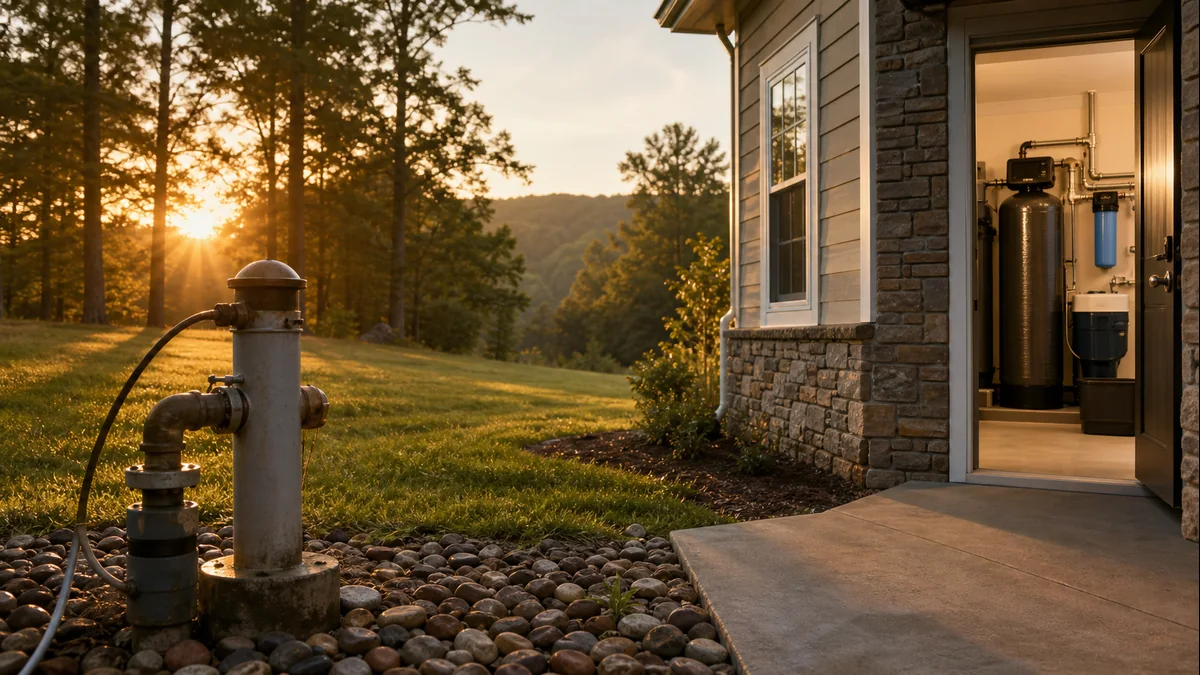
Well water treatment in North Carolina follows one reliable order: test first, then treat problems in this sequence — sediment, then pH neutralization, then iron, then hardness (if present), then carbon, then UV disinfection. North Carolina doesn't regulate private well water quality after construction, so testing and treatment are entirely the owner's responsibility — there's no utility report to fall back on.
Why Well Owners Are on Their Own Here
Roughly 15% of Wake County homes run on private wells, with higher shares in Johnston, Franklin, Chatham, and Granville counties. Unlike city water customers, well owners don't get an annual water quality report in the mail. North Carolina law regulates well construction but not ongoing water quality after the well is drilled — testing and maintaining safe water is the owner's job, full stop. County health departments typically test for bacteria and nitrates; a comprehensive test (recommended before any treatment purchase) also covers iron, pH, hardness, sulfur, and total dissolved solids (TDS).
That means the starting point for literally every well water decision is the same: test before you treat.
Step 1: What Should I Test My Well Water For?
At minimum, a comprehensive well test should cover bacteria, nitrates, iron, pH, hardness, sulfur, and TDS. Skipping straight to buying equipment based on symptoms alone (smell, stains, taste) risks buying the wrong system — or the right system sized wrong. See how often to test well water in NC for testing frequency and where to get it done.
Step 2: How Do I Diagnose What's Actually Wrong?
Match your symptoms to the likely cause, then confirm with your test results:
| Symptom | Likely Cause | Typical Fix |
|---|---|---|
| Rotten-egg smell | Hydrogen sulfide | Aeration/oxidation, sometimes carbon |
| Orange/rust staining, metallic taste | Iron (above ~0.3 ppm stains fixtures) | Air-injection oxidation (AIO) |
| Blue-green staining on fixtures | Acidic water (pH below 7) corroding copper pipe | Neutralizer (calcite) |
| White scale, poor soap lather | Hardness (property-specific — must be tested) | Water softener |
| Positive bacteria test | Coliform/E. coli contamination | Shock chlorination, UV disinfection |
| Gritty or cloudy water | Sediment | Sediment pre-filter |
For the smell and staining issues specifically, see well water smells like rotten eggs, iron in well water and orange stains, is iron in well water dangerous, and acidic well water and blue-green stains.
Step 3: What's the Correct Treatment Order?
Treating well water in the wrong order wastes money — a softener installed before an iron problem is fixed, for example, gets fouled by iron it wasn't designed to handle. The reliable sequence:
- Sediment filtration — removes grit and particulate first so it doesn't clog downstream equipment
- pH neutralization — corrects acidic water before it damages pipes or interferes with other treatment stages
- Iron removal — air-injection oxidation systems handle iron up to roughly 15 ppm
- Softening (only if hardness testing confirms it's needed) — removes calcium/magnesium after iron and pH are handled
- Carbon filtration — addresses taste, odor, and organic contaminants
- UV disinfection (if bacteria is present) — requires NSF/ANSI 55 Class A certification to be effective against bacteria and viruses
See UV water treatment for well water and how an air-injection iron filter works for detail on those two stages, and coliform bacteria in well water if your test came back positive.
Step 4: What Does Well Water Treatment Cost?
Costs depend entirely on which stages your test results require — a sediment-and-carbon setup costs far less than a full sediment-to-UV system. We quote every well system after a free water analysis so the price matches your actual test results rather than a guess. Full cost breakdown at well water treatment system cost.
Local Resources by County
Well water profiles vary by county — geology drives what's actually in the water, including in Johnston County, Franklin County, Chatham County, Granville County, and around Clayton, NC.
If you just bought a home with a well, start with first-time well owner: what to do — it walks through the testing and budgeting checklist before you touch equipment.
Who's Allowed to Install a Well Treatment System in NC?
Under North Carolina law (NCGS §87-21), whole-home water treatment installation is licensed plumbing work — not a DIY-and-forget job or something an unlicensed installer should be doing. Verify any installer's license through the NC State Board's public lookup before signing anything. Every Triangle Waterworks well system is installed by an NC-licensed plumber, with a lifetime warranty and terms in writing.
Frequently Asked Questions
What's the first step in treating well water? Testing. North Carolina doesn't regulate private well water quality after construction, so there's no public report to check — you need a direct, comprehensive test covering bacteria, nitrates, iron, pH, hardness, sulfur, and TDS before any treatment decision.
What order should well water treatment stages go in? Sediment filtration first, then pH neutralization, then iron removal, then softening (if needed), then carbon filtration, then UV disinfection if bacteria is present. Installing stages out of order — like softening before fixing an iron problem — shortens equipment life.
How much does well water treatment cost in NC? It depends on which stages your water actually needs. Our well systems are quoted after a free water analysis rather than a flat-rate guess, so the price reflects your actual test results.
Do I need a professional to install well water treatment in NC? Yes. Whole-home water treatment installation is licensed plumbing work under NCGS §87-21. Confirm any installer's license through the NC State Board's public lookup.
Is my county more likely to have well water problems? Roughly 15% of Wake County is on private wells, with higher shares in Johnston, Franklin, Chatham, and Granville counties. But well water quality is property-specific — county trends are a starting point, not a substitute for testing your own water.
Get a Free Water Analysis
Before you buy anything, get your well tested. Our free water analysis tells you exactly what's in your water and which treatment stages you actually need — no guessing, no oversized system.
Answer nine practical questions, then request a written quote or well-water analysis.
Start My Water Analysis