
Well Water Treatment System Cost in NC
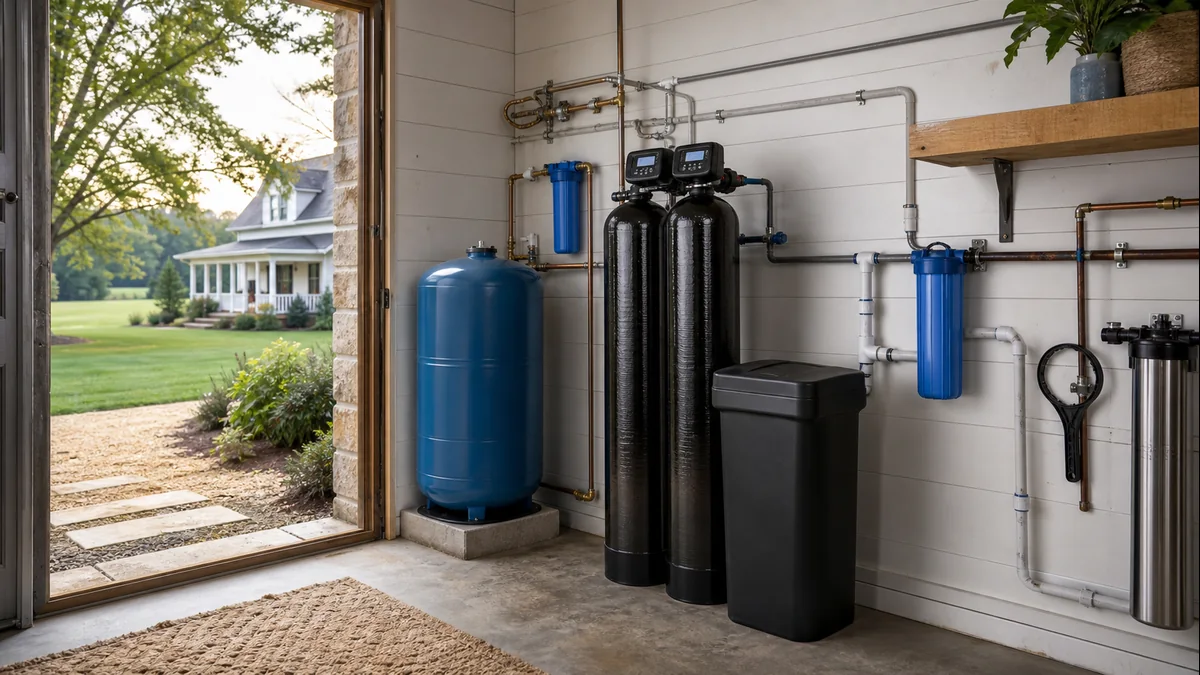
Well water treatment systems from Triangle Waterworks are priced after a free water analysis identifies exactly what's in your water — not a generic estimate. Cost depends on which treatment stages your well actually needs: sediment filtration, pH neutralization, iron removal, UV disinfection, and/or softening. Every install carries a lifetime warranty and is done by NC-licensed plumbers.
What's the real cost range for well water treatment?
There's no single price for "a well system" because no two wells have the same problem. A well needing only sediment and iron treatment costs less than a well needing pH correction, iron removal, UV disinfection, and softening in combination. The reason Triangle Waterworks quotes after a free water analysis rather than a flat number is that guessing at stages either underprices the job (and undertreats the water) or overprices it (selling equipment the water doesn't need).
What drives the price up or down?
Each of these is a separate treatment stage, and your well may need one, several, or all of them:
| Well water issue | Symptom | Treatment |
|---|---|---|
| Iron above 0.3 ppm | Orange/rust staining on fixtures | Air-injection oxidation (AIO), effective up to ~15 ppm iron |
| Hydrogen sulfide | Rotten-egg smell | Oxidation/filtration stage |
| Low pH (below 7) | Blue-green staining, corroded copper pipe | Calcite neutralizer |
| Bacteria/coliform | Positive test result | UV disinfection, certified to NSF/ANSI 55 Class A |
| General hardness | Scale buildup, soap scum | Water softener |
| Sediment | Cloudy water, clogged aerators | Sediment pre-filter |
A well with iron and nothing else needs one stage. A well with iron, low pH, and bacteria needs three stages working together — and the price reflects the actual equipment and labor for each one, not a markup for complexity.
Why test before you buy anything?
North Carolina doesn't regulate private well water quality after construction — once your well passes its initial inspection, ongoing water quality is entirely the owner's responsibility. County health departments typically test for bacteria and nitrates, but a comprehensive analysis — the kind that actually determines what treatment stages you need — covers iron, pH, hardness, sulfur, and total dissolved solids (TDS). Skipping the test and buying equipment based on a guess is how homeowners end up either paying for a stage they didn't need or missing the one that actually caused the problem. A free water analysis before quoting a price is the difference between a system built for your well and a generic package.
Do all wells in the Triangle need the same treatment?
No — and the symptoms are usually the giveaway before a test even confirms it:
- Rotten-egg smell points to hydrogen sulfide, treated with oxidation.
- Orange or rust staining on sinks and tubs points to iron above the 0.3 ppm staining threshold, treated with air-injection oxidation.
- Blue-green staining on fixtures points to low pH corroding copper plumbing, treated with a calcite neutralizer (which typically adds hardness back, sometimes requiring a softener downstream).
- A positive bacteria test requires UV disinfection certified to NSF/ANSI 55 Class A, not just a one-time shock treatment.
These aren't interchangeable — treating the wrong stage doesn't fix the symptom you're actually seeing.
Local angle: how common are wells in the Triangle?
Roughly 15% of Wake County homes are on private wells, with higher shares in Johnston, Franklin, Chatham, and Granville counties. If you're in one of those outer counties, well ownership is closer to the norm than the exception, and the same testing-first approach applies regardless of county — there's no regional shortcut around confirming what's actually in your specific well before pricing a system.
FAQ
Why isn't there a flat price for well water treatment? Because every well is different — cost depends entirely on which contaminants are present and how many treatment stages are needed, which is why pricing follows a free water analysis rather than a fixed number.
Does NC test my well water for me? Not on an ongoing basis. NC doesn't regulate private well water quality after initial construction — county health departments offer bacteria and nitrate testing, but comprehensive testing (iron, pH, hardness, sulfur, TDS) is the well owner's responsibility.
What's the most common well water problem in the Triangle? Iron staining and hydrogen sulfide (rotten-egg smell) are common well water issues in the region, along with low pH in some areas — but the only way to know your specific well's profile is testing.
Can one system handle iron, pH, and bacteria all at once? Yes, but it requires combining separate stages — air-injection oxidation for iron, a calcite neutralizer for pH, and UV disinfection for bacteria — which is reflected in the price for wells needing multiple treatments.
Is a water softener the same thing as well water treatment? No. A softener addresses hardness specifically; it doesn't treat iron, pH, sulfur, or bacteria. Many well systems need a softener as one component alongside other stages, not as a standalone fix.
Get your well tested for free before you spend anything on equipment. Request your free water analysis and get a price built for your actual well, not a guess.
Related reading: Well water treatment guide for NC · Whole house water filter cost in Raleigh, NC · Iron in well water: orange stains · Acidic well water: blue-green stains
Answer nine practical questions, then request a written quote or well-water analysis.
Start My Water Analysis