
What Causes White Residue on Faucets and Glasses?
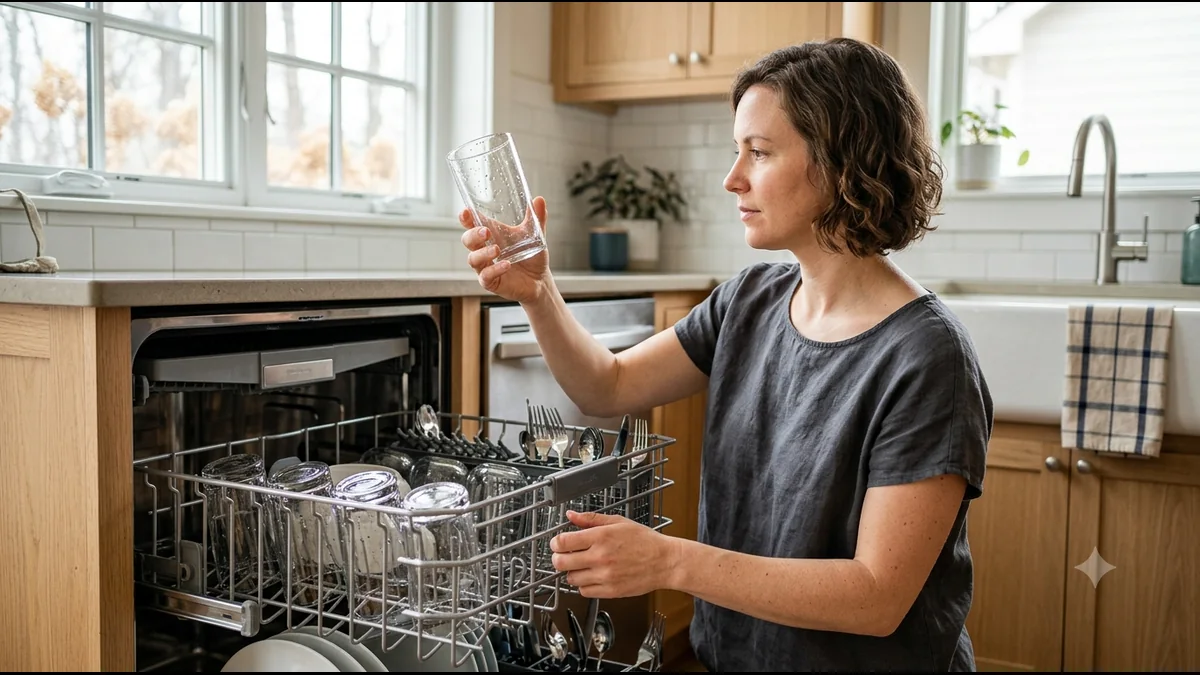
Direct answer: That chalky white film on faucets, shower glass, and drinking glasses is mineral scale — the calcium and magnesium naturally dissolved in your water, left behind once the water itself evaporates or heats away. It happens even in Triangle homes with slightly-hard-to-moderately-hard water, because the buildup is cumulative: every glass that evaporates and every gallon that's heated adds a little more. An all-in-one softening and carbon system removes the minerals before they ever reach a surface.
What causes white residue on faucets and glasses?
Calcium and magnesium do. The U.S. Geological Survey identifies these two minerals as the ones responsible for water hardness, and they're present in essentially all tap water to some degree, dissolved and invisible while the water is still liquid. Once that water evaporates off a faucet, a glass, or a shower door — or gets driven out of solution by heat — the minerals can't evaporate with it. They stay behind as a chalky, whitish film. The same process happens whether the water sits in a drop on stainless steel, dries on the inside of a glass, or gets heated inside an appliance.
Why does this happen here when Triangle water isn't especially hard?
Because "slightly hard" doesn't mean mineral-free, and buildup adds up over time. Raleigh Water's hardness runs about 1.6 grains per gallon (gpg) — slightly hard on the Water Quality Association (WQA) scale, the same one the Hach Total Hardness Test Kit uses, where soft runs under 1.0 gpg and slightly hard runs 1.0–3.5 gpg. Cary, Apex, and Morrisville span a wider range, 1.6–3.7 gpg, moving into moderately hard territory at the top of that band. At any of those levels, water still carries dissolved calcium and magnesium — just less of it than in a genuinely harder-water region. The residue doesn't come from one dramatic glass of water; it comes from years of daily use, one evaporated drop and one heated gallon at a time, minerals accumulating on the same surfaces day after day.
Where does the residue show up worst?
Wherever water evaporates or heats repeatedly on the same surface.
- Faucets and fixtures — the chrome or stainless surface where drops sit and dry between uses
- Shower glass and doors — hot water evaporating off glass, over and over, is one of the most visible spots in the house
- Drinking glasses — spots that remain after the dishwasher dries them, especially with heated-dry cycles
- Kettles and coffee makers — anywhere water is boiled repeatedly in the same vessel
- Inside the water heater — the one place you can't see it, where scale forms on tank walls and heating surfaces every time water is heated
That last one matters most. The Department of Energy's Building America program describes scale as an insulating layer between the burner (or heating element) and the water — it builds up the same way as the residue on your faucet, just out of sight, tank after tank, for as long as the water heater runs untreated.
Is white residue the same thing as glass etching?
No, and the difference matters for what you can actually do about it. Mineral scale is a deposit sitting on top of the surface — it rinses off with an acid like vinegar or lemon juice, and it comes right back the next time water evaporates there. Etching is different: it's permanent clouding of the glass itself, where the surface has been physically roughened rather than coated. An acid rinse restores a scale-covered glass to clear; it does nothing for an etched one, because there's nothing sitting on top to dissolve — the damage is in the glass.
How can I tell which one I'm dealing with?
Try an acid rinse on a small area first. Soak the cloudy spot in white vinegar or lemon juice for several minutes, then rinse and dry. If the film comes off, that's mineral scale — it was residue sitting on the surface, not damage to it. If the clouding doesn't change, the glass is likely etched, which no cleaning method reverses. Scale is nearly always the answer for faucets, fixtures, and shower doors; etching shows up mainly on glassware run through repeated dishwasher cycles with hot water and detergent.
Does cleaning it off actually solve the problem?
Only until the next glass of water evaporates. Wiping down a faucet, scrubbing a shower door, or running a vinegar rinse through a kettle removes what's already there, but it does nothing to stop the next round of minerals from arriving. As long as untreated water keeps passing through the house, the residue keeps coming back — on the same fixtures, at roughly the same rate, for as long as you keep cleaning instead of preventing. That's the difference between managing a symptom and removing the cause.
What actually stops white residue from forming in the first place?
Removing the calcium and magnesium before the water reaches a faucet, a glass, or an appliance. A water softener does this through ion exchange, pulling the hardness minerals out of the water supply at the point it enters the house — so there's nothing left to leave a film once the water evaporates or heats. Triangle Waterworks builds that softening stage into an all-in-one system alongside a carbon filtration stage, so the same installation stopping the residue on your fixtures also handles the chlorine and chloramine taste, and the disinfection byproducts, that softening alone does nothing about. It's one decision at the point where water enters the home, instead of an ongoing cleaning routine at every faucet, every shower door, and every glass.
Mineral scale vs. glass etching
| Mineral scale | Glass etching | |
|---|---|---|
| What it is | Calcium and magnesium left behind after water evaporates or heats | Permanent roughening of the glass surface itself |
| Removable with a vinegar or acid rinse? | Yes | No |
| Comes back? | Yes, as soon as more water evaporates there | N/A — the damage is already permanent |
| Where it shows up | Faucets, shower glass, kettles, dishwasher-dried glasses, water heater tanks | Mainly glassware run through repeated hot, high-detergent dishwasher cycles |
| What fixes it long-term | Removing the minerals before they reach the surface (softening) | Nothing reverses it — softer water going forward only prevents new etching |
Frequently Asked Questions
Is white residue on faucets a sign my water is unsafe? No. Mineral scale from calcium and magnesium is a cosmetic and maintenance issue, not a safety one — the minerals themselves aren't a health concern. It's worth addressing because of what it does to fixtures, glassware, and the inside of your water heater over time, not because of any risk in the water itself.
I just moved to Apex and my glasses come out spotty from the dishwasher — is that normal here? Yes. Apex runs on the higher end of the Triangle's hardness range, roughly 1.6–3.7 gpg, moving toward moderately hard at the top of that band. That's enough dissolved calcium and magnesium to leave visible spots on glassware once the water dries, especially with a heated-dry dishwasher cycle.
My shower glass gets cloudy no matter how often I squeegee it — what am I missing? You're managing the residue, not the source. Squeegeeing removes water before it evaporates on the glass, which helps, but any water that does dry there still leaves minerals behind. The only way to stop the buildup rather than continually removing it is treating the water itself before it reaches the shower.
Can I just use a water filter instead of a softener to fix this? No — a standard carbon filter doesn't remove calcium and magnesium, so it won't stop scale from forming. Carbon filtration handles taste, chlorine and chloramine, and disinfection byproducts; softening through ion exchange is what removes the hardness minerals causing the residue. An all-in-one system combines both in a single installation.
I've been cleaning my kettle with vinegar every few weeks — is there a way to stop needing to? Yes. If vinegar reliably clears the buildup, that confirms it's mineral scale rather than damage to the kettle itself, which means it's fully preventable. Removing calcium and magnesium from your water supply before it reaches the kettle stops the deposit from forming, rather than requiring an ongoing cleaning cycle.
Does this affect my water heater even if I can't see it? Yes, and that's the part worth paying attention to. The same minerals that leave visible residue on a faucet build up inside the water heater tank with every gallon heated — the Department of Energy describes scale acting as an insulating layer between the heating surface and the water. You won't see it forming, but it accumulates the same way, tank after tank, for as long as the water going in is untreated.
Ready to stop cleaning and start preventing?
Take our 60-second water quiz to see which all-in-one system fits your home — softening resin to stop the scale at the source, paired with carbon filtration for taste and disinfection byproducts, in one installation.
Related reading: Soft Water for Cleaner Dishes and Spotless Glasses | Fixing Soap Scum and Shower Door Buildup | How to Prevent Water Heater Scale Buildup | Raleigh Water Hardness | Water Softener vs. All-in-One System
Answer nine practical questions, then request a written quote or well-water analysis.
Start My Water Analysis