
Who Installs Water Softeners in Cary, NC?
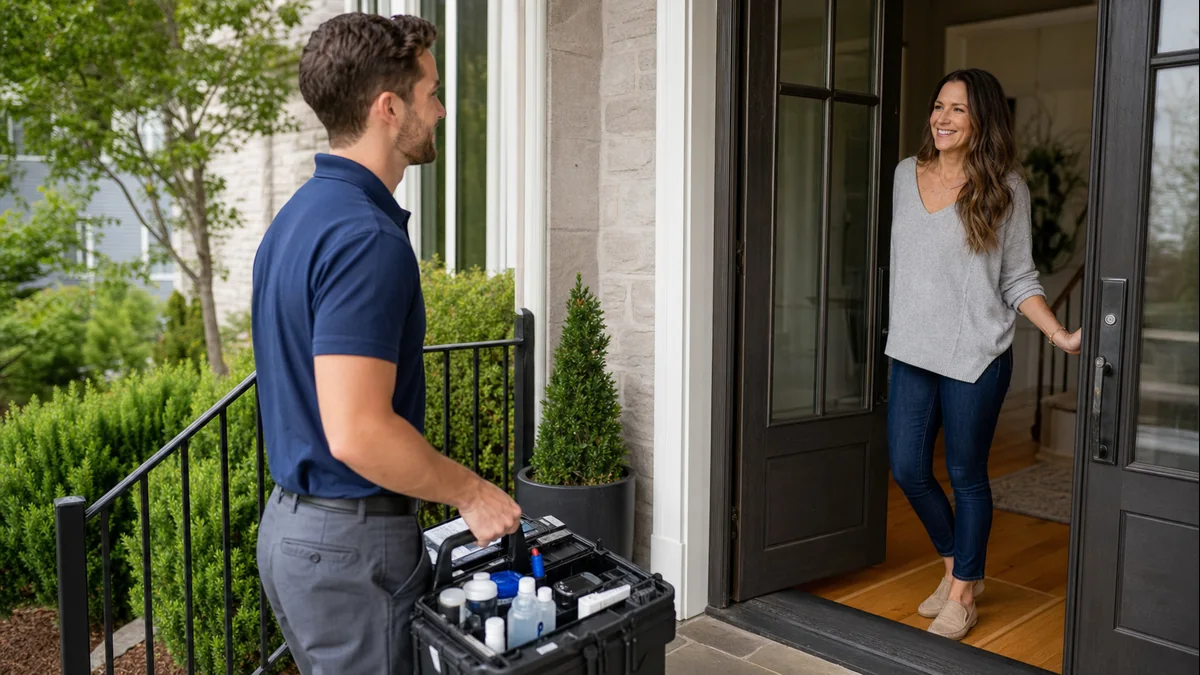
Direct answer: Three types of companies install water softeners in Cary: national dealer or franchise networks, general plumbing contractors, and local water-treatment specialists. What matters isn't which category a company falls into, but three questions: is the installer a licensed NC plumbing contractor, does the company test your specific address before quoting, and does one system handle both softening and carbon filtration. Ask all three before you sign.
Who Actually Installs Water Softeners in Cary?
Softener installation in Cary comes from one of three kinds of companies, and it helps to know which one you're talking to before the sales conversation starts.
- National dealer or franchise networks — a big-brand name sold and serviced through local dealers or franchise territories.
- General plumbing contractors — licensed plumbers who install water treatment equipment as one line item among broader plumbing services.
- Local water-treatment specialists — companies whose primary business is water testing and treatment for the area they serve.
None of these categories tells you, on its own, whether a given company will do a good job on your house. That comes down to how they answer the questions below, not which bucket they sit in.
What Should I Ask a National Dealer or Franchise Network?
Ask who actually shows up to install the system, and whether that installer is licensed in North Carolina. A national brand name doesn't automatically tell you who's doing the plumbing work at your address — that's a separate, verifiable fact worth confirming directly.
Also ask whether the quote is based on a test of your water or on a standard tier applied regardless of address. Cary's hardness varies by ZIP code, so the honest starting point for any quote is a number from your own tap, not a company-wide average.
Can a General Plumbing Contractor Install a Water Softener in Cary?
Yes — installing a whole-house water treatment system is licensed plumbing work under North Carolina law, and any licensed NC plumbing contractor is legally qualified to do it. N.C. Gen. Stat. § 87-21 defines plumbing contracting to include installing "whole-house water purification or treatment systems," which is why the license question applies to every type of installer, not just specialists.
What's worth asking a general plumbing contractor specifically is how much of their work is water treatment versus other plumbing jobs, and whether they test hardness before recommending equipment. A license confirms they're legally allowed to do the install — it doesn't by itself tell you how they size or configure the system.
What Should I Ask a Local Water-Treatment Specialist?
Ask the same licensing question you'd ask anyone else — specializing in water treatment doesn't exempt a company from the NC plumbing contractor requirement. Beyond that, ask what the testing process actually looks like: is it a full water analysis at your address, or a quick estimate based on your ZIP code alone?
Also ask directly whether the system quoted handles both softening and carbon filtration in one unit, or only the hardness side. Cary's water carries chlorine, chloramine, and disinfection byproducts alongside its measured hardness — a system that addresses only minerals is solving half the problem.
Does Cary's Water Actually Support Needing This, or Is the Town Right That It's Very Soft?
Both figures are real, and they're measuring different things. The Town of Cary publishes finished-water hardness of 25–30 ppm, roughly 1.5–1.75 gpg, which the Town calls very soft. Triangle Waterworks' own in-home testing across the service area measures higher — 1.6 to 3.7 gpg by ZIP code, which spans slightly hard to moderately hard on the Water Quality Association scale the Hach Total Hardness Test Kit (Model 5-B) uses.
| Town of Cary figure | Triangle Waterworks testing | |
|---|---|---|
| Hardness | 25–30 ppm (≈1.5–1.75 gpg) | 1.6–3.7 gpg by ZIP |
| What it measures | Plant-average finished water | Address-level testing across the service area |
| WQA/Hach classification | — | Slightly hard to moderately hard |
Neither number contradicts the other — a plant average and an address-level reading answer different questions, and the gap is exactly why any installer worth hiring tests your specific tap before quoting anything.
What About Chlorine and Disinfection Byproducts — Does Hardness Even Matter If My Water Tastes Fine?
Hardness and disinfection byproducts are separate issues, and Cary's 2025 Annual Water Quality Report shows both are present regardless of taste. The report lists total trihalomethanes (TTHM) at 37 ppb, ranging 17 to 43, and haloacetic acids (HAA5) at 17 ppb — both compliant with EPA's legal limits, and both a byproduct of chloraminating water sourced from Jordan Lake.
EPA's National Primary Drinking Water Regulations table lists the potential health effects of long-term exposure to TTHMs above the legal limit as "Liver, kidney or central nervous system problems; increased risk of cancer," and for HAA5 as "Increased risk of cancer."
That's not a claim that Cary's current, compliant water is causing those effects — it isn't, and every figure above sits under the legal limit. But it's why a carbon stage matters alongside softening: a softener only exchanges calcium and magnesium, so it does nothing about TTHM or HAA5 regardless of how well it's installed. Ask any installer directly whether their system includes carbon filtration or only softening resin.
Why Does Testing My Address First Matter More Than Which Type of Company I Pick?
Because a quote built on your actual water is the only one that's sized correctly, and category alone doesn't guarantee that happens. A national network, a general contractor, and a specialist can all, in principle, test your address first — and any of them can also skip that step and quote off an average. The company type is a starting point for the conversation, not the deciding factor.
That's why the questions in this article matter more than the label on the truck: licensed installer, address-tested quote, and one system covering both softening and carbon. A company that answers all three clearly, in writing, before asking for a signature is doing the job the way it should be done.
FAQ
I just moved to Cary and don't know where to start looking for an installer — what's the first question I should ask? Ask whether they test your water at your specific address before quoting a system, rather than pricing off a standard tier. That one question tells you more about how a company operates than which category — national, general contractor, or specialist — they fall into.
My neighbor used a national brand and I'm considering a local company instead — does it matter which I pick? Not as a category — what matters is whether the specific company you're talking to is a licensed NC plumbing contractor, tests your address, and installs one system that handles both softening and carbon. Ask those three questions of any company, national or local, before deciding.
How do I verify a water softener installer is actually licensed in North Carolina? Ask for their NC plumbing contractor license number and confirm it through the NC State Board's public license lookup. Whole-house water treatment installation is defined as plumbing-contracting work under N.C. Gen. Stat. § 87-21, so this is a legitimate, verifiable question for any installer, regardless of company type.
Can I install a water softener myself instead of hiring anyone? No — North Carolina law classifies installing a whole-house water treatment system as licensed plumbing-contracting work, since it involves tying into your home's main water line. That line serves every fixture in the house, which is why the work is reserved for a licensed plumbing contractor rather than handled as a DIY project.
Does a general plumbing contractor know as much about water softeners as a specialist? Both are legally qualified to install the equipment, but their day-to-day focus differs — a specialist's core business is water treatment, while a general contractor covers a wider range of plumbing work. Ask either one directly how many whole-home water treatment systems they've installed and whether they test hardness before quoting.
What's the actual difference between a softener-only quote and an all-in-one system quote? A softener-only quote addresses hardness — calcium and magnesium — and nothing else in your water. An all-in-one quote pairs that softening resin with a carbon stage in the same unit, so chlorine taste and disinfection byproducts like TTHM and HAA5 get addressed too, not just mineral buildup.
Get Your Own Address Tested Before You Choose an Installer
The fastest way to compare quotes on equal footing is a number from your own tap, not a town average or a company's standard tier. Take the 60-second water quiz or book a free in-home water analysis to see exactly what your Cary address tests at before you sign with anyone.
Sources
Related reading: Water Softeners in Cary, NC | The All-in-One System Built for Cary, Apex, and Morrisville | What to Expect From Water Softener Installation in Cary, NC | Water Softener Cost in Cary, NC | Is Cary, NC Water Really Soft?
Answer nine practical questions, then request a written quote or well-water analysis.
Start My Water Analysis