
Who Installs Water Treatment in Wake Forest, NC?
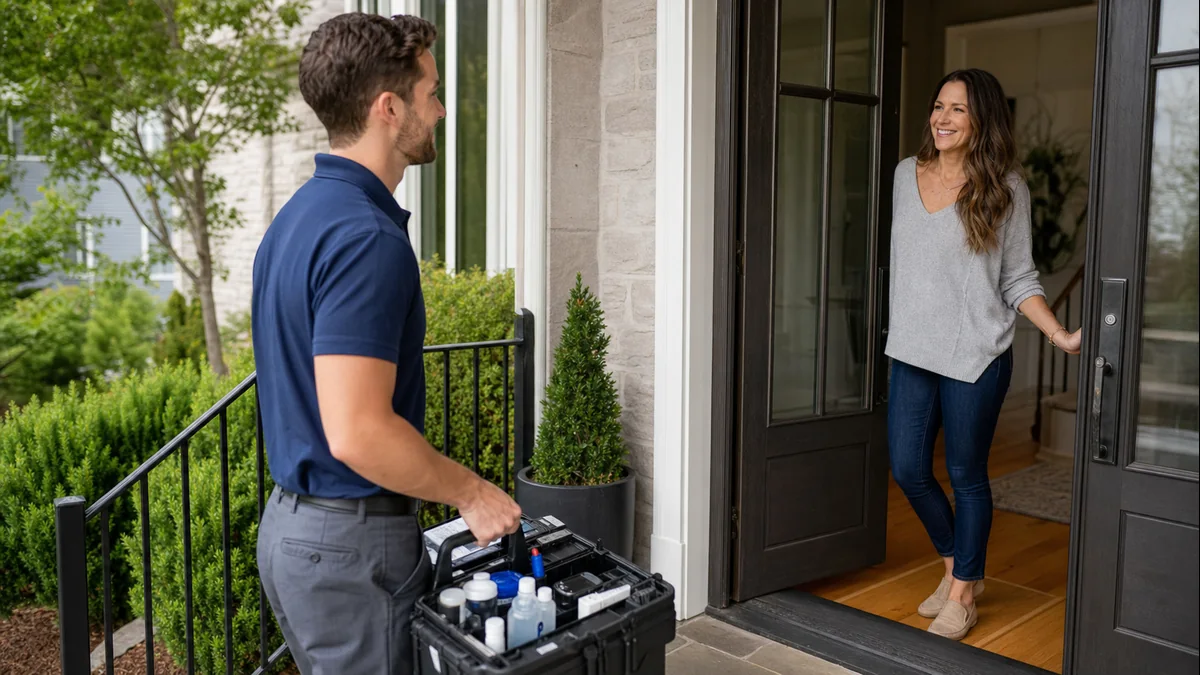
Direct answer: Triangle Waterworks installs whole-home water treatment in Wake Forest — a licensed local team running an all-in-one system (softening resin plus carbon filtration) sized to your address, not a generic install. Wake Forest sits on Raleigh Water's slightly hard supply, so the value is mostly the carbon side: chlorine/chloramine taste and documented disinfection byproducts. Pricing is set after a free water analysis, up front and with no in-home sales presentation, versus $6,000–$12,000 quotes typical of national big-brand installers.
Who Installs Water Treatment Systems in Wake Forest, NC?
Wake Forest homeowners have two real options: a local Triangle-based installer or a national big-brand dealer network that dispatches a rotating crew from wherever the closest franchise happens to be. Triangle Waterworks falls into the first category — based in the Triangle, familiar with Raleigh Water's supply characteristics, and using a licensed plumber for every install rather than a subcontracted crew assigned after the sale. Because Wake Forest runs on Raleigh Water rather than its own municipal plant, an installer who already knows that supply's hardness range and disinfection pattern doesn't have to guess at sizing — that's a meaningful difference between a company that treats water across the Triangle every week and one quoting from a national price sheet. For the full picture of what's actually in Wake Forest's supply, see water treatment in Wake Forest, NC.
If you're comparing installers more broadly across the Triangle rather than just in Wake Forest, our guide to finding a water treatment company near you in Raleigh covers the same criteria at a wider radius.
What Should I Look for in a Wake Forest Water Treatment Installer?
The short list: a straightforward quote built from a real water test rather than an in-home sales pitch, a licensed plumber doing the physical install (not just a sales rep who "coordinates" one), local familiarity with your specific water supply, and a system built for what your water actually needs rather than a one-size-fits-all package.
- Transparent pricing process. If a company won't quote you until a high-pressure sales visit, that's a process built around anchoring, not transparency. A free water analysis followed by a straight quote is the alternative.
- Licensed installation. Whole-home systems tie into your main line — this is plumbing work, and it should be done by a licensed plumber, not an installer whose only credential is a sales certification.
- Local water knowledge. An installer who works Raleigh, Cary, Apex, and Wake Forest every week already knows this area's hardness range and disinfection cycle; a national call center reading from a script doesn't.
- The right system, not the biggest one. Wake Forest's water doesn't need aggressive de-scaling — it needs a system sized to actually match what comes out of the tap here.
What Does the Installation Process Actually Look Like?
It starts with a free assessment of your specific address — not a town-wide average, since what comes out of your tap can vary somewhat by pipe age and location even within the same utility's service area. From there, the installer sizes the system to your household (standard or XL, based on water usage and fixture count), schedules a single visit, and a licensed plumber completes the tie-in to your main line. A properly sized all-in-one system, installed by someone who does this daily, is typically a same-day job. There's no multi-week wait for a regional crew, and no upsell negotiation once the truck is already in your driveway.
Why Does Wake Forest Specifically Need Both Softening and Carbon Filtration?
Wake Forest is on the Raleigh Water system, which tests slightly hard — around 1.6 grains per gallon (gpg), on the Water Quality Association (WQA) scale the Hach Total Hardness Test Kit uses (soft is under 1.0 gpg; slightly hard runs 1.0–3.5 gpg). That's a genuine perk: a softener sized for 1.6 gpg water runs on very little salt and regenerates less often than one built for a harder supply. But slightly hard doesn't mean mineral-free. Calcium and magnesium are still present at 1.6 gpg, and they still accumulate — inside a water heater, on fixtures, on glassware — over years of continuous use. That's why the softening half of an all-in-one system still earns its place here, just at a lower operating cost than it would in a harder-water town.
The carbon half is where most of the day-to-day difference shows up. Raleigh Water disinfects with chloramine most of the year — the utility itself describes it as carrying no strong taste or odor — but once annually, on the N.C. Department of Environmental Quality's recommendation, the system converts to free chlorine only and flushes the distribution network to speed the changeover. Chlorine residual runs higher system-wide during that period, and flushing can cause temporary discoloration. (Timing shifts year to year — Raleigh Water posts the current schedule at raleighnc.gov.) Beyond that annual event, Raleigh's supply carries documented disinfection byproducts: haloacetic acids (HAA9) at 19.9 ppb and trihalomethanes (TTHM) at 21.7 ppb. Both are legally compliant with EPA limits — Raleigh Water isn't violating anything — but they sit above the Environmental Working Group's stricter, non-regulatory health guideline. Activated carbon is what actually removes chlorine taste and reduces those byproducts; a softener alone does nothing for any of it, since softening is ion exchange for calcium and magnesium only.
Some of Wake Forest's older housing stock — the homes around the historic district's early residential streets, built across more than a century of construction — has had decades longer for that cumulative mineral buildup to work on aging plumbing and water heaters than a house built last year. That's a reason to get ahead of it, not a reason to worry about any one home's pipe material, which a general blog post can't diagnose for you.
Local Installer vs. National Big-Brand: What Actually Differs?
| Local Installer (Triangle-based) | National Big-Brand Installer | |
|---|---|---|
| Pricing | Quoted after a free water analysis, no sales presentation | Typically undisclosed until an in-home sales visit |
| Typical installed cost | Sized and quoted to household need | $6,000–$12,000 |
| Who installs | Licensed plumber | Varies — often a subcontracted or franchise crew |
| Knowledge of Wake Forest's water | Direct, ongoing (Raleigh Water hardness + disinfection cycle) | Generic, applied from a national playbook |
| Sales process | Straightforward quote from a real water test | Often an in-home sales presentation before a number is given |
| System | All-in-one, sized to your address | Often bundled with add-ons priced to hit a target sale |
The pricing gap isn't a coincidence — a national big-brand's overhead (call centers, franchise fees, commissioned sales visits) gets built into the quote before a plumber ever shows up. A local installer selling directly, quoting from a real water test rather than a sales script, doesn't carry that structure. Read the fuller breakdown in big-brand vs. local water treatment.
How Much Does a Whole-Home System Cost in Wake Forest?
Triangle Waterworks sizes and quotes whole-home all-in-one systems after a free water analysis — a standard household and an XL system for larger households or higher fixture counts are both quoted the same way, with no in-home sales visit required to get a number. National big-brand quotes for a comparable whole-home setup commonly run $6,000–$12,000 once the in-home sales visit wraps up. The difference isn't a smaller system — it's a shorter path from quote to install with less built-in sales overhead. See the full all-in-one system cost breakdown for how standard and XL sizing gets decided.
Frequently Asked Questions
I just moved to Wake Forest and need to find someone to install a water system — where do I even start? Start with a free address-level water assessment rather than picking a company off a search results page. Because Wake Forest runs on Raleigh Water, most homes here need the same core setup — softening plus carbon filtration — but sizing still depends on your household's fixture count and usage. A local installer can typically complete an assessment and schedule installation within the same week.
Is it better to hire a local installer or a national brand for my Wake Forest home? For most homeowners here, a local installer makes more sense: a quote built from a real water test, a licensed plumber doing the actual work, and familiarity with Raleigh Water's specific hardness and disinfection profile. National big-brand installers can certainly do the job, but their quotes commonly run two to four times higher once the in-home sales process concludes.
Does the installer need to know anything specific about Wake Forest's water, or is it the same everywhere? It helps. Wake Forest is on Raleigh Water, which tests slightly hard (about 1.6 gpg on the WQA scale) but also runs an annual switch to free chlorine and carries measurable disinfection byproducts. An installer who works this specific supply regularly sizes a system correctly the first time, rather than defaulting to specs built for a different region's water.
How long does a whole-home installation take once I schedule it? A properly sized all-in-one system is typically a same-day install once a licensed plumber is on site, following the free assessment that confirmed sizing. There's no multi-week wait typical of a national dealer's regional dispatch model.
What's the actual difference between a softener-only company and one that installs an all-in-one system? A softener-only installer addresses calcium and magnesium buildup but leaves chlorine taste and disinfection byproducts completely untouched, since softening is ion exchange only. An all-in-one installer combines softening resin with a carbon stage in a single system, covering both what makes water feel hard and what makes it taste or test differently than it should.
My water heater is older and I'm worried about buildup — does the installer check for that before quoting a system? A proper free assessment looks at your household's actual usage and fixture setup, which is the basis for sizing a system correctly. We won't diagnose your specific plumbing or water heater condition sight unseen in a blog post, but a licensed installer doing a visit can flag anything relevant before installation, not after.
See What Your Wake Forest Home Actually Needs
Every Wake Forest address is on the same Raleigh Water supply, but household size, fixture count, and usage all change what a system should be sized for. Take our free 60-second water quiz to see what fits your home — for most Wake Forest households, that means a locally installed, all-in-one system that runs efficiently on low-hardness water while removing chlorine taste and disinfection byproducts.
Answer nine practical questions, then request a written quote or well-water analysis.
Start My Water Analysis